Pain treatment can be a major financial decision, especially when insurance coverage is unclear. If you are asking how much shock wave therapy costs, start by looking beyond the advertised price per appointment. Some clinics include an evaluation and progress checks, while others bill those services separately. The recommended number of sessions can also vary based on your diagnosis, treatment area, symptom duration, and response to care. SoftWave TRT is an FDA-cleared, non-invasive technology offered by independent healthcare providers, so prices differ from one clinic to another. This guide breaks down the factors that shape total cost and shares practical questions to ask before treatment begins.
Key Takeaways
- Identify the exact treatment: Ask which acoustic wave technology and device the clinic uses, what condition it is intended to address, and whether the proposed use is FDA cleared.
- Review the complete price: Compare the estimated total cost, including consultations, sessions, follow-ups, imaging, supplies, package terms, insurance coverage, and payment policies.
- Choose care based on clinical quality: Verify the provider’s credentials and device training, confirm how progress will be measured, and request a personalized plan that includes safety guidance and realistic expectations.
What Is Shock Wave Therapy and How Does It Work?
Shock wave therapy is a non-invasive treatment that uses acoustic energy to address targeted areas of the body. Providers may use it in musculoskeletal care, sports medicine, orthopedics, physical therapy, podiatry, wound care, regenerative medicine, and urology. The purpose of treatment depends on the patient’s diagnosis, the device used, and the provider’s treatment plan.
Because “shock wave therapy” can describe more than one technology, ask specific questions before comparing prices. The modality, device, treatment area, and provider’s approach can affect both the treatment experience and the total number of sessions recommended.
Shock Wave Therapy, Acoustic Wave Therapy, and SoftWave TRT
Shock wave therapy and acoustic wave therapy are sometimes used as general terms for treatments that deliver acoustic energy to tissue. However, different systems use different energy patterns and delivery methods. Focused and radial shock wave technologies, for example, are designed to deliver energy in distinct ways and may be used for different clinical applications. Research on shock wave therapy can help explain how the broader category is used across sports medicine, orthopedics, and other specialties.
SoftWave Tissue Regeneration Technology, or SoftWave TRT, is a specific FDA-cleared, non-invasive technology used for pain relief, healing, and musculoskeletal care. Before booking, ask which device the clinic uses, how it delivers acoustic energy, and why the provider recommends it for your condition. SoftWave’s technology overview offers more detail about the platform.
How Acoustic Energy Affects Tissue
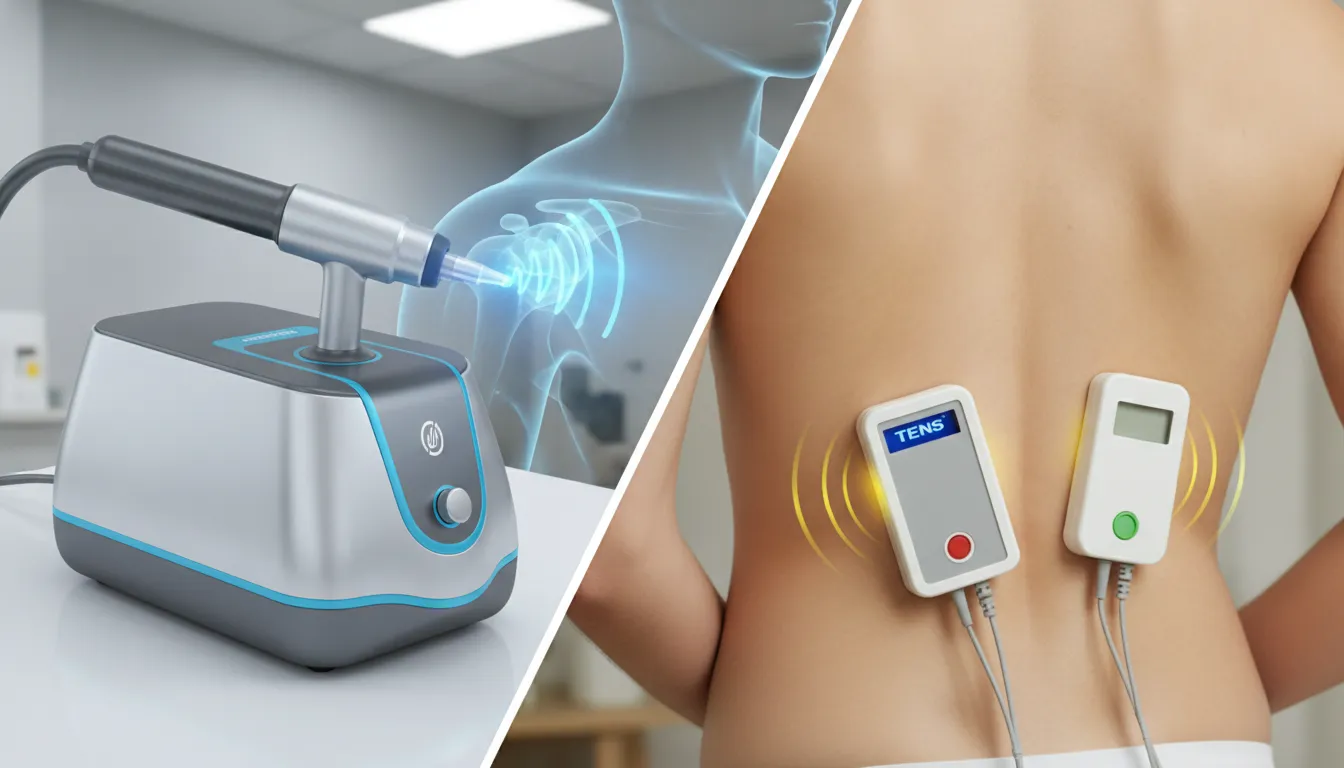
During a session, a provider places a handheld applicator against the skin near the treatment area. The device delivers acoustic energy to targeted tissue. You may feel tapping, tingling, or snapping sensations during the application. Some areas may feel more sensitive than others, particularly when the tissue is already irritated or tender. Any discomfort is generally temporary, and the provider may adjust the settings to help keep the session manageable.
The treatment goal varies by condition and may include supporting the body’s healing response, reducing pain, improving movement, or addressing tissue changes associated with an injury. Progress may develop over time rather than immediately after one appointment. Your provider should explain what changes to monitor and how those changes will influence the care plan. SoftWave provides clinical education and research resources for providers using the technology in different applications.
Why the Device, Modality, and FDA Clearance Matter
The device and modality determine how acoustic energy is delivered and which applications may be appropriate. Two clinics can use the phrase “shock wave therapy” while offering different technologies, treatment protocols, and levels of clinical support. That is why a lower price per session does not necessarily represent the same service or treatment approach.
FDA clearance identifies specific uses for a particular device. It does not mean that every device has the same capabilities, that every condition is appropriate for treatment, or that a specific outcome is guaranteed. Ask the provider which device they use, what indication applies to your treatment, and how they will assess your progress. SoftWave’s device information explains the company’s available systems and intended clinical applications.
What Drug-Free, Non-Invasive Treatment Can and Cannot Do
Shock wave therapy does not require an incision, and some patients consider it as part of a care plan that does not rely on medication or surgery. Providers may use acoustic wave technologies for selected musculoskeletal and soft tissue concerns, including certain tendon, ligament, joint, and wound-care applications. Your suitability depends on your diagnosis, medical history, symptoms, and treatment goals.
The treatment is not a universal answer for pain, and it cannot replace a complete medical evaluation. It may not address the underlying cause of every condition, and no provider can guarantee healing or a specific result. A qualified clinician should discuss potential benefits, limitations, alternatives, and any additional care you may need. SoftWave’s musculoskeletal applications show how providers may use the technology as one part of a broader treatment plan.
Which Conditions Can Shock Wave Therapy Treat?
Shock wave therapy is used in several areas of healthcare, but its suitability depends on the diagnosis, treatment area, device, and goals of care. Providers may consider acoustic energy for certain musculoskeletal conditions, soft-tissue concerns, wound-care plans, and specialty applications. The treatment is non-invasive, meaning it does not require an incision, but it is not appropriate for every condition or every patient.
SoftWave TRT is an FDA-cleared technology designed for clinical use across musculoskeletal care and several specialty disciplines. Its musculoskeletal applications include treatment approaches for muscles, tendons, joints, ligaments, and other soft tissues. A qualified healthcare provider should review your symptoms, medical history, medications, and previous care before recommending treatment.
“Shock wave therapy” can refer to different devices and treatment approaches. Radial shock wave therapy and extracorporeal shock wave therapy, or ESWT, may have different uses, protocols, and pricing. Ask your provider which technology they use, what condition it is intended to address, and how the treatment fits into your broader care plan.
Musculoskeletal Pain, Tendons, Joints, and Ligaments
Shock wave therapy is commonly considered for musculoskeletal conditions involving painful or irritated soft tissue. Depending on the diagnosis, a provider may use it for tendon problems, joint discomfort, ligament injuries, muscle pain, or overuse-related symptoms. Sports medicine, orthopedic, and physical therapy practices may include acoustic wave therapy alongside exercise, mobility work, manual therapy, or other conservative care.
Potential treatment areas include the shoulder, elbow, knee, foot, ankle, and other parts of the body. Examples may include tendinopathy, plantar foot pain, and soft-tissue injuries. However, treatment depends on the underlying cause of symptoms, not just the body part that hurts. Your provider may assess the tissue involved, symptom duration, movement limitations, and previous treatment response before making a recommendation. SoftWave’s technology overview explains its acoustic energy approach.
Orthopedic, Sports Medicine, Physical Therapy, and Podiatry Uses
Orthopedic and sports medicine providers may consider shock wave therapy for activity-related pain, tendon concerns, joint stiffness, or injuries that have not improved with initial treatment. Physical therapists may include it within a rehabilitation plan that also addresses strength, flexibility, balance, movement patterns, and a gradual return to activity.
Podiatrists may evaluate acoustic wave therapy for foot and ankle concerns involving the plantar fascia, Achilles tendon, or other soft tissues. The treatment area, energy settings, and session schedule should reflect the patient’s anatomy and diagnosis rather than follow a standard formula.
A clinic’s training and specialty experience can also affect how treatment is used. SoftWave describes applications across orthopedics, physical therapy, podiatry, sports medicine, and other disciplines. Patients can ask how the provider’s experience relates to their condition and whether therapy will be combined with rehabilitation or other care.
Wound Care, Regenerative Medicine, and Urology Uses
Some providers use shock wave or acoustic wave therapy as part of wound-care and regenerative-medicine plans. Wound care may also require assessment for infection, pressure relief, circulation support, dressings, and other medical services. Acoustic energy should not replace urgent evaluation or established wound-care treatment when those services are necessary.
In regenerative medicine, providers may use acoustic wave therapy as one component of a plan focused on pain management, tissue health, or functional recovery. The purpose of treatment should be clearly connected to the patient’s diagnosis and care goals.
Urology is another specialty in which certain acoustic wave technologies may be discussed, including applications related to sexual health. Patients should confirm the specific device, treatment protocol, and applicable clinical indication because the phrase “shock wave therapy” covers several modalities. SoftWave provides information about its specialty applications for providers and patients reviewing different care settings.
How Diagnosis, Treatment Area, and Goals Affect Suitability
The same symptom can have several causes, and each may require a different treatment plan. Pain near a joint, for example, could involve a tendon, ligament, muscle, nerve, bone, or another medical condition. A provider may use a physical exam, medical history, imaging, or a functional assessment to identify the likely source before recommending acoustic wave therapy.
The treatment area and condition severity also affect the plan. A localized tendon problem may require a different approach from widespread pain, a complex injury, or a wound that needs regular monitoring. Providers may consider symptom duration, tissue condition, medications, previous procedures, and goals such as reducing pain, improving movement, returning to sport, or supporting wound healing.
Before booking, ask what diagnosis the therapy is intended to address, why the selected device is appropriate, how progress will be measured, and what other care may be needed. A thorough evaluation helps determine whether treatment is suitable and gives you useful information for comparing session fees, treatment length, and the expected total cost.
How Much Does Shock Wave Therapy Cost?
Shock wave therapy costs vary from one clinic to another, so there is no single price for every patient or treatment plan. Self-pay fees may depend on the treatment area, the condition being addressed, the number of sessions recommended, the provider’s experience, and the device or protocol used.
When comparing prices, look beyond the cost of one appointment. A lower session fee may not include the initial evaluation, follow-up visits, imaging, or related care. Ask each clinic for a written, itemized estimate that explains what the fee includes and how many sessions the provider expects you may need.
Typical Self-Pay Prices: $100–$1,500 per Session
Self-pay shock wave therapy prices may range from about $100 to $1,500 per session. This is a broad range because clinics use different devices, treatment protocols, specialties, and pricing models. Some providers report fees closer to $100 to $300 per visit, while specialized treatments may cost more. Live Aligned’s cost guide also notes that condition severity and the number of sessions can affect total treatment costs.
A price estimate cannot determine whether treatment is appropriate for you. Your provider should consider your diagnosis, symptoms, medical history, and treatment goals before recommending a plan. Ask whether the quoted price includes an evaluation and whether additional services may be billed separately.
Why Many Clinics Charge $200–$500 per Session
Many clinics charge between $200 and $500 for a shock wave therapy session. This fee may reflect the provider’s training, the equipment used, appointment length, and clinical support included with treatment. A complex orthopedic or sports medicine concern may require more time for movement assessments, record review, treatment planning, and progress checks.
Prices can differ even among clinics in the same area. Sampson Regen’s pricing overview explains that treatment costs can vary according to location, provider, and the details of care. A higher price does not automatically indicate better care, and the lowest price may not include everything you need. Ask how the clinic sets its fees and what you receive for the quoted amount.
Compare Per-Session and Total Treatment Costs
A per-session price shows what one appointment costs, but your total expense depends on the number of visits your provider recommends. For example, three sessions at $300 each would cost $900, while six sessions at the same rate would cost $1,800. Some clinics offer package pricing, but review the expiration, cancellation, and refund terms before paying in advance.
During your consultation, ask:
- How many sessions do you recommend initially?
- What services are included with each visit?
- Could the plan change after progress is assessed?
- Are follow-up evaluations billed separately?
- Will imaging or another assessment be needed?
- What happens if treatment is not appropriate after the initial evaluation?
A responsible provider should explain the purpose of each recommended session without promising a specific result. Shock wave therapy may be one part of a broader plan that includes exercise, physical therapy, activity changes, or other care.
Why SoftWave TRT Fees Vary by Provider and Clinic
SoftWave TRT fees vary because healthcare providers and clinics set their own prices. A provider may consider their specialty, location, clinical experience, equipment, appointment length, and follow-up services when setting fees. SoftWave TRT may be available through orthopedic practices, physical therapy clinics, podiatry offices, sports medicine practices, wound care clinics, and other specialty settings.
The treatment plan may also differ according to the body area, condition, and clinical goal. SoftWave’s musculoskeletal applications include treatment approaches for a range of pain and tissue-related concerns, while its specialty applications support different areas of clinical practice.
Before booking, verify the provider’s credentials and ask which SoftWave device and protocol the clinic uses. Request an itemized estimate that separates the evaluation, treatment sessions, follow-up care, and any related services. This makes it easier to compare clinics based on the full plan rather than the advertised price alone.
What Affects Shock Wave Therapy Cost?
The cost of shock wave therapy depends on more than the price listed for a single appointment. Clinics may consider the technology used, the condition being treated, the size of the treatment area, and the level of clinical support involved. A focused treatment for one tendon may require a different protocol than care for several areas or a condition that affects movement and daily function.
The total price also depends on what the clinic includes. Some providers combine the evaluation and treatment in one fee, while others bill separately for examinations, imaging, follow-up visits, or rehabilitation services. Treatment packages may reduce the per-session price, but they can also require payment before you know how your body will respond. Request a written estimate that lists the recommended number of visits, the cost of each service, and any additional charges before you schedule.
Modality, Device, and Treatment Protocol
“Shock wave therapy” can describe several types of acoustic therapy. Focused extracorporeal shock wave therapy and radial pressure wave therapy use different forms of energy and may be selected for different conditions. As Sampson Regen explains, the modality and intended application can influence treatment pricing.
The device may also affect cost because equipment, maintenance, provider training, and treatment settings vary. SoftWave TRT is a non-invasive, FDA-cleared technology used by trained healthcare providers for applications including musculoskeletal care and wound care. Learn more about SoftWave technology and its clinical applications before comparing prices.
A treatment protocol may specify the energy settings, areas treated, appointment length, and visit frequency. Ask which device the clinic uses and why the recommended protocol fits your condition.
Treatment Area, Condition Severity, and Care Complexity
The size and location of the treatment area can affect the time and resources needed for each appointment. Treating one clearly defined area may be simpler than treating multiple sites or a broad region. The provider may also spend more time assessing how the condition affects strength, mobility, gait, or other aspects of function.
Condition severity and duration can shape the treatment plan as well. A recent tendon problem may call for a different approach than a long-standing condition involving several tissues. Your medical history, previous care, activity level, and goals may also influence the number of sessions recommended. Live Aligned explains that severity, session count, and an individualized plan all affect total cost.
Additional services can increase the price when care involves multiple treatment areas, detailed assessments, or coordination with physical therapy, orthopedic care, podiatry, or another specialty. Ask how each recommended service relates to your diagnosis and goals.
Provider Credentials, Training, and Experience
The provider’s credentials and experience can affect the cost of treatment. A clinic with highly trained professionals, specialized knowledge, and extensive experience may charge more than a provider with less experience. BioInformant outlines how training, certification, and clinical experience can influence shock wave therapy pricing.
Before booking, ask about the provider’s license, professional background, and training on the specific device used at the clinic. It is also reasonable to ask how often they treat conditions like yours and how they measure progress. These details help you compare the level of clinical support, not just the fee for one visit.
SoftWave provides training and specialty applications for professionals in fields such as physical therapy, sports medicine, podiatry, regenerative medicine, and wound care. Training does not guarantee a particular result, but it can support consistent device use and thoughtful treatment planning.
Clinic Location, Facility Costs, and Specialty Services
Clinic location can influence treatment prices. Facilities in metropolitan areas may have higher rent, staffing, and operating expenses, and those costs can appear in service fees. Local demand for specialized care may also affect pricing. BioInformant notes that regional operating costs and demand can contribute to differences between clinics.
The type of facility matters, too. An orthopedic practice, rehabilitation center, multidisciplinary medical office, and dedicated therapy clinic may include different services in their fees. One clinic may provide movement assessments and rehabilitation guidance, while another may charge separately for those services.
When comparing providers, ask whether the listed fee includes the evaluation, treatment session, clinical support, and follow-up communication. A lower per-session price may not result in a lower total cost if the clinic bills assessments separately or recommends additional visits. Travel expenses and time away from work may also matter when choosing a provider.
Insurance Coverage, Medical Necessity, and Self-Pay Pricing
Insurance coverage for shock wave therapy varies by health plan, diagnosis, provider, and treatment setting. An insurer may cover a service for one medically necessary indication but exclude it for another. Some plans may classify certain treatments as elective, investigational, or outside their benefits. Contact both your insurance company and the clinic before scheduling care.
Ask the billing team whether the clinic will verify benefits, submit claims, or require self-pay. Confirm the relevant procedure code, diagnosis requirements, authorization rules, deductible, copayment, and network status. The clinic’s estimate is useful, but it does not guarantee what your insurer will pay.
If you plan to pay out of pocket, request the self-pay rate in writing. Confirm whether it applies per session or to a package, and ask about deposits, cancellations, payment plans, and separate evaluation fees. SoftWave’s provider network can help you identify clinics offering the technology, but each provider sets its own prices and billing policies.
What Do Treatment Fees Include?
The price listed for shock wave therapy may cover more than the time spent delivering treatment. Depending on the clinic, your fee may include an initial evaluation, treatment planning, progress reviews, clinical supplies, and guidance between visits. Imaging, specialist assessments, or other related services may be billed separately.
SoftWave TRT fees can also differ from those for other acoustic or shock wave therapy devices. The treatment protocol, condition being addressed, provider’s training, and clinic’s approach all affect the final estimate. Before booking, ask the clinic to explain exactly what the quoted price includes and whether the recommended plan uses SoftWave Tissue Regeneration Technology or another modality.
A written estimate can make it easier to compare providers. Ask for the expected number of sessions, the price per visit, any separate consultation fees, and the services included in the plan. This helps you understand the likely total cost instead of focusing only on the advertised price for one appointment.
Initial Consultation, Exam, and Treatment Plan
Many providers begin with a consultation and physical exam before recommending treatment. During this appointment, the clinician may discuss your symptoms, medical history, previous care, activity level, and treatment goals. They may also assess movement, tenderness, strength, or the function of the affected area.
This evaluation helps determine whether shock wave therapy is appropriate and which areas may require attention. It also gives the provider information needed to create a personalized plan rather than applying the same protocol to every patient. Some clinics include the consultation in the first treatment fee, while others charge for it separately.
Ask whether the initial visit includes a complete examination, treatment recommendations, and a written estimate. SoftWave’s musculoskeletal applications cover several types of conditions, but a provider still needs to assess your individual situation before recommending care.
Therapy Sessions, Supplies, and Clinical Support
The main treatment fee typically covers the therapy session itself. This may include preparing the treatment area, positioning you comfortably, applying the device, adjusting the protocol, and monitoring your response. Depending on the condition and treatment area, the appointment may also include education about activity, movement, or home care.
Clinical support is another part of the service. Providers with advanced training and experience may spend more time reviewing your history, selecting treatment parameters, and assessing your response from one visit to the next. The clinic may also include supplies used during treatment, such as coupling gel, disposable materials, protective coverings, or cleaning products.
Ask whether the quoted price covers the full appointment or only device application. You can also ask which clinician will deliver the treatment and whether a trained staff member will be available to answer questions before or after the session. Provider experience is one factor that may affect pricing, as treatment cost research notes.
Imaging, Assessments, and Related Services
Imaging is not always required before shock wave therapy, but a provider may recommend it when the diagnosis is unclear, symptoms have changed, or another condition needs to be ruled out. Ultrasound, X-rays, MRI scans, or other assessments may be performed by the clinic or ordered through a separate facility.
These services can affect your total cost because they may not be included in the therapy fee. The same applies to additional evaluations from a physician, physical therapist, podiatrist, or another specialist. Treatment prices can also vary based on the modality and the complexity of the condition. Some clinics report per-session prices ranging from approximately $250 to $450, although fees differ by provider and location.
Before agreeing to additional services, ask why they are recommended, who will perform them, and how much they cost. SoftWave offers specialty applications for providers working across areas such as sports medicine, wound care, and regenerative medicine, but the services included in a treatment plan depend on the clinic.
Follow-Up Visits, Progress Checks, and Plan Changes
A treatment plan may include progress checks rather than a series of identical appointments. At these visits, the provider may ask about pain, movement, daily activities, exercise tolerance, or changes in function. They may also examine the treated area and compare your progress with the goals established during the initial consultation.
The provider can use this information to adjust the treatment area, session frequency, or broader care plan. Some clinics include brief progress checks in each appointment, while others schedule separate follow-up visits. These details can change the total price.
Ask how progress will be measured and when the plan will be reviewed. A provider should be able to explain what would lead to continuing, changing, or stopping treatment. Since many patients receive multiple sessions, understanding the expected number of visits is essential when estimating the full cost. Research on shock wave therapy pricing also notes that multiple appointments can increase the total expense.
Packages, Deposits, Cancellations, and Payment Options
Some clinics offer a lower per-session price when you purchase a package of treatments. This may reduce the overall cost, but make sure you understand how long the package remains valid, whether sessions can be transferred, and what happens if your provider changes the plan. A package should reflect a clinically appropriate care plan, not pressure you to purchase more sessions than your provider recommends.
Ask about deposits, cancellation windows, late-arrival policies, and refunds before paying. A package may be nonrefundable, or the clinic may charge a fee for missed appointments. Get these terms in writing so you can compare offers accurately. Clinics may also offer package discounts, but the lowest per-session price is not always the lowest total cost.
It is also worth asking whether the clinic accepts credit cards, payment plans, or financing. Confirm whether financing applies to the complete care plan or only individual visits. A written, itemized estimate should show the session price, consultation fee, related services, package savings, taxes, and any additional charges.
HSA or FSA Eligibility and Financing Questions
Health savings account and flexible spending account rules depend on your plan, the service provided, and whether the expense qualifies as medical care. Some patients may be able to use HSA or FSA funds for eligible treatment, but a clinic’s acceptance of a card does not guarantee that the expense meets your plan’s requirements.
Contact your plan administrator before treatment and ask whether shock wave therapy or SoftWave TRT is an eligible expense. You may need a diagnosis, letter of medical necessity, itemized receipt, or other documentation. The clinic may be able to provide receipts, but it cannot determine your plan’s final decision.
Insurance coverage also varies. Some plans may cover therapy when it meets their medical-necessity criteria, while others classify it as an excluded or self-pay service. Ask the provider for billing information, then verify coverage directly with your insurer. Since insurance coverage can affect treatment cost, confirm your benefits before scheduling a series of appointments.
If you are considering financing, ask about the interest rate, repayment period, fees, and cancellation policy. Compare the total amount you will pay, not only the monthly payment. The clinic can explain its payment options, while your insurer, HSA administrator, or FSA administrator can clarify coverage and eligibility.
How Many Shock Wave Therapy Sessions Do You Need?
There is no fixed number of shock wave therapy sessions that works for every person or condition. Your recommended treatment plan may depend on the area being treated, how long you have had symptoms, the severity of your condition, your overall health, and the device and protocol used by your provider. A qualified clinician should evaluate your condition and explain what the therapy is intended to address before recommending a course of care.
Many providers begin with a short series of appointments and assess your response along the way. This gives you and your clinician opportunities to discuss pain, movement, function, and other treatment goals. It also allows the plan to change if your symptoms improve, remain the same, or require a different type of care. SoftWave’s musculoskeletal applications cover several areas of treatment, but your provider must decide whether the technology is appropriate for your specific needs.
The number of visits should never be the only factor you consider. Ask how your progress will be measured, what each appointment is expected to accomplish, and when your provider will review the treatment plan. These questions can help you understand both the potential cost and the clinical purpose of your care.
Why Providers Often Start With Three to Six Sessions
A course of three to six sessions is a common starting point for shock wave therapy, although recommendations vary by condition and treatment approach. This range gives providers time to deliver care over multiple appointments while monitoring changes in symptoms and function. The aim is not simply to complete a preset number of visits. Each session should relate to your diagnosis, treatment area, and broader care plan.
Some people notice changes after an early appointment, while others need several sessions before they can assess whether treatment is helping. The appropriate schedule may also differ between shock wave modalities. Ask your provider why they recommend a particular number of sessions and which outcomes will guide the next step. You can learn more about SoftWave’s approach through its technology overview.
Session Frequency, Appointment Length, and Recovery Guidance
Providers may schedule sessions once or more than once per week, depending on your condition, treatment area, and care plan. Appointment length can also vary. Some visits may include only the therapy, while others may include an examination, movement assessment, or progress review. Before treatment begins, ask how often you will return and whether you should change your activity between appointments.
Follow your provider’s instructions about exercise, rest, medication, and other treatments. Temporary tenderness or soreness can occur after a session, so ask what to expect and how to manage it. Do not change prescribed medication or stop another treatment without medical guidance. A written plan can help you track appointments, symptoms, activity, and questions for your next visit.
When Providers Recommend Fewer or Additional Sessions
You may need fewer sessions if your symptoms improve quickly, your goals are limited, or your provider decides another treatment is more appropriate. Additional sessions may be considered when symptoms have lasted longer, the treatment area is complex, or progress is slower than expected. Any recommendation for more care should have a clear clinical reason, not simply follow an automatic package schedule.
Provider training and experience may also influence the treatment plan. Ask whether the clinician regularly treats your condition and has experience with the specific device and protocol being proposed. SoftWave supports care across specialty applications, including sports medicine, podiatry, physical therapy, wound care, and regenerative medicine. Your assessment and treatment goals should guide the recommendation.
Estimate the Total Cost Before Booking
Ask for the expected number of sessions and an estimated total cost before beginning treatment. Self-pay prices vary widely. Some reported fees range from about $250 to $450 per session, while other clinics may charge more or less based on the service, provider, and location. A price range alone does not show whether a treatment plan is appropriate, so request a written, itemized estimate. Cost factors for shock wave therapy can include the number of sessions and the details of your care plan.
Confirm whether the quoted fee includes the initial consultation, examination, treatment, supplies, progress checks, and follow-up visits. Ask about package discounts, deposits, cancellation policies, financing, and HSA or FSA eligibility. SoftWave devices are used by independent healthcare providers, so each clinic sets its own fees and payment policies.
Make Sure Every Session Has a Clear Purpose
Before each appointment, you should understand what the session is intended to address and how your provider will assess progress. Depending on your condition, the clinician may track pain levels, walking tolerance, range of motion, strength, wound changes, or another relevant outcome. These checkpoints help determine whether to continue, adjust the plan, or consider another option.
Ask what improvement may reasonably look like and when you will review your results. No provider can guarantee a specific outcome, and shock wave therapy may be one part of a broader treatment plan. If your symptoms change, tell your clinician promptly. A thoughtful plan should respond to your progress rather than require you to complete an unnecessary number of visits.
What Can You Expect During Recovery?
Recovery after shock wave therapy is typically gradual rather than immediate. Your experience may depend on the condition being treated, the treatment area, the therapy settings, and your general health. Before treatment, your provider should explain how the session may feel, what activities to avoid, and how progress will be assessed.
SoftWave describes its Tissue Regeneration Technology as a non-invasive treatment used in several clinical settings. However, non-invasive treatment does not guarantee the same response for every patient. Your provider may adjust your plan as your symptoms, movement, and activity tolerance change.
What Treatment May Feel Like During and After a Session
During a session, you may feel pressure, tapping, vibration, or brief discomfort as the device delivers acoustic energy to the treatment area. Some patients describe a sharp or shooting sensation, particularly when the provider works over a tender spot. Let your provider know if the sensation becomes difficult to tolerate. They may adjust the settings, treatment location, or technique.
Mild soreness, stiffness, achiness, redness, swelling, or bruising may occur afterward. These effects are generally temporary, but your clinician should explain what to expect based on your treatment plan. Many people return to regular daily activities after treatment, although avoiding strenuous exercise for at least 24 hours may be appropriate. Follow your provider’s instructions, since aftercare can vary by condition and treatment area. Patient aftercare guidance also commonly recommends allowing the treated area time to respond before resuming demanding activity.
How Pain, Movement, and Function May Change Gradually
Some patients notice an early change in symptoms, while others need several sessions before seeing a meaningful improvement. Providers often evaluate progress over several weeks by reviewing pain, mobility, tenderness, strength, and activity tolerance. Changes may include less morning discomfort, easier movement, improved walking tolerance, or faster recovery after exercise.
Pain may fluctuate during treatment. Temporary soreness does not necessarily mean the therapy has failed, but new or worsening symptoms should be reported to your provider. Track function as well as pain scores. Walking farther, climbing stairs, returning to training, or completing daily tasks with fewer limitations can provide useful evidence of progress. Your clinician may tailor the plan to your condition using guidance from SoftWave’s musculoskeletal treatment applications.
Track Progress and Set Outcome Checkpoints
Ask how your provider will measure progress before your first session. Your record might include pain levels, range of motion, sleep quality, work tolerance, exercise tolerance, and the activities you want to resume. Also note how long symptoms last after activity, not only how you feel immediately after treatment.
Schedule progress checkpoints rather than waiting until the last appointment to review your results. These conversations allow you and your provider to determine whether the plan is helping, whether the treatment area needs another assessment, or whether another part of your care plan requires attention. Bring specific examples to each visit, such as walking for 20 minutes instead of 10, taking fewer breaks, or feeling less tenderness during a familiar movement.
A simple symptom diary can make these changes easier to identify. Clinical guidance on shock wave therapy supports discussing treatment expectations and follow-up with a qualified healthcare professional.
Fit Shock Wave Therapy Into a Broader Care Plan
Shock wave therapy may form one part of a broader recovery plan. Depending on your condition, your provider may recommend physical therapy, progressive strengthening, mobility exercises, activity changes, or other non-invasive treatments. These steps can help you apply improvements in pain and movement to everyday tasks.
Follow exercise instructions carefully, especially during the first day or two after treatment. Doing too much too soon can make it difficult to determine how your body is responding. Your provider may coordinate care with a physical therapist, orthopedic specialist, podiatrist, sports-medicine professional, or another clinician. SoftWave’s specialty applications describe the professional settings in which its technology may be used, but your treatment plan should follow an individual evaluation and diagnosis.
Why Providers Cannot Guarantee Results
No responsible provider can promise a specific result or recovery timeline. Outcomes may vary based on the condition being treated, symptom duration, severity, age, general health, activity demands, and response to the complete care plan. Results can also differ between studies when researchers use different treatment protocols, devices, or patient groups. A review of extracorporeal shock wave therapy research illustrates why findings should be interpreted in the context of the condition and protocol being studied.
Before booking treatment, ask what outcome your provider considers realistic and how success will be measured. A transparent clinician should explain potential benefits, limitations, alternatives, and reasons the plan may change. SoftWave provides information about its devices and clinical technology, while your treating provider determines whether a particular therapy is appropriate for your health needs.
Is Shock Wave Therapy Safe?
Shock wave therapy is generally well tolerated when a qualified healthcare professional evaluates the patient, selects an appropriate treatment area, and uses the correct device and settings. The experience can vary based on the condition, body part, tissue sensitivity, treatment goals, and type of acoustic wave technology used. SoftWave’s TRT technology is non-invasive and designed for clinical applications involving pain, healing, and tissue support.
Safety begins before the first session. Your provider should review your symptoms, medical history, medications, recent procedures, and treatment goals. They should also explain what the therapy can and cannot do, what you may feel during treatment, and which symptoms require follow-up care. Because no treatment is right for every person or condition, an individualized evaluation is essential.
Temporary Soreness, Redness, Swelling, or Bruising
Some people experience temporary discomfort during or after shock wave therapy. Patients may describe the sensation as tingling, tapping, snapping, or mild to moderate pressure at the treatment site. The level of discomfort may depend on the location being treated, the severity of the condition, and the settings selected by the provider. Treatment should remain tolerable, so tell your provider if the sensation becomes unusually painful.
Temporary soreness, redness, mild swelling, or bruising can also occur. These effects often settle without additional treatment, but your provider can explain what to expect based on your condition and care plan. This overview of shockwave therapy myths describes these reactions as generally temporary and notes that patients often tolerate treatment well.
Follow the clinic’s aftercare instructions, including guidance about activity, exercise, hydration, and pain medication. Avoid changing your routine based on general advice alone, particularly if you are recovering from a complex injury or managing another medical condition.
Medications, Health Conditions, and Recent Procedures to Disclose
Tell your provider about every medication, supplement, and health condition before treatment. Mention blood-thinning medication, bleeding or clotting disorders, nerve problems, circulation concerns, active infections, cancer treatment, pregnancy, and any condition that may affect healing. You should also disclose implanted devices, recent injections, surgery, or other procedures near the intended treatment area.
This information helps the provider determine whether shock wave therapy is appropriate, whether the treatment settings should change, or whether another clinician should be consulted. Never stop a prescribed medication to prepare for treatment unless the clinician who prescribed it gives you specific instructions.
The treatment area matters as well. Shock wave therapy should not be applied casually over sensitive structures or areas where it may cause harm. The provider should identify the target tissue and avoid inappropriate locations, including areas over the lungs, brain, or major nerves. This clinical safety discussion from Serenity Healthcare Center emphasizes the importance of trained providers, suitable equipment, and a complete patient evaluation.
When Providers May Delay or Avoid Treatment
A provider may postpone treatment when your symptoms need additional evaluation. Unexplained swelling, fever, suspected infection, significant bruising, or sudden loss of strength may require a medical assessment before therapy begins. Treatment may also be delayed when the provider cannot clearly identify the target tissue or when your medical history raises a safety concern.
Shock wave therapy is not limited to long-standing pain, but acute symptoms still require careful screening. A recent injury may involve a fracture, tendon tear, blood clot, nerve problem, or another condition that requires a different form of care. Your provider should not assume that every painful area is appropriate for acoustic wave treatment.
Treatment may be avoided or modified when the area is close to vulnerable organs, open growth plates, major blood vessels, or other sensitive structures. The decision depends on the device, application, health history, and clinician’s training. Ask why treatment is recommended and what alternatives may be available if your provider advises waiting.
Complete Informed Consent and Safety Screening
Informed consent should be a conversation, not just a signature. Before treatment, ask what condition the provider is addressing, what evidence supports the proposed application, how many sessions may be needed, and which outcomes will be monitored. You should also receive a clear explanation of possible side effects, alternatives, expected costs, and circumstances that could lead the clinic to change or stop treatment.
A responsible provider will assess the treatment area and select settings based on your symptoms and response. They should not rely on one fixed protocol for every patient. Energy level, number of pulses, treatment frequency, and session length may need to change as your condition and tolerance become clearer. The European Society of Medicine’s discussion of shock wave therapy misconceptions explains why predetermined, high-energy treatment may result in overtreatment.
Ask which device will be used and whether the provider has training for the specific application. SoftWave provides specialty applications and provider education for areas such as musculoskeletal care, wound care, sports medicine, podiatry, and regenerative medicine. Training does not replace clinical judgment, but it can support appropriate use within an individualized care plan.
Know When New or Worsening Symptoms Need Medical Attention
Mild, short-term soreness can occur after treatment, but new or worsening symptoms deserve attention. Contact your provider promptly if you develop severe or increasing pain, significant swelling, spreading redness, warmth, drainage, fever, numbness, weakness, loss of movement, or changes in skin color. These symptoms may not be caused by the therapy, but they should not be ignored.
Seek urgent medical care for difficulty breathing, chest pain, sudden weakness, severe allergic symptoms, or signs of a serious infection. If you are unsure whether a reaction is expected, call the treating clinic and describe when the symptom began, how it has changed, and what you noticed at the treatment site.
Keep follow-up appointments so the provider can assess your response and revise the plan when needed. Tracking pain, movement, strength, wound changes, or daily function can make those conversations more useful. This guidance on shock wave therapy also recommends seeking medical attention when symptoms are new or worsening after treatment.
How Can You Compare Providers and Treatment Plans?
Price matters when you are comparing shock wave therapy, but it should not be the only factor. Two clinics may quote different prices because they use different devices, treat different conditions, or include different services in the fee. A lower per-session price may not offer better value if the plan includes limited assessments, little follow-up, or no clear treatment goals.
Ask each provider to explain the proposed plan in plain language. You should know which device will be used, why the treatment may be appropriate for your condition, how often sessions are recommended, and how progress will be assessed. The provider should also explain what the treatment can and cannot reasonably address. Clinics considering SoftWave TRT can review its musculoskeletal applications to learn more about the conditions and treatment areas associated with the technology.
A careful comparison helps you evaluate the full care experience, not just the advertised fee. Use the questions below to compare providers and identify a plan that is clear, appropriately supervised, and aligned with your goals.
Verify Licensure, Training, and Device Experience
Ask who will provide the treatment and whether that person is licensed to deliver the service in your area. You can also ask about their training, experience with shock wave therapy, and familiarity with your condition. A provider who regularly treats tendon injuries may use a different clinical approach from one who focuses on wound care, pelvic health, or post-surgical rehabilitation.
Experience with the device also matters. Ask how long the clinic has used it, how staff members were trained, and whether a qualified healthcare professional supervises treatment. Providers should explain their credentials without making exaggerated promises about outcomes. Clinics evaluating SoftWave TRT can learn about the company’s provider training and education, which supports clinical use across multiple specialties.
Confirm the Device and Applicable FDA-Cleared Indication
Before booking, ask the clinic to identify the device and the treatment indication it plans to use. “Shock wave therapy” can refer to different forms of acoustic energy, and devices may vary in design, settings, and intended applications. Confirming the equipment helps you understand what you are paying for and whether the proposed use matches the device’s FDA clearance.
FDA clearance does not mean a treatment is appropriate for every person or condition. Your provider should still review your diagnosis, medical history, medications, and goals. Ask what evidence supports the proposed use and whether the plan falls within the device’s cleared indication. You can also search the FDA’s medical device database and review SoftWave’s explanation of its TRT technology.
Be cautious if a clinic cannot clearly name its device, avoids questions about clearance, or makes broad claims without explaining the relevant indication.
Compare Protocols, Follow-Up, and Frequency, Not Just Price
A session fee tells you only part of the total cost. Compare the number of sessions, appointment length, treatment frequency, and services included with each plan. One provider may recommend three sessions with progress checks, while another may suggest six sessions with limited reassessment. Neither plan is automatically better, but the difference should be explained.
Ask why the provider selected the recommended schedule and whether the plan may change based on your response. Find out whether follow-up visits are included, when progress will be reviewed, and what happens if symptoms do not improve as expected. The provider should also explain activity recommendations or other care that may support your goals.
Avoid plans based only on a fixed package without an assessment or progress reviews. A clear protocol should connect each appointment to a clinical purpose, such as reducing discomfort, improving movement, supporting wound care, or monitoring functional progress.
Request a Written, Itemized Cost Estimate
Ask for a written estimate before treatment begins. It should list the consultation fee, individual session price, recommended number of sessions, follow-up visits, and any additional services. If the clinic offers a package, request both the package price and the equivalent per-session cost so you can compare options accurately.
The estimate should identify charges that may not be included, such as imaging, wound supplies, exercise instruction, evaluations, or appointments with another specialist. Ask whether the treatment plan requires a separate examination before each session and whether missed appointments affect the package.
A written estimate helps prevent misunderstandings. It also makes it easier to compare clinics on equal terms. If a clinic will not explain what its fee covers, ask for clarification before making a payment. Clear pricing is especially important when treatment is self-pay or insurance coverage is uncertain.
Ask About Coverage, Payment Plans, Deposits, and Cancellations
Ask whether the clinic bills insurance or provides shock wave therapy as a self-pay service. Coverage may depend on your plan, diagnosis, medical necessity requirements, and the specific device or indication. Contact your insurer directly to ask what documentation it requires. Do not assume that a provider’s statement about coverage guarantees reimbursement.
If you are paying out of pocket, ask whether the clinic accepts health savings account or flexible spending account funds, when applicable. You can also ask about payment plans, financing, deposits, and payment due dates. Review all terms before purchasing a multi-session package.
Make sure you understand the cancellation and rescheduling policy. Some clinics charge a fee for late cancellations or retain part of a deposit. Others may allow unused sessions to expire after a set period. Ask whether a package can be paused, transferred, or refunded if your provider changes the plan or determines that additional treatment is not appropriate.
Evaluate Provider Communication and Clinical Support
Pay attention to how the provider answers questions before you commit. A strong clinical team should explain the treatment in understandable terms, discuss possible side effects, and give you time to decide. You should not feel pressured to purchase a package during your first conversation.
Ask what treatment may feel like, how long an appointment lasts, and what you should do after each session. The provider should review relevant medications, medical conditions, recent procedures, and other therapies that could affect your care. Clear instructions can help you prepare and recognize concerns that require medical attention.
Communication should continue after the appointment. Find out whom to contact if you experience unexpected pain, swelling, skin changes, or another concern. A clinic that offers practical guidance and responds promptly may provide a better overall experience than one focused only on selling sessions.
Look for Transparent Claims, Progress Tracking, and Flexible Plans
Choose a provider that describes possible benefits without promising a guaranteed result. Shock wave therapy may be part of a broader plan that includes exercise, rehabilitation, wound care, activity changes, or other medical treatment. The provider should explain how the therapy fits into your care rather than presenting it as a replacement for every other option.
Ask how progress will be measured. Depending on your condition, this could include pain ratings, range of motion, walking tolerance, strength, wound measurements, or changes in daily activities. Establish a review point before treatment starts so you know when the provider will decide whether to continue, adjust, or stop the plan.
A flexible plan should respond to your clinical progress instead of simply filling a prepaid schedule. SoftWave provides information about its specialty applications for areas such as sports medicine, podiatry, physical therapy, wound care, and urology. Use this information to prepare questions, then rely on a qualified provider to determine whether the treatment fits your needs.
Related Articles
- Unraveling the Price Tag: How Much Does Shockwave Therapy Cost?
- Understanding the Cost of Shockwave Therapy
- How to Get Maximum Shockwave Therapy Benefits: A Patient’s Guide to Fast Recovery
- Shockwave Therapy Myths
- Can Shockwave Therapy Cause Damage?
Frequently Asked Questions
How much does shock wave therapy usually cost?
Self-pay prices commonly range from about $100 to $1,500 per session, with many clinics charging approximately $200 to $500. The final amount depends on the device, treatment area, provider, location, and services included. Request an itemized estimate before scheduling.
Does insurance cover shock wave therapy?
Coverage depends on your insurer, diagnosis, treatment indication, provider, and plan requirements. Some patients may need prior authorization or documentation of medical necessity, while others may need to pay privately. Contact your insurer and the clinic’s billing team to confirm your benefits.
How many sessions of shock wave therapy are typically needed?
Many providers begin with three to six sessions, but the recommended number varies by condition and treatment response. Your clinician should review your progress and explain whether to continue, adjust, or stop treatment instead of relying on a fixed schedule.
Is SoftWave TRT the same as every type of shock wave therapy?
No. Shock wave therapy can refer to several acoustic energy technologies, including focused and radial systems. SoftWave TRT is a specific FDA-cleared, non-invasive technology. Ask the clinic which device it uses and whether the proposed treatment matches its cleared indication.
What should I ask before choosing a provider?
Ask about the provider’s license, training, experience with your condition, device used, recommended session schedule, progress measures, and total fees. Confirm whether the estimate includes the evaluation, treatment, follow-up care, imaging, supplies, and cancellation or package terms.