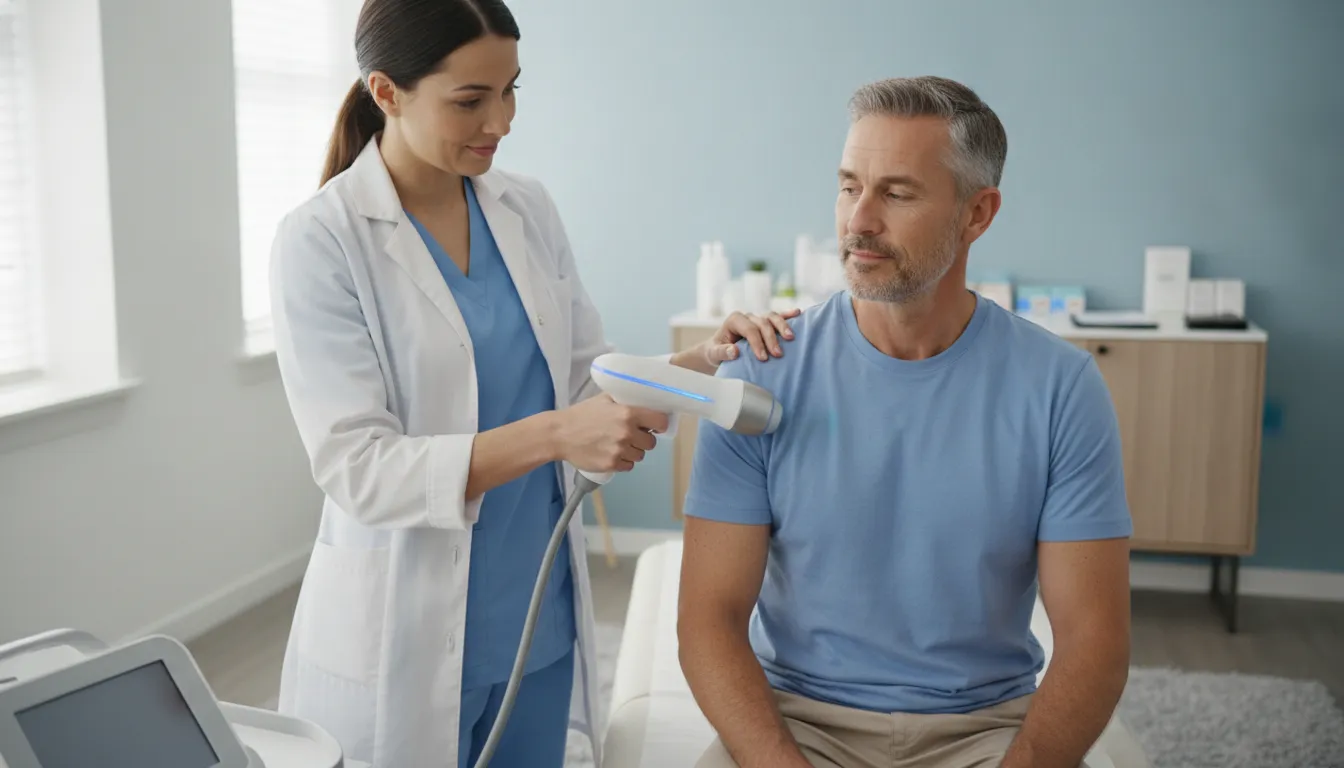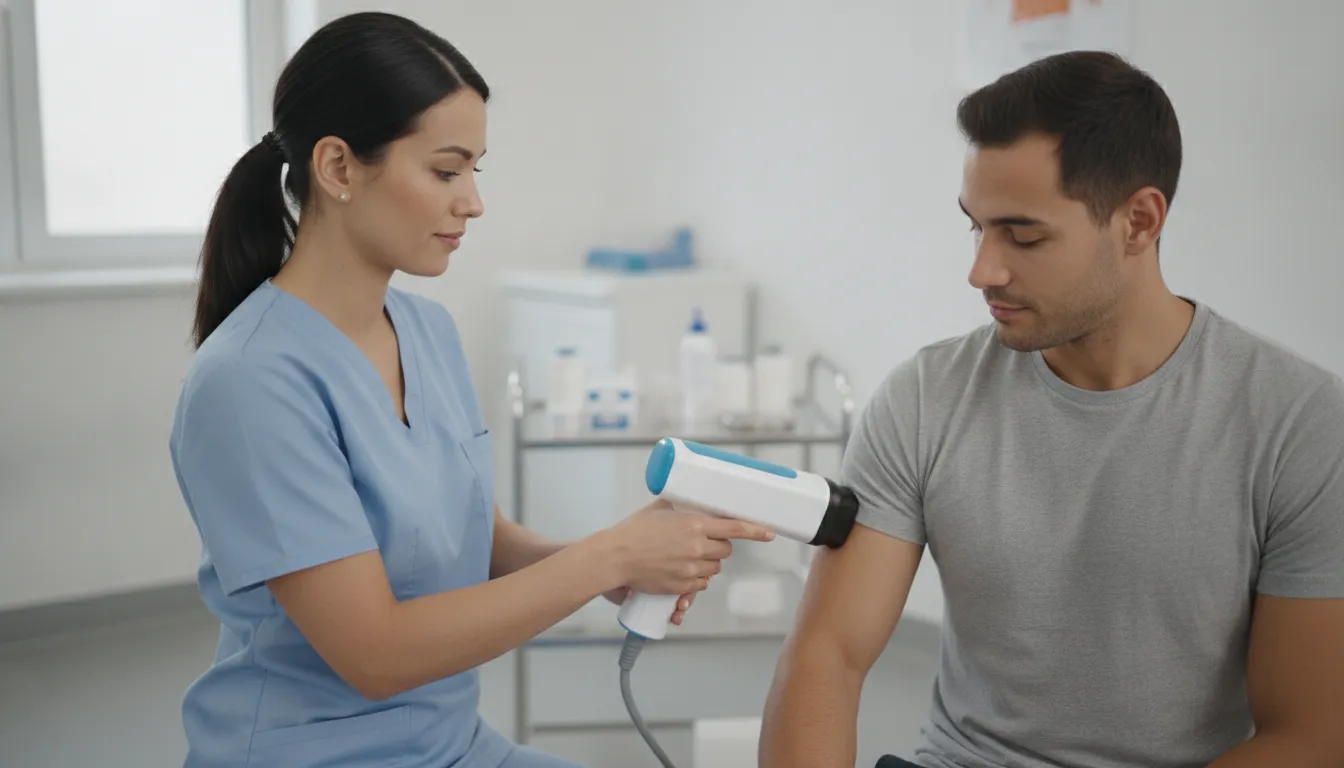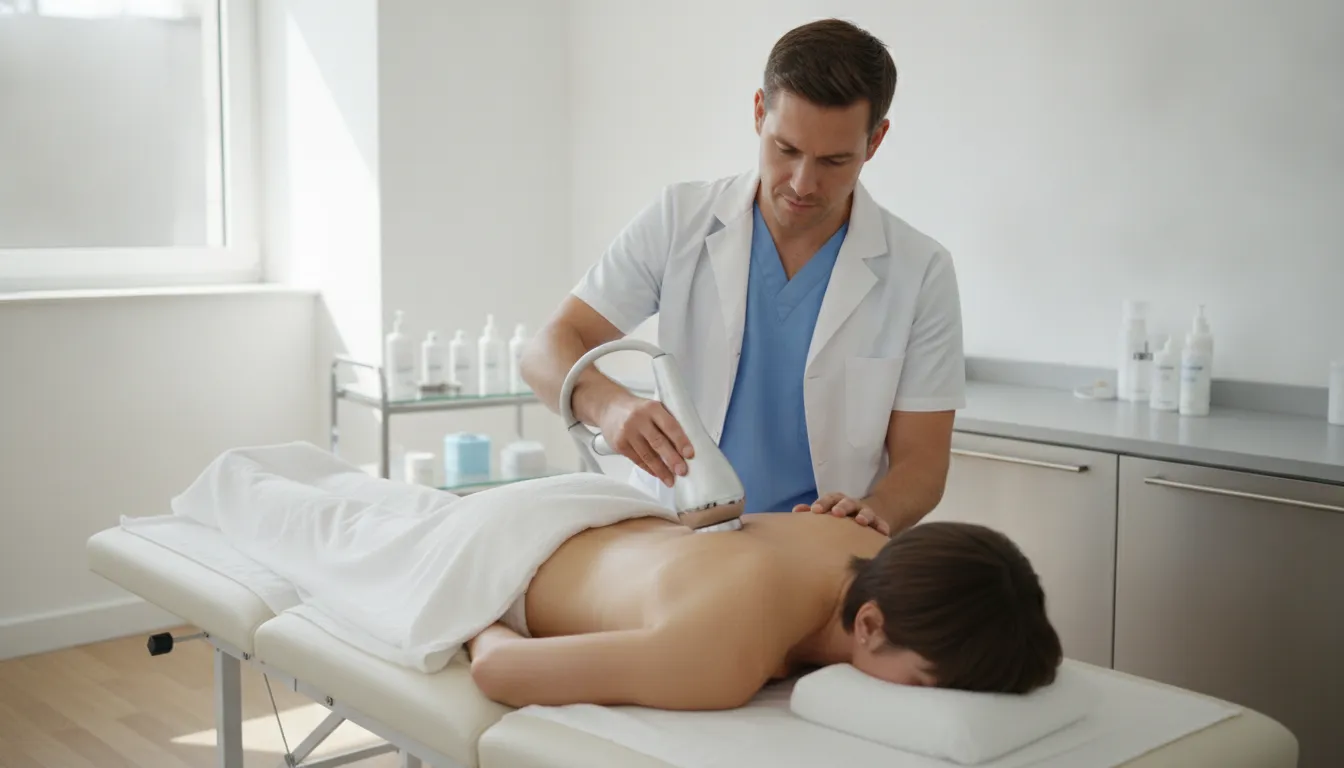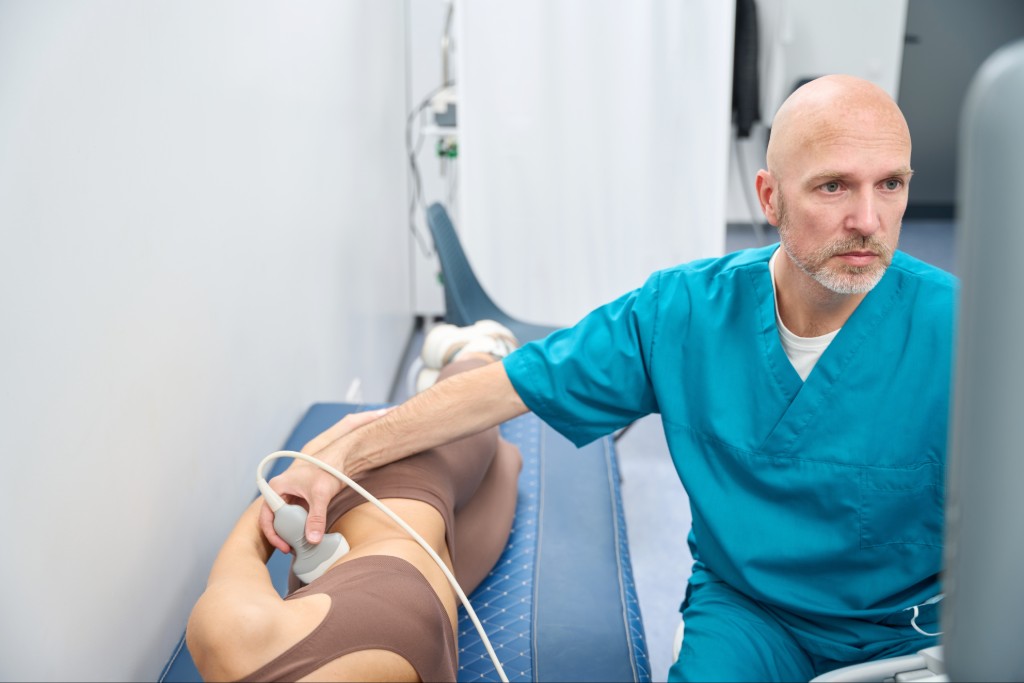
Electromagnetic shockwave therapy (ESWT) has been utilized in various medical fields, including musculoskeletal rehabilitation, dermatology, and men’s health. This non-invasive modality applies focused acoustic waves to targeted tissues, stimulating biological responses that promote healing and regeneration. Several medical devices incorporate this technology, including the Storz Duolith, a well-known example of an electromagnetic shockwave therapy device. The fundamental principle behind this technology lies in its ability to deliver controlled mechanical energy to affected tissues, influencing cellular and molecular responses.
What Is Electromagnetic Shockwave Therapy?
Electromagnetic shockwave therapy is a type of ESWT that generates acoustic waves using an electric coil and a magnetic field. Unlike other shockwave generation methods—such as electrohydraulic and piezoelectric—electromagnetic ESWT offers a highly controlled and uniform energy distribution.
In this process, an electrical current passes through a coil, creating a rapidly fluctuating magnetic field. This field induces the movement of a membrane, which generates precisely focused shockwaves. These waves are then directed into the body using an acoustic lens, allowing for adjustable penetration depths depending on the targeted tissue.
Compared to other forms of shockwave therapy, electromagnetic ESWT provides greater consistency in energy delivery, resulting in more predictable therapeutic outcomes. The ability to fine-tune focal depth enhances precision, making it particularly effective for clinical applications in musculoskeletal disorders, dermatology, and urology (Wang, 2012; Kim et al., 2020).
Mechanism of Action: How Does Electromagnetic Shockwave Therapy Work?
Electromagnetic shockwave therapy influences biological tissues through mechanical stimulation that leads to a cascade of molecular and cellular responses. The primary mechanisms include:
- Cavitation and microtrauma: The rapid pressure changes induce controlled mechanical stress, stimulating cellular repair and neovascularization.
- Angiogenesis induction: Increased expression of vascular endothelial growth factor (VEGF) promotes the formation of new blood vessels, improving oxygen and nutrient supply.
- Cellular signaling activation: ESWT influences mechanotransduction pathways, stimulating fibroblasts, osteoblasts, and endothelial cells to enhance tissue regeneration.
- Pain modulation: The therapy modulates nociceptive pathways by desensitizing nerve endings and reducing inflammatory mediators.
Clinical Indications for Electromagnetic Shockwave Therapy: Evidence-Based Applications
Musculoskeletal and Orthopedic Applications
Electromagnetic shockwave therapy has demonstrated efficacy in treating musculoskeletal conditions, particularly chronic tendinopathies, non-union fractures, and degenerative joint disorders. Wang (2012) reviewed the clinical application of ESWT in orthopedic settings, reporting significant improvement in tissue repair and functional recovery. The study highlighted ESWT’s effectiveness in plantar fasciitis, lateral epicondylitis, Achilles tendinopathy, and bone healing by stimulating neovascularization and increasing collagen deposition.
Dermatology
Electromagnetic shockwave therapy has been studied in dermatology, particularly for its role in skin regeneration and cellulite reduction. Modena et al. (2019) found that ESWT significantly improved skin elasticity and reduced cellulite severity by enhancing microcirculation and collagen remodeling. The study also suggested that electromagnetic shockwaves may stimulate fibroblast activity, leading to improved skin structure and tone.
Additionally, a systematic review by Dymarek et al. (2014) analyzed ESWT in wound care, concluding that electromagnetic shockwaves facilitate wound healing through angiogenesis stimulation and inflammatory modulation. The review emphasized ESWT’s potential as an adjunct therapy for chronic wounds, diabetic ulcers, and pressure sores.
Men’s Health Applications
Recent research has explored the role of electromagnetic low-intensity extracorporeal shockwave therapy (Li-ESWT) in the management of erectile dysfunction (ED). Kim et al. (2020) conducted a sham-controlled, double-blind study, demonstrating that electromagnetic Li-ESWT significantly improved erectile function in patients with mild to moderate ED. The proposed mechanisms include increased blood flow to penile tissue, stimulation of angiogenesis, and nerve regeneration, indicating that Li-ESWT may enhance tissue repair in vascular-related ED cases.
Clinical Limitations of Electromagnetic Shockwave Therapy
While electromagnetic shockwave therapy has demonstrated efficacy in multiple clinical applications, it also has limitations. Studies indicate that treatment outcomes can vary based on factors such as patient-specific conditions, energy levels applied, and treatment protocols. Some of the primary limitations include:
- Reproducibility Challenges: Clinical outcomes are dependent on device parameters, treatment protocols, and energy flux density. Variability in these factors can lead to inconsistent treatment responses.
- Depth Limitations: Some electromagnetic systems have narrow focal zones, requiring precise targeting to reach deeper tissues effectively. This can be a challenge for conditions requiring broader treatment areas.
- Patient Experience: High-energy focused ESWT may induce localized discomfort or tissue irritation. While generally well-tolerated, some patients may experience temporary pain following treatment.
SoftWave Therapy: An Advanced Alternative in Shockwave Technology
SoftWave Therapy, especially their SoftWave Gold Li Series device, represents a next-generation ESWT solution, utilizing a patented parabolic reflector applicator to create broad-focused waves. This advanced technology offers several advantages over traditional electromagnetic ESWT:
- Broad-focused waves: SoftWave distributes energy over a larger treatment area, reducing discomfort while still activating key healing pathways.
- Primary & secondary waves: Parallel acoustic waves generate a greater biological response compared to conventional shockwaves.
- Non-invasive & no microtrauma: Unlike traditional focused ESWT, SoftWave stimulates tissue regeneration without causing localized damage.
SoftWave Therapy holds multiple FDA clearances for orthopedic, musculoskeletal, wound healing, and urological applications, making it a highly versatile option for healthcare providers.
Why Choose SoftWave Therapy?
- Clinically Proven: Studies demonstrate its efficacy in tissue regeneration, inflammation reduction, and improved blood circulation.
- Efficiency in Clinical Practice: Shorter treatment sessions (10 minutes) and higher patient throughput.
- Increased Revenue Potential: Higher patient satisfaction and return on investment for providers.
- FDA-Cleared and Health Canada Licensed.
- Minimal Learning Curve: Easy to operate.
- Quick Patient Recovery: Enhances practice efficiency.
Learn more about the Best Shockwave Therapy for your practice
Expand Your Practice with SoftWave Therapy Today
SoftWave Therapy optimizes patient care with a non-invasive, broad-focused approach that enhances treatment efficiency and patient comfort. Its versatility allows providers to expand their services, attract more patients, and seamlessly integrate it into their practice.
Join the growing network of healthcare professionals using SoftWave Therapy to deliver superior outcomes and improve clinical efficiency.