Most medical professionals hit this question right before they buy a device: shockwave or laser? Whether the practice already owns one system and is weighing a second, or is evaluating its first, the comparison holds to the same four variables: how each device acts on tissue, what the trials found, how long a session takes, and who is credentialed to run it.
Shockwave Therapy vs. Laser Therapy: Two Different Forms of Energy
What Broad-Focused Shockwave Therapy Delivers
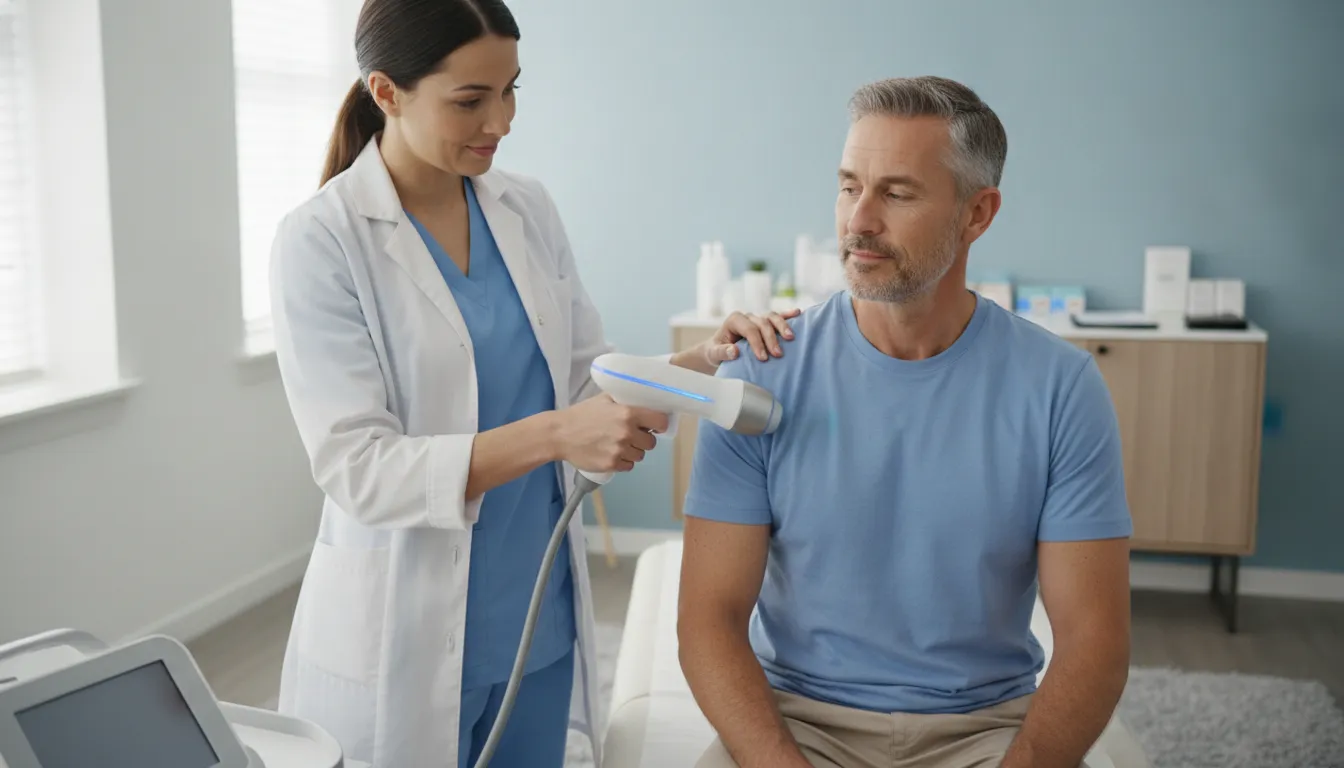
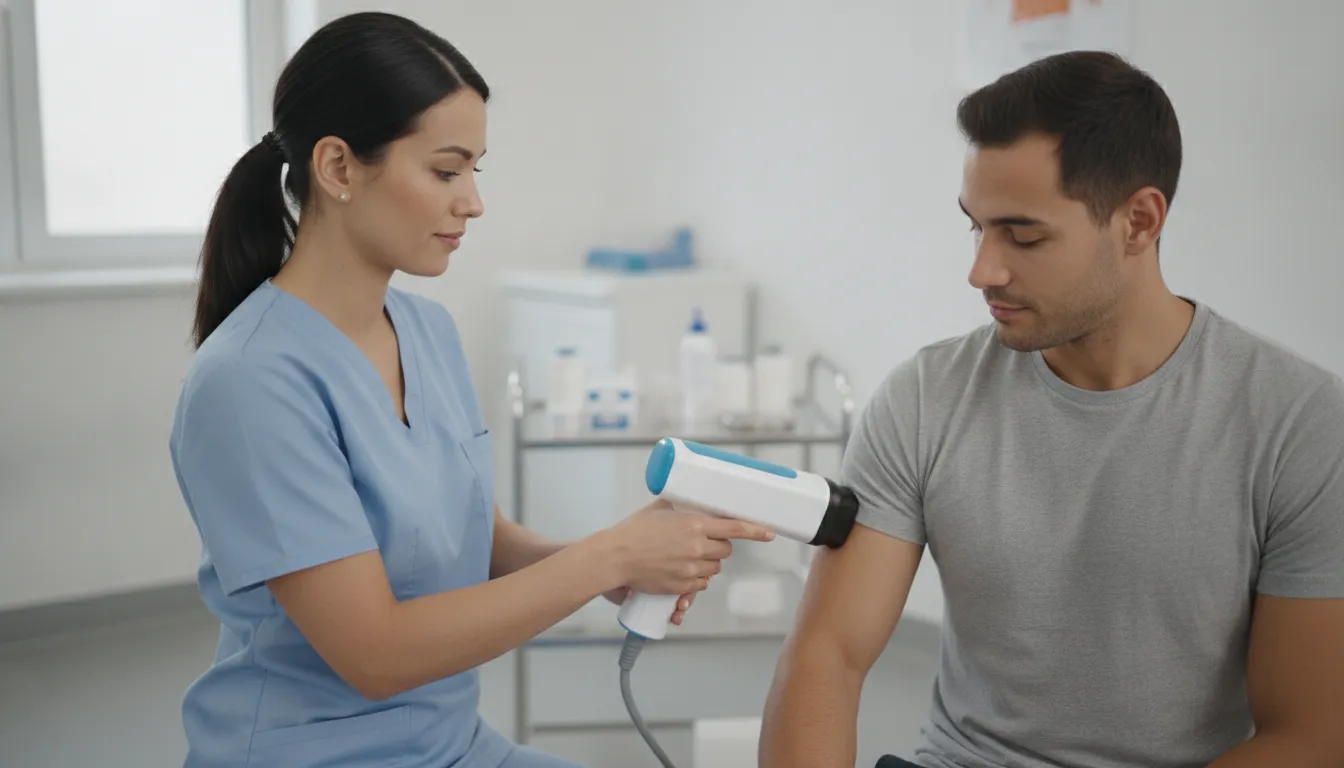
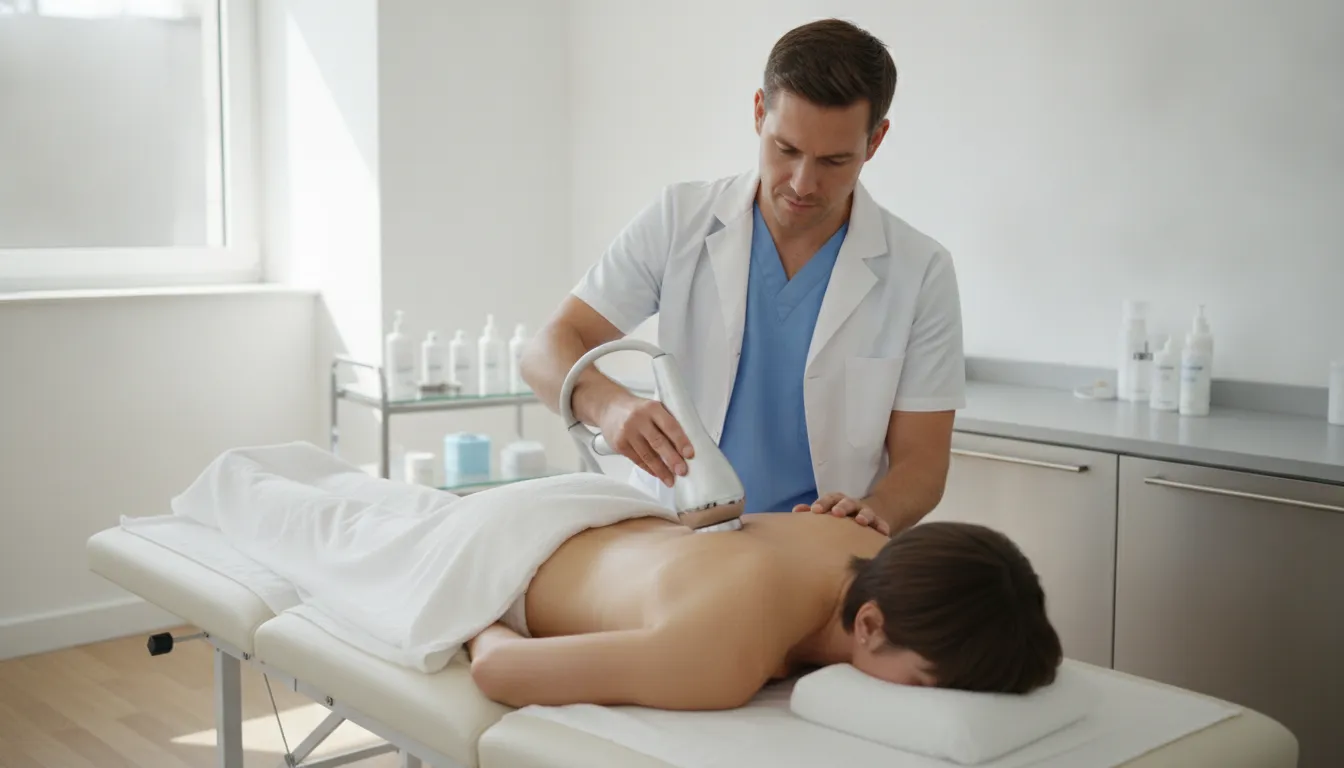
Broad-focused shockwave therapy sends an acoustic pressure wave into tissue. The force is mechanical. SoftWave produces that wave with a spark gap and a parabolic reflector, which spreads the energy across a broad area instead of concentrating it at a single point. Once the wave reaches tissue, it activates cellular receptors, supports tissue regeneration, and accelerates wound healing.
SoftWave devices carry FDA 510(k) clearances covering both musculoskeletal indications and wound care: activation of connective tissue, relief of minor muscle aches and pains, treatment of chronic diabetic foot ulcers, treatment of acute second-degree burns, and temporary improved blood supply.
What Laser Therapy Delivers at the Cellular Level
Low-level laser therapy, also called photobiomodulation, works through light absorption: red and near-infrared wavelengths are absorbed mainly by cytochrome c oxidase, an enzyme inside the mitochondria, which speeds up electron transport and, per the evidence, drives the cell to produce more ATP (Hamblin, 2018).
Dosing follows a biphasic response (Hamblin, 2018): low doses stimulate tissue, and higher doses cancel the benefit out entirely. That’s the detail worth pressing a rep on — the wavelength and dose their protocol actually runs, not just the specs printed on the unit.
Chair Time, Staffing, and Scope of Practice
How Long Do Laser Therapy Sessions Take?
Laser session length depends on the unit and the protocol, so there’s no single number to quote you. Ask the rep for the minutes their protocol takes on the exact unit they are selling you. Then count how many of those sessions fit in a day alongside everything else you book.
How Long Do Shockwave Therapy Sessions Run?
A SoftWave session for musculoskeletal indications typically runs around 5–10 minutes. Ask the rep whether 5–10 minutes is enough for the conditions you treat most often.
Who Can Legally Perform Shockwave and Laser Therapy
Who may administer a session, and under what supervision, is set by state law and the relevant state board. A clinic’s own policy can only operate within those limits, never around them. Chiropractic, physical therapy, and podiatry each answer to a different board, so shockwave and laser devices can carry different staffing rules depending on which license is running them. Before either modality goes into a staffing plan, the practice should confirm its own board’s specific rules for that device.
Can a Practice Offer Both?
What the Research Says About Running Both
For a practice running both devices, the natural question is whether to pair them in the same course of care. The 2025 meta-analysis tested shockwave against laser as separate treatments, not the two combined (Ismail Hassan et al., 2025).
The two also fit differently into a day’s schedule. A practice weighing both should refer to the IFU on how many minutes their protocol runs, then check that against the appointment slots already booked. When explaining a paired protocol to a patient, the safer approach is to name what each device is cleared to treat and promise only what the trials found for each therapy on its own.
Choosing on Practice Fit
The pooled comparison found shockwave therapy and laser therapy broadly equivalent on pain, strength, range of motion, and quality of life (Ismail Hassan et al., 2025), though the evidence behind that is graded very low to moderate certainty. Laser holds a strong published result in neck pain (Chow et al., 2009) and a short-term advantage in plantar fasciitis (Timurtaş et al., 2024). SoftWave’s broad-focused devices carry FDA 510(k) clearances spanning musculoskeletal indications and wound care, and a session runs five to ten minutes.
The decision ultimately comes down to the practice itself: the conditions seen most often, who on staff is credentialed to run sessions, and what the state board allows. Practices can look up the conditions they treat most in the clinical research and read what it takes to become a SoftWave provider. Schedule a call to work through both options against the practice’s own schedule.