Adding a new therapy platform is a clinical and operational decision, not simply an equipment purchase. Practice leaders need to assess patient and specialty fit, regulatory boundaries, staff readiness, documentation, payer requirements, and the assumptions behind any financial model.
Explore whether SoftWave TRT fits your practice by reviewing provider requirements and requesting current information from SoftWave TRT.
SoftWave TRT may fit practices seeking a non-invasive, drug-free shockwave therapy option when its documented indications, workflow, training requirements, and business case align with the practice’s clinical goals. Providers should verify applicable clearance, coverage, coding, and documentation requirements for their setting rather than assume outcomes or reimbursement.
The evaluation starts with the technology itself: what it is designed to do, which patients and specialties it may support, and how its treatment characteristics fit the way your team already delivers care.
Why Add SoftWave TRT to a Healthcare Practice?
For a healthcare practice, adding a new technology should begin with clinical fit, not a marketing promise. SoftWave TRT may be worth evaluating when a practice wants another non-invasive modality for appropriate musculoskeletal applications and has the staff, protocols, and oversight needed to use it responsibly. The Gold Li-Series Musculoskeletal platform is intended for settings such as orthopedics, regenerative medicine, physiatry, podiatry, physical therapy, and chiropractic care. That breadth does not mean the device is appropriate for every patient or condition. The decision still depends on the provider’s scope, assessment process, documented indications, and treatment plan.
What broad-focused electrohydraulic technology means
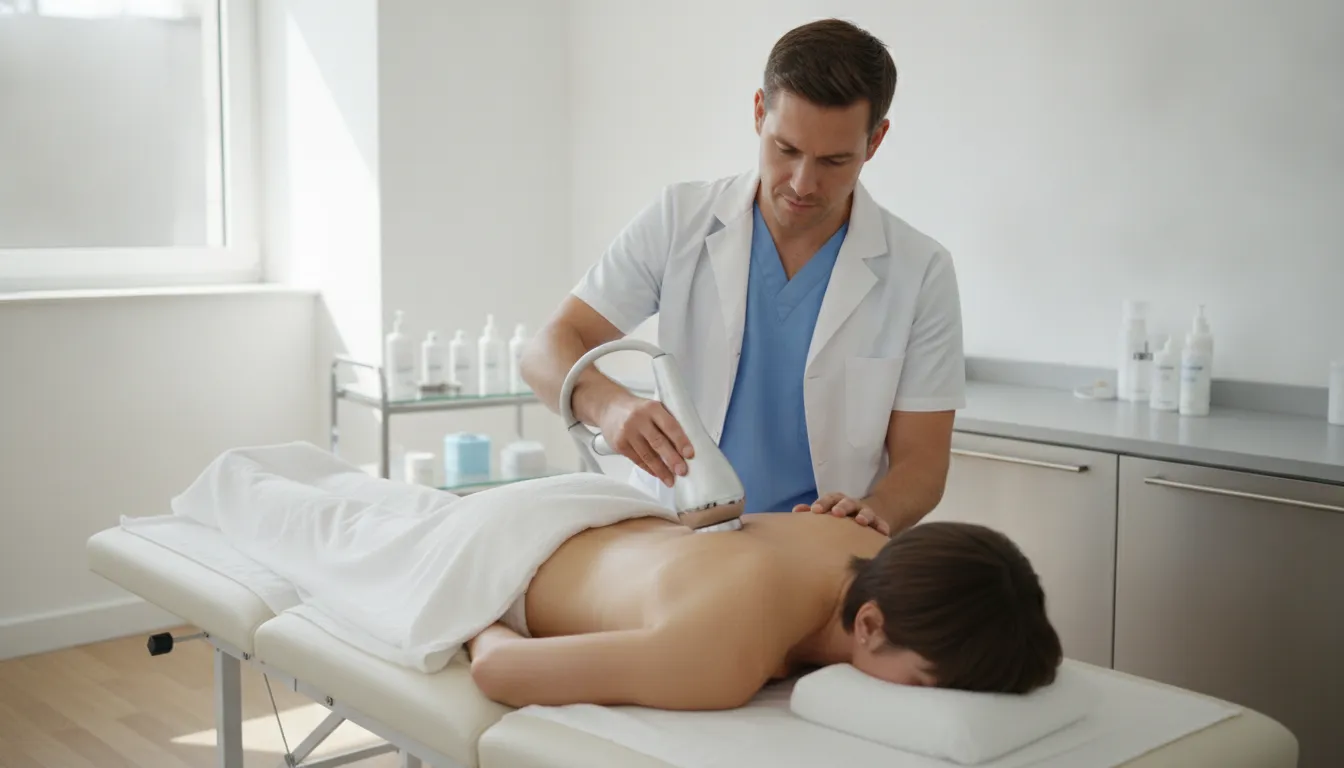
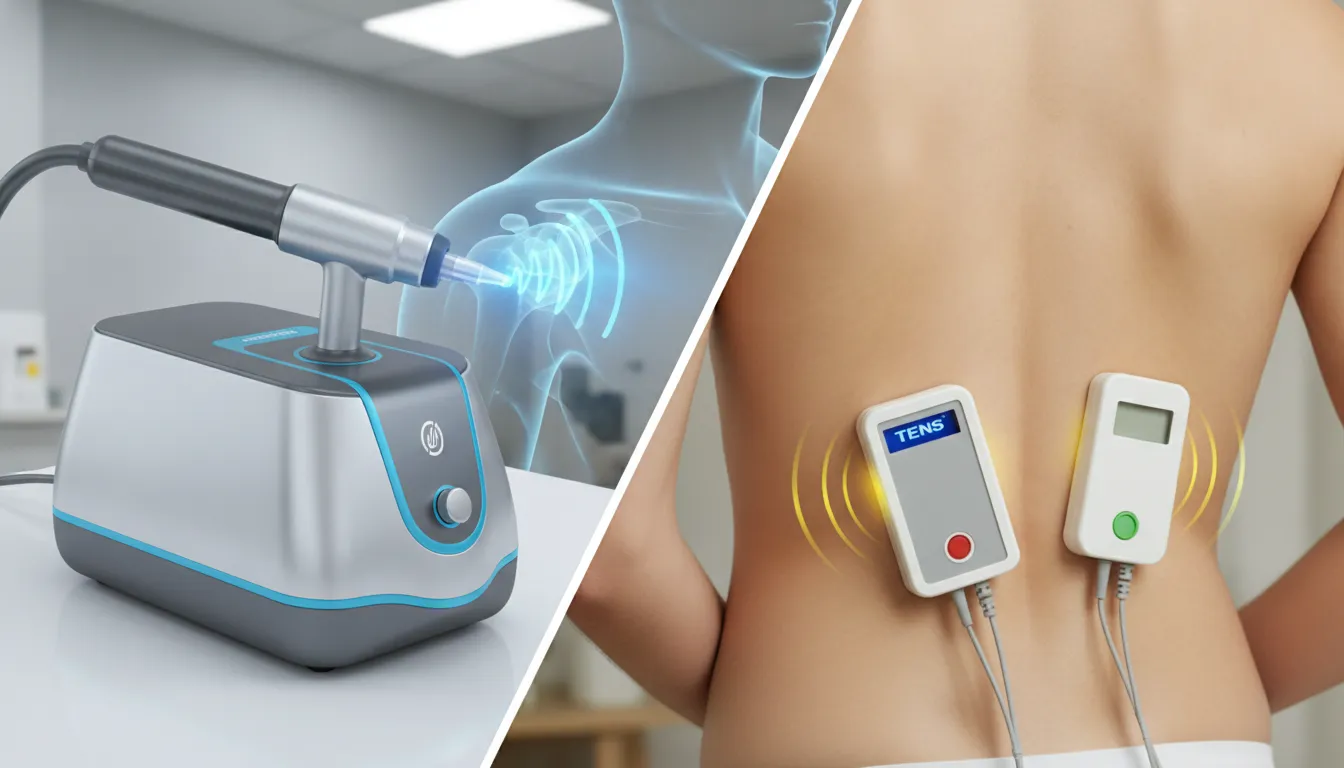
SoftWave describes its devices as using electrohydraulic shockwaves. In practical terms, an electrical discharge generates a pressure wave in a water-based system, and a reflector directs that energy toward the treatment area. SoftWave’s broad-focused design is described as creating a therapeutic zone approximately 7 centimeters wide and up to 12 centimeters deep. That is different from a narrowly concentrated focal point. It may allow a trained provider to address a broader region of tissue while still selecting energy levels and treatment parameters for the clinical context.
Patients do not experience a machine’s engineering as a clinical outcome, however. Providers must translate the technology into an appropriate evaluation, positioning strategy, protocol, and follow-up plan. A review in the National Library of Medicine describes extracorporeal shockwave therapy as a non-invasive modality used in research and practice for numerous musculoskeletal disorders. The review also explains that acoustic waves carry energy through tissue and may produce biological responses such as vascular and cellular effects. These findings support continued clinical evaluation, not a guarantee that every patient will respond or that SoftWave replaces standard care.
Where the practice-fit question matters
The most useful next step is to compare the platform’s documented capabilities with the conditions your practice already assesses, the space available, staff responsibilities, and your safety and documentation procedures. Reviewing how SoftWave technology works alongside the company’s musculoskeletal applications can help frame that discussion. A sound evaluation should also account for training, regulatory status, payer requirements, and how the modality would complement rather than displace established clinical judgment.
Which Practices and Patients May Be a Clinical Fit?
Clinical fit starts with the conditions your practice treats, the patient populations you serve, and the regulatory status of the application you are evaluating. SoftWave TRT is designed for provider settings rather than a one-size-fits-all consumer use case. Orthopedic practices, physical therapy clinics, sports medicine programs, podiatry offices, chiropractic practices, regenerative medicine providers, wound-care centers, and urology practices may each evaluate different applications, protocols, and documentation requirements.
Orthopedic practices
The Gold Li-Series Musculoskeletal platform is intended for specialties including orthopedics, regenerative medicine, physiatry, podiatry, physical therapy, and chiropractic care. These practices may consider the technology when they want to add a non-invasive modality to an existing evaluation and treatment pathway. Common clinical conversations may involve connective tissue, minor muscle aches and pains, tendon-related concerns, mobility limitations, or rehabilitation goals. The appropriate use still depends on the clinician’s assessment, patient history, contraindications, and the documented indication. Explore the full range of musculoskeletal applications before deciding whether a specific patient population is appropriate.
Regenerative medicine practices
Regenerative medicine providers can evaluate SoftWave TRT as a potential adjunct to an existing care pathway, provided the proposed use fits the provider’s scope, documented indications, and informed-consent process. The implementation question is how the modality complements assessment, rehabilitation, and follow-up, not whether it should replace other clinically indicated care.
Physical therapy practices
Physical therapy practices should map SoftWave TRT to the evaluation, movement, exercise, and reassessment process already used by the clinical team. Define which patients may be appropriate, who provides oversight, how treatment is documented, and how the modality supports rather than substitutes for the plan of care.
Podiatry practices
Podiatry teams may assess fit for foot and ankle patients by reviewing the relevant SoftWave TRT indications, contraindications, treatment workflow, and referral boundaries. A clear protocol should identify when the podiatrist reassesses the patient and when wound, vascular, or orthopedic concerns require additional evaluation.
Chiropractic practices
Chiropractic practices should evaluate SoftWave TRT within their state scope, existing examination process, and referral relationships. Adoption is strongest when the team can explain the modality accurately, select appropriate cases, coordinate it with the broader care plan, and document patient response without promising a specific result.
Concierge and direct-pay practices
Concierge and direct-pay practices may value a clearly defined patient experience, but a self-pay model does not remove clinical, regulatory, or documentation obligations. Before launch, explain what the service includes, how fees are set, what outcomes are not guaranteed, and when patients should use insurance-based or specialist care instead.
Sports medicine practices and athletic trainers
Sports medicine teams can assess fit across active patients, recreational athletes, and other individuals receiving rehabilitation or performance-related care. The relevant question is not whether a device promises the same result for every patient. It is whether the practice can select appropriate cases, set realistic expectations, coordinate treatment with exercise or rehabilitation, and monitor progress within its normal standard of care.
Wound care and dermatology
Wound-care settings require especially careful separation between an adjunctive technology and foundational treatment. SoftWave identifies FDA-cleared indications that include chronic diabetic foot ulcers and superficial partial-thickness second-degree burns. Its wound-care applications are described as adjunctive to standard care. So they should not be presented as a replacement for wound assessment, infection management, offloading, vascular evaluation, or other clinically indicated services. Providers should confirm that a proposed use fits the documented clearance parameters and their own policies.
Urology and pelvic-health applications
Urology and pelvic-health applications require a distinct regulatory discussion. The available customer documentation describes the relevant SoftWave device or use pathway as licensed in Canada, not FDA cleared for the same use in the United States. A Canadian device license should not be used to describe a U.S. indication. Practices considering these applications should verify the exact model, jurisdiction, device labeling, local requirements, patient-selection criteria, and professional oversight before incorporating them into care.
Across every specialty, a responsible evaluation includes clinical evidence, staff training, safety procedures, documentation, and an honest explanation of what is known and what remains dependent on individual circumstances. The specialty applications overview can help practices compare the areas that may align with their services, while final decisions should remain within clinician judgment and applicable regulations.
What Does Implementation Look Like in Practice?
Implementation is less about adding a device to a treatment room and more about building a repeatable clinical process around it. The practice should decide where SoftWave TRT fits, who prepares the patient, which clinician provides oversight, and how each treatment is documented before the first patient is scheduled. A practical sequence can look like this:
- Choose the clinical setting and equipment location. Start with the specialties, indications, and patient populations the practice intends to serve. Place the device where staff can maintain privacy, position patients safely, access the treatment area without disrupting adjacent care, and complete documentation promptly. Review the available SoftWave device platforms against the intended applications, room layout, and existing equipment.
- Map the patient journey. Define how a patient moves from evaluation and informed discussion to positioning, treatment, reassessment, and follow-up. The process should make clear when a qualified provider evaluates clinical appropriateness and when trained staff may assist with an established protocol. SoftWave describes typical musculoskeletal sessions as taking 5-10 minutes and requiring no anesthesia, but actual scheduling should reflect the practice’s assessment, positioning, cleaning, documentation, and follow-up requirements.
- Assign trained roles and provider oversight. Identify the supervising provider, authorized operators, and a backup plan for coverage. On-site onboarding is described as covering setup, operation, patient positioning, energy selection, protocols, and safety for the full staff. Delegation should remain consistent with applicable state rules, organizational policies, scope of practice, and the provider’s clinical judgment. Staff should know when to pause treatment and escalate a question or unexpected response.
- Standardize treatment and safety documentation. Build condition-specific workflows that record the clinical assessment, treatment area, protocol, energy selection, relevant patient response, and follow-up plan. Dose should be adapted to the clinical context. An academic review cautions that exceeding an appropriate dose may cause structural injury, which is why protocols and provider oversight matter. Do not treat documentation as a billing formality; it should show the rationale for care and support continuity across visits.
- Rehearse the workflow before launch. Have the team walk through setup, patient positioning, treatment timing, charting, equipment care, and emergency escalation. Confirm who prepares the room and who verifies completion. Then monitor the first cases for bottlenecks, missed documentation, patient questions, or safety concerns, and refine the process without changing clinical protocols casually.
- Plan ongoing support and review. Use available training resources, condition-specific protocols, and provider materials to keep onboarding consistent as staff changes. Before committing, practices can learn how to become a SoftWave provider and clarify training, oversight, documentation, and implementation expectations with the company.
How Does SoftWave Provider Training Support Adoption?
Adoption is more sustainable when training reaches the people who will actually prepare the room, position patients, operate the system, document care, and communicate with the treating provider. SoftWave TRT describes onboarding as on-site training for the full staff, rather than a single demonstration for one buyer. That approach gives a practice the opportunity to build a shared workflow before the device becomes part of routine care.
Training connects operation to clinical decision-making
Core onboarding covers setup and operation, patient positioning, energy selection, treatment protocols, and safety procedures. These are not interchangeable steps. Positioning affects how the intended treatment area is approached, while energy selection and protocol choice should reflect the patient, condition, treatment goals, and the provider’s clinical judgment. The academic literature on extracorporeal shockwave therapy also emphasizes that differences in energy flux density, impulse count, device type, treatment frequency, session number, and analgesia can contribute to variation in clinical practice and study results. Practices should therefore use training to establish consistent protocols, then apply them within the scope of their own clinical standards and applicable requirements.
Safety education is particularly important when responsibilities are distributed across a team. Clinical safety education should emphasize that treatment parameters must be adapted to the tissue, patient, and clinical context. Staff should understand the approved protocol, relevant contraindications and precautions, escalation points, and when a treating provider must reassess the patient. This supports a measured implementation model and avoids attributing a universal dose or outcome to every patient.
Ongoing resources help the team keep learning
Initial training is only one part of adoption. SoftWave provides on-demand advanced training videos, condition-specific protocols, and a provider portal that staff can use as questions arise or as the practice expands into additional applications. Marketing materials and a Jumpstart Kit are also described as part of the provider support model. These resources can help a practice organize education for new team members and reinforce a common process instead of relying on informal peer instruction.
Delegating portions of treatment to trained staff may support workflow efficiency where permitted, but delegation does not transfer clinical accountability. The responsible provider should establish protocols, confirm that staff are trained and competent, oversee treatment, and make patient-specific decisions. The practice should also confirm local scope-of-practice rules, documentation expectations, and regulatory requirements before assigning duties.
For practices evaluating the training pathway, the become a SoftWave provider page is the appropriate next step for reviewing implementation and support details.
What Should Providers Know About Reimbursement and Compliance?
Reimbursement planning should be treated as a diligence process, not a promise attached to the device. SoftWave provides reimbursement support that may include CPT code guidance, sample letters of medical necessity, and appeal templates for denied claims. Those resources can help a practice organize its approach, but they do not determine whether a particular payer will cover a service or pay a claim.
Verify payer rules and documentation requirements
Before adding SoftWave TRT to a billable workflow, identify the payers and patient populations the practice actually serves. Confirm current coverage policies, applicable coding guidance, prior authorization requirements, eligibility rules, and documentation expectations for each setting. Payer policies can differ by plan, state, specialty, and indication, so a code or successful claim in one environment should not be treated as evidence of universal coverage.
Build documentation around the clinical rationale for treatment. Depending on the indication and payer, the record may need to show the patient assessment, diagnosis, prior or concurrent care, treatment parameters, response tracking, and medical necessity. Providers should also establish an internal process for reviewing claims, responding to denials, and updating protocols when payer guidance changes. Independent verification by the practice’s billing and compliance team remains essential.
Keep U.S. indications separate from other regulatory pathways
In the United States, the exact SoftWave model and its cleared scope must guide both clinical use and marketing language. SoftWave identifies FDA-cleared indications that include activation of connective tissue, temporary relief of minor muscle aches and pains, temporary increases in local blood circulation, chronic diabetic foot ulcers, and superficial partial-thickness second-degree burns. The FDA’s 510(k) record for the OW100S, for example, identifies an extracorporeal shock wave device for treatment of diabetic foot ulcers and records a substantially equivalent decision: FDA 510(k) record K233937. Providers should confirm that the model, indication, patient population, and intended use they are evaluating match current U.S. labeling before making clinical or promotional claims.
Wound-care use should remain adjunctive to standard care, with diabetic foot ulcer treatment limited to the documented clearance parameters. Urology and pelvic-health applications are identified as Health Canada licensed in the available materials, not FDA cleared in the United States. That distinction matters when selecting indications, training staff, preparing patient communications, and evaluating whether a service fits local requirements. A careful review with the practice’s compliance adviser, coding team, and relevant payer contacts should precede launch.
How Should a Practice Evaluate the Business Case?
A sound business case for SoftWave TRT starts with clinical and operational fit, not a projected payback period. The relevant question is whether the technology can be integrated into your current services, staffing model, patient population, and compliance process while creating a clearly defined option for appropriate patients. That evaluation should include clinical differentiation, workflow, staff adoption, demand generation, reimbursement diligence, and the total cost of ownership.
Begin by mapping the intended use cases to your documented indications, specialty scope, and existing protocols. Then review the SoftWave device platforms with your clinical and operations teams. Features such as SmartTrode electrodes designed for longevity and a closed-loop, self-regulating water system may be relevant to maintenance planning. But they should be assessed alongside training, service, consumables, room utilization, and staff time.
| Area | Questions for the practice | Evidence to gather |
|---|---|---|
| Clinical fit | Which documented indications and patient pathways fit our specialty? | Protocols, regulatory documentation, clinician review, and patient-selection criteria |
| Workflow | Who will deliver treatments, under what oversight, and how will visits fit the schedule? | Room capacity, staffing plan, training requirements, treatment time, and safety procedures |
| Financial exposure | What investment and ongoing costs can the practice support before demand is established? | Current quote, financing terms, service needs, consumables, and conservative demand scenarios |
| Demand and support | How will appropriate patients learn about the service and find the practice? | Marketing plan, referral relationships, staff education, and the SoftWave provider directory |
Device investment depends on the configuration, implementation needs, and commercial terms for the practice. Treat any general estimate as a starting point, not a quote. For current details, review SoftWave pricing and ROI information and request practice-specific terms.
Finally, model at least three scenarios: slower-than-expected adoption, an expected implementation case, and demand that exceeds initial capacity. Keep assumptions visible, including eligible patient volume, scheduling availability, staffing, payer rules, documentation, and patient payment policies. Do not treat the provider directory or marketing support as a guarantee of referrals, revenue, or return. A defensible decision is one that remains reasonable even when those assumptions are tested.
What Questions Should a Provider Ask Before Buying?
A purchase decision should connect the device to your clinical scope, operating model, and compliance responsibilities. Before discussing terms, ask:
- Clinical fit: Which conditions and patient populations will we address, and does the platform match our specialty, treatment space, and existing care pathways? Review the documented musculoskeletal applications and define where the technology complements, rather than replaces, standard care.
- Regulatory scope: Which indications are FDA cleared for our setting, and what claims can our clinicians and marketing team make? Wound-care use is adjunctive to standard care, while urology and pelvic-health applications are identified as Health Canada licensed, not FDA cleared in the United States. Confirm the current documentation before building protocols or patient materials.
- Workflow and staffing: Where will treatment occur, who will operate the equipment, and what provider oversight is required? Ask how setup, patient positioning, energy selection, safety procedures, and documentation will fit into a normal visit. SoftWave describes typical musculoskeletal sessions as 5 to 10 minutes, but your staffing and scheduling model should be tested locally.
- Training: What does initial and continuing education include? Confirm whether the full team receives training, how condition-specific protocols are maintained, and where staff can access advanced instruction and support.
- Reimbursement: Which CPT codes, payer policies, prior-authorization rules, and documentation standards apply to our patients? Reimbursement guidance and sample appeal materials may be available, but verify coverage and coding independently with each relevant payer.
- Patient communication: What can we explain accurately about expected experience, alternatives, limitations, and evidence? Build education around qualified statements, not guaranteed pain relief, healing, or financial results.
- Maintenance and measurement: What consumables, service requirements, warranty terms, and downtime support apply? Also decide how you will track safety, treatment completion, patient-reported outcomes, referrals, and operational impact before launch. Review the available SoftWave device platforms and ask which configuration supports those measures.
Finally, request current commercial terms rather than relying on a generic online estimate. A disciplined review gives your clinical, compliance, and finance stakeholders the same decision record.
Request current SoftWave TRT provider information before you make a purchase decision, and bring your clinical, compliance, and finance questions to the evaluation.
Frequently Asked Questions
Which practices are a good clinical fit?
SoftWave TRT may fit orthopedic, physical therapy, sports medicine, podiatry, regenerative medicine, physiatry, chiropractic, wound-care, and other practices whose patient populations align with the device’s documented indications. The decision should account for scope of practice, patient selection, existing protocols, staffing, and the level of provider oversight your setting can maintain.
How should a practice evaluate regulatory fit?
Start with the specific indication, patient population, and jurisdiction rather than treating every application as interchangeable. SoftWave identifies U.S. FDA clearances for documented uses including connective-tissue activation, minor muscle aches and pains, temporary local blood-circulation increase, certain chronic diabetic foot ulcers, and superficial partial-thickness second-degree burns. Wound care remains adjunctive to standard care, and urology and pelvic-health applications are identified as Health Canada licensed, not FDA cleared.
What training does a new provider need?
Implementation should include training for the full team on setup, operation, patient positioning, energy selection, protocols, and safety. SoftWave also describes on-demand advanced training videos, condition-specific protocols, and a provider portal. Practices should define who may deliver treatment, when a clinician must be involved, and how competency and ongoing protocol adherence will be documented.
Will insurance reimburse SoftWave treatments?
Coverage and coding depend on the payer, indication, documentation, jurisdiction, and clinical setting. SoftWave provides CPT-code guidance, sample letters of medical necessity, and appeal templates, but providers must independently verify current payer rules, coding requirements, authorization needs, and patient financial responsibility before representing a treatment as covered.
How much should a practice budget for the device?
Device investment depends on the configuration, training and implementation needs, staffing, utilization assumptions, maintenance, payer mix, and patient demand. Request current commercial terms and build a practice-specific model. Do not assume a guaranteed return or reimbursement outcome.
Ready to Evaluate a Fit for Your Practice?
Adding SoftWave TRT requires a thoughtful review of clinical applications, workflow, training, and reimbursement considerations. To evaluate whether the technology aligns with your practice and request provider information, become a SoftWave provider.