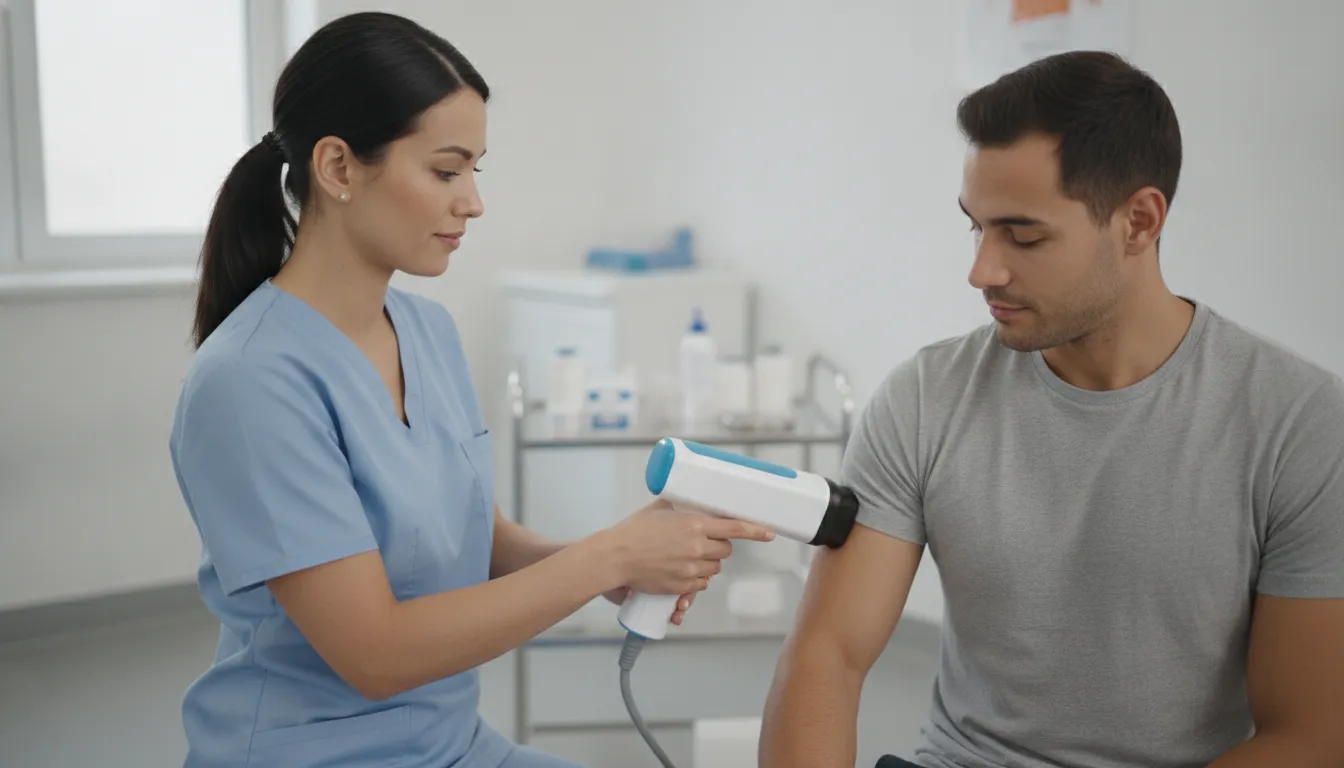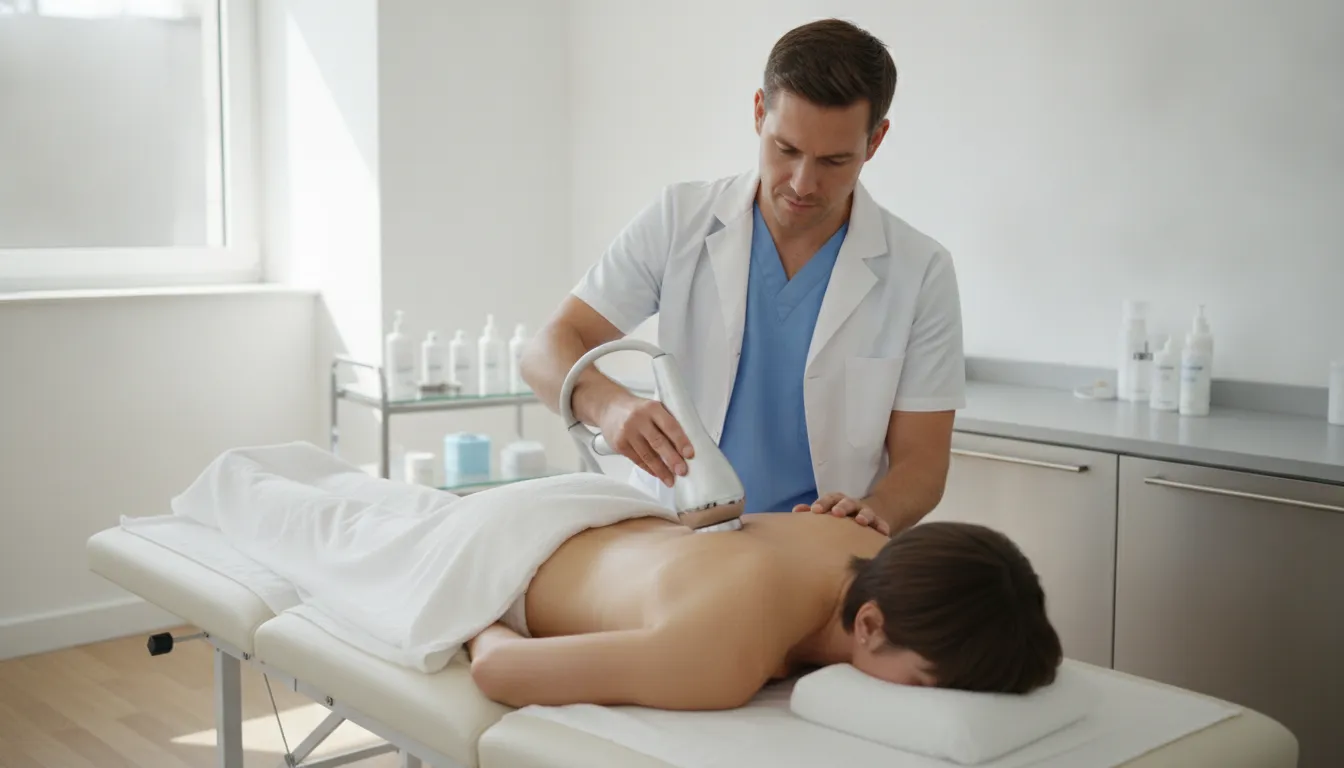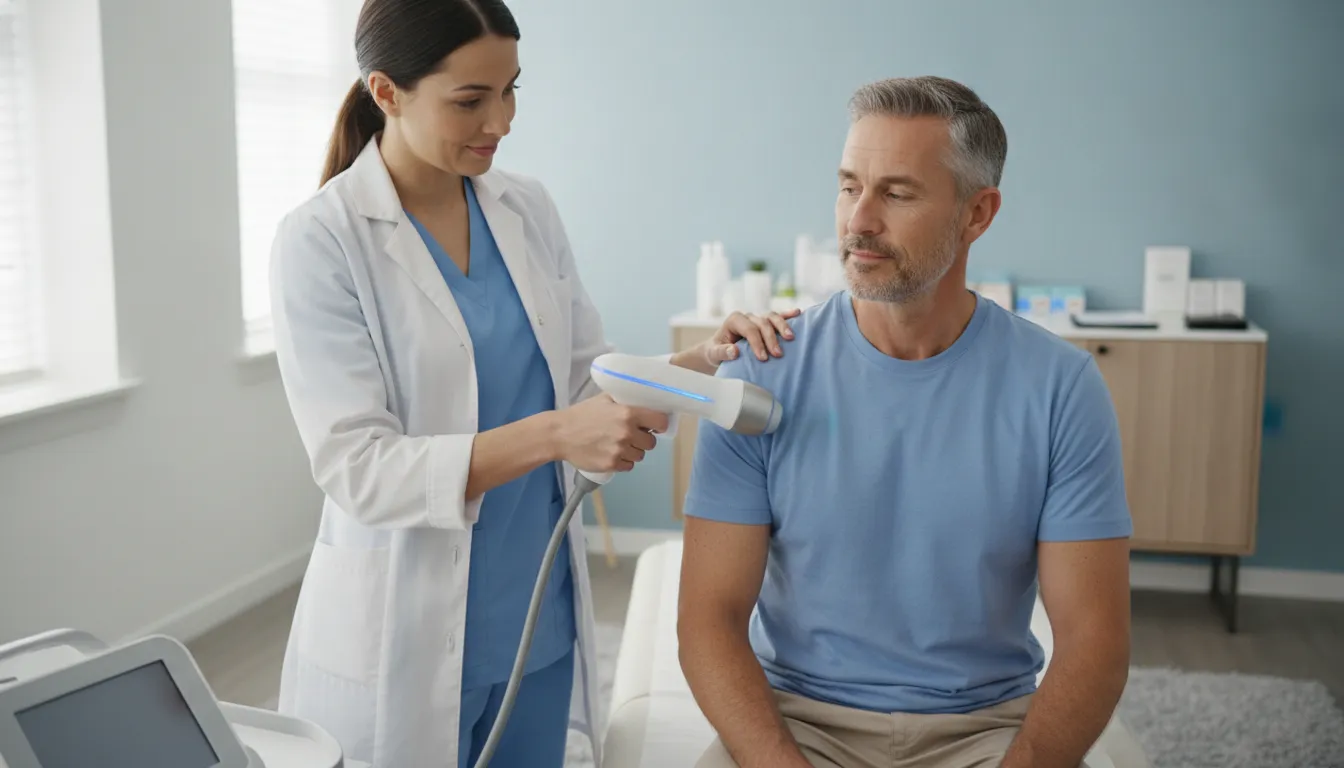
Shockwave therapy is not simply a stronger form of massage or electrical stimulation. It uses acoustic energy to interact with tissue. The way a device generates and delivers that energy is central to its clinical and regulatory profile.
Electrohydraulic shockwave therapy uses a high-voltage underwater discharge to create a plasma bubble and pressure wave, then focuses that wave into a defined therapeutic zone. The resulting mechanical stimulus may support cellular signaling, local circulation, and tissue responses, but FDA 510(k) clearance remains specific to the device and its intended uses.
Understanding the technology requires separating true shockwaves from radial pressure waves, then connecting the physical process to mechanotransduction, clinical evidence, and outcomes tracking. The distinction begins with how the wave is produced and what happens as it enters tissue.
What Is Electrohydraulic Shockwave Therapy?
Electrohydraulic shockwave therapy is a noninvasive treatment that uses acoustic shockwaves to deliver mechanical energy into targeted tissue. In an electrohydraulic system, a high-voltage discharge underwater creates a rapidly expanding plasma bubble. That expansion generates a pressure wave, which is shaped and directed by the device applicator before it reaches the treatment area.
The term can be confusing because several types of acoustic-wave devices are often grouped under the broader label extracorporeal shockwave therapy. The underlying physics matters. It helps clinicians and patients understand what a device produces, how energy is delivered, and which claims are appropriate for a specific system.
True shockwaves and radial pressure waves are different
A true focused shockwave has a rapid rise in pressure, a high peak pressure, and a short duration. Focused shockwaves can be generated by electrohydraulic, electromagnetic, or piezoelectric devices. Their maximum force occurs at a particular depth determined by the device, applicator, and tissue characteristics. The medical literature describes focused shockwave therapy as an acoustic intervention that can produce cellular responses through mechanotransduction, meaning that cells convert mechanical signals into biochemical activity. A peer-reviewed review of shockwave mechanisms discusses these responses in musculoskeletal regenerative medicine.
Radial pressure waves are produced differently. In a typical radial system, a projectile strikes an applicator and creates a pressure wave that spreads outward from the treatment tip. Radial pressure waves may be clinically useful, but they do not have the same physical waveform as a true shockwave. The ISMST overview of shockwave physics describes the electrohydraulic process and its distinct pressure-wave behavior.
This distinction does not mean that one approach is automatically appropriate for every condition or patient. Treatment decisions depend on the device, intended use, treatment parameters, clinical assessment, and available evidence. Electrohydraulic shockwave therapy should therefore be discussed in precise terms rather than treated as a generic synonym for every pressure-wave treatment. The next step is understanding how the electrohydraulic generator creates and delivers its therapeutic field.
How Electrohydraulic Shockwaves Are Generated and Delivered
| Wave type. | How it is generated. | Key physical distinction. |
|---|---|---|
| Electrohydraulic focused or broad-focused. | Underwater electrical discharge forms a plasma bubble. | True shockwave shaped by a reflector. |
| Electromagnetic or piezoelectric focused. | Electrical energy moves a membrane or crystals. | Focused acoustic field with device-specific properties. |
| Radial pressure wave. | Projectile strikes an applicator. | Pressure wave, not the same waveform as a true shockwave. |
Electrohydraulic shockwave therapy begins with a controlled electrical event inside a water-filled applicator. A high-voltage discharge passes between electrode tips, rapidly vaporizing a small amount of water and forming a plasma bubble. As that bubble expands, it compresses the surrounding water and produces a fast acoustic pressure wave. This is different from a pneumatic radial pressure wave, which is created when a projectile strikes an applicator. The International Society for Medical Shockwave Treatment describes the electrohydraulic process as a spark-generated spherical wave that is redirected by a reflector.
The underlying physics help explain why device design matters. A true shockwave is characterized by a rapid change in pressure, a short rise time, and a broad frequency range. Focused shockwave devices can use electrohydraulic, electromagnetic, or piezoelectric generation methods, but these systems do not produce identical waveforms or treatment fields. Focused shockwaves have high peak pressure and short duration. Their maximum force occurs at a device-dependent depth influenced by the applicator and tissue characteristics.
From a plasma bubble to an acoustic treatment field
In an electrohydraulic system, the initial wave spreads outward from the discharge point. A shaped reflector then redirects the acoustic energy. Conventional focused systems concentrate the wave toward a defined focal region. SoftWave uses a parabolic and ellipsoidal reflector design intended to create a broad-focused therapeutic zone rather than a narrow point. The SoftWave knowledge base describes this field as approximately 7 centimeters wide and up to 12 centimeters deep. Those dimensions are device and application descriptions, not a guarantee that energy reaches the same tissue location or produces the same response in every person.
Clinical delivery also depends on how the provider positions the applicator, selects treatment parameters, and accounts for anatomy, tissue density, the intended use, and the patient’s condition. The goal is not simply to send energy as deeply as possible. It is to apply an appropriate acoustic stimulus to the relevant treatment area while staying within the device’s instructions and the provider’s clinical judgment. Learn more about SoftWave electrohydraulic technology and how its broad-focused approach is described.
Why the applicator is part of the treatment system
The generator creates the pulse, but the applicator influences how that pulse is shaped and delivered to tissue. Reflector geometry, coupling at the skin surface, contact angle, and selected settings can affect the resulting field. Providers evaluating a device should therefore review technical documentation alongside clinical evidence. The OP155 applicator specifications provide device-level information without replacing training or patient-specific assessment.
Once acoustic energy enters tissue, mechanical forces may initiate cellular signaling processes known as mechanotransduction. That downstream biology is an area of ongoing research. The physical generation of a shockwave explains how the stimulus is produced, but it does not by itself establish an outcome for every condition or patient.
How Mechanotransduction Connects Acoustic Energy to Tissue Response
Mechanotransduction is the process through which physical force is converted into biochemical signals at the cellular level. When an acoustic wave enters tissue, its mechanical energy can interact with cell membranes, extracellular structures, and mechanosensitive receptors. Those interactions may alter how cells communicate, migrate, proliferate, and organize the surrounding matrix. The proposed response is therefore more than a local physical effect. It is a sequence of biological signals that may influence tissue behavior over time.
From mechanical stimulus to cellular signaling
Focused shockwave therapy applies acoustic energy through the skin. Research describes mechanotransduction as a pathway associated with changes in cell activity, pain signaling, vascular response, and tissue repair processes. A 2020 review of extracorporeal shockwave therapy discusses effects including vascularization, protein biosynthesis, cell proliferation, neuroprotection, chondroprotection, and changes involving calcium deposits. These findings help explain why researchers continue to study acoustic waves in musculoskeletal medicine. But they do not establish that every patient or condition will respond in the same way. Read the peer-reviewed mechanism review for its scope and limitations.
Vascular and cellular responses
One area of interest is angiogenesis, the formation of new blood vessels. Mechanical stimulation may affect signaling pathways involved in vascular growth and local circulation. Other proposed responses include recruitment or activation of progenitor cells, changes in protein production, and increased cellular migration. Research overviews describe mechanotransduction alongside cell proliferation, migration, increased neovascularization, and osteoprogenitor differentiation. These mechanisms are biologically plausible explanations for the way acoustic energy may support a tissue environment involved in repair. They are not a guarantee of new tissue formation or symptom improvement.
Inflammation and remodeling
Inflammation is not simply an on-or-off process. It is part of the body’s response to tissue stress, and its timing and intensity can affect remodeling. Acoustic stimulation is being investigated for its potential to modulate inflammatory signaling and influence extracellular matrix organization. Remodeling may include changes in how collagen and other structural proteins are produced and arranged. These effects depend on factors such as the tissue involved, the treatment parameters, the underlying condition, and the individual’s biology.
For clinicians, the practical point is to connect the proposed mechanism with an appropriate assessment and treatment plan. Mechanotransduction may help explain why electrohydraulic shockwave therapy is studied across musculoskeletal applications, but mechanism alone is not proof of a clinical outcome. Patient selection, indication-specific evidence, device parameters, and follow-up measurements remain important when evaluating whether a treatment is appropriate.
What Does FDA 510(k) Clearance Mean for SoftWave?
For a medical device. FDA 510(k) clearance means the manufacturer has demonstrated that the device is substantially equivalent to a legally marketed predicate device for a specified intended use. It is a regulatory determination about a device, its indications, and the conditions under which it may be used. It is not a blanket statement that every application of electrohydraulic shockwave therapy is proven effective.
That distinction matters when interpreting SoftWave’s regulatory status. The U.S. Food and Drug Administration uses different terms for different regulatory actions. Clearance through the 510(k) pathway is not the same as approval, which generally refers to a different and more demanding pathway for certain products. It is also not the same as FDA registration. Registration identifies a facility or device listing in the FDA system; it does not, by itself, establish that a particular clinical use has been cleared.
Clearance is tied to intended use and treatment parameters
SoftWave’s documented Class I indications include activation of connective tissue, relief of minor muscle aches and pains, and a temporary increase in local blood circulation. These categories describe intended uses, not guarantees of a particular result for every patient or condition. The device, applicator, energy settings, treatment technique, and clinical context all matter when a provider determines whether a use fits the cleared indication.
SoftWave also has documented Class II clearances for chronic diabetic foot ulcers and superficial partial-thickness second-degree burns. Those uses involve defined parameters and standard-care requirements. A clearance for a wound-care indication should not be generalized to every type of wound. Nor should it be interpreted as evidence that the same treatment approach is appropriate for all injuries or diagnoses.
The practical takeaway is that FDA clearance provides an important regulatory boundary, but it does not replace clinical judgment, patient evaluation, or evidence review. Providers should match the device and protocol to the patient, the treatment goal, and the applicable intended use. Patients should ask which indication is relevant to their situation and how the provider plans to monitor care.
For the documented regulatory details and the specific clearance announcement related to circulation, minor aches and pains, and connective-tissue activation, review SoftWave’s SoftWave FDA clearances. This page should be read alongside current device information and clinical evidence, rather than as a substitute for either.
What Does the Clinical Research Show?
The research on extracorporeal shockwave therapy is broad, but it is not one undifferentiated body of evidence. Studies vary by generator technology, energy settings, treatment site, protocol, patient population, and outcome measure. For that reason, a responsible review should explain what a study tested before applying its findings to a particular patient or practice.
A peer-reviewed review in the Journal of Clinical Orthopaedics and Trauma describes shockwaves as acoustic waves that carry energy through tissue. It discusses reported biological responses that include vascularization, protein biosynthesis, cell proliferation, neuroprotection, chondroprotection, and changes involving calcium deposits. These findings help explain why researchers have investigated shockwave applications across orthopedics, traumatology, and problematic soft-tissue wounds. They do not mean that every condition responds in the same way.
Clinical studies also illustrate why outcomes must be read in context. The SoftWave clinical materials cite a prospective randomized burn study that reported mean epithelialization of 9.6 +/- 1.7 days with ESWT compared with 12.5 +/- 2.2 days in the control group. With p<0.05. That is a result from a specific study population and protocol. It is not a guarantee that an individual wound will heal within a particular time frame, and it does not replace wound assessment or standard care.
How to read the SoftWave research library
For providers, the most useful questions are practical: What device and waveform were used? What was the intended use? How many participants were included? Was there a comparator? Which outcomes were measured, and for how long? Were the results statistically significant and clinically meaningful? These questions make a research library more useful than a publication count alone.
SoftWave maintains a SoftWave research library that brings together evidence related to its technology and clinical applications. Narrow studies should remain narrow. For example, research on bone defects treated with particulate allografts can inform a discussion of bone-repair research. But it should not be presented as evidence for every musculoskeletal condition.
Evidence is strongest when research findings, the device’s cleared intended use, the provider’s clinical judgment, and patient-reported or measured outcomes are considered together. That approach keeps electrohydraulic shockwave therapy grounded in inquiry rather than promises.
How Outcomes Tracking Supports Evidence-Based Practice
- Define the condition, treatment goal, and outcome that matters before treatment.
- Record a consistent baseline using an appropriate clinical or patient-reported measure.
- Document treatment details and review follow-up findings in context.
- Use the pattern of results to support a clinical discussion, not to promise a future response.
Evidence-based practice depends on more than a plausible mechanism or a positive conversation after treatment. It combines clinical expertise, relevant research, patient preferences, and observations from actual care. For providers using electrohydraulic shockwave therapy, outcomes tracking can add structure to that process without turning a record of patient experiences into a promise of effectiveness.
SoftWave describes DataBiologics as a real-world outcomes tracking resource. A provider may use this type of system to document the condition being addressed, establish a baseline, record treatment details, and follow changes over time. Depending on the application and the provider’s protocols, tracked measures may include pain intensity, functional limitations, mobility, wound status, activity tolerance, or patient-reported progress. The appropriate measures should match the clinical question rather than be selected simply because they are easy to collect.
Baseline and follow-up measures create context
A baseline gives the provider a reference point before treatment begins. Without it, a later report such as “feels better” can be meaningful to the patient but difficult to interpret consistently. Follow-up measures can show whether symptoms, function, or other relevant findings changed, remained stable, or fluctuated. They can also help identify differences between a patient’s initial goals and the outcomes that matter most in daily life.
These observations do not eliminate uncertainty. A patient’s progress may reflect multiple treatments, changes in activity, natural variation, or other aspects of care. Outcomes data should therefore support a broader clinical discussion, not replace examination, informed consent, medical judgment, or appropriate standard care. It may help a provider ask better questions and make more informed adjustments, but it cannot guarantee a particular response for the next patient.
Recording the workflow helps set practical expectations
SoftWave’s general descriptions place many musculoskeletal sessions in the range of 5 to 10 minutes, with common protocols involving 3 to 5 weekly sessions. These are general workflow descriptions, not a universal prescription. Session length and treatment frequency can vary with the condition, treatment area, patient presentation, and the provider’s clinical plan. Wound-care sessions may take longer, with the customer knowledge base describing sessions of up to 15 minutes.
Providers can use outcomes tracking alongside the musculoskeletal applications and wound-care applications they offer to keep measurement tied to the intended use. The goal is a disciplined feedback loop: define what matters, measure it consistently. Discuss the findings with the patient, and interpret them within the limits of the available evidence.
Frequently Asked Questions
How long does a typical shockwave treatment take?
A typical musculoskeletal session is generally described as 5 to 10 minutes, although timing depends on the treatment area, protocol, and clinical assessment. Wound-care sessions may take up to 15 minutes. A provider determines the appropriate schedule; common musculoskeletal protocols involve 3 to 5 weekly sessions, but treatment plans are not identical for every patient. Musculoskeletal applications may involve different goals and measures than wound-care applications.
Is electrohydraulic shockwave therapy uncomfortable or does it have downsides?
Sensation varies by treatment area, energy level, and individual tolerance. Temporary redness, swelling, or soreness may occur, so the treating clinician should review expected responses and relevant health history before treatment. The therapy is non-invasive, but that does not make it appropriate for every person or every condition. Discuss contraindications, treatment goals, and other care options with a qualified provider rather than assuming that a device’s clearance applies to your specific diagnosis.
Can a patient buy and use a shockwave therapy device at home?
These devices are medical technology, and safe use depends on selecting the right indication, applicator, parameters, and treatment location. A patient should not assume that owning a device replaces a clinical evaluation or training. Providers also need to follow the device’s intended use and applicable regulatory requirements. For questions about professional adoption, SoftWave provides information for those considering how to become a SoftWave provider.
Does FDA 510(k) clearance mean the therapy will work for every condition?
No. FDA 510(k) clearance is specific to a device and its intended use, and it is not proof of effectiveness for every condition. SoftWave’s recorded Class I indications include connective-tissue activation, relief of minor muscle aches and pains, and a temporary increase in local blood circulation. Class II clearances include certain chronic diabetic foot ulcers and superficial partial-thickness second-degree burns under defined parameters and standard care requirements. Clinical research and individual clinical judgment remain important when considering care.
Ready to Explore SoftWave as a Provider?
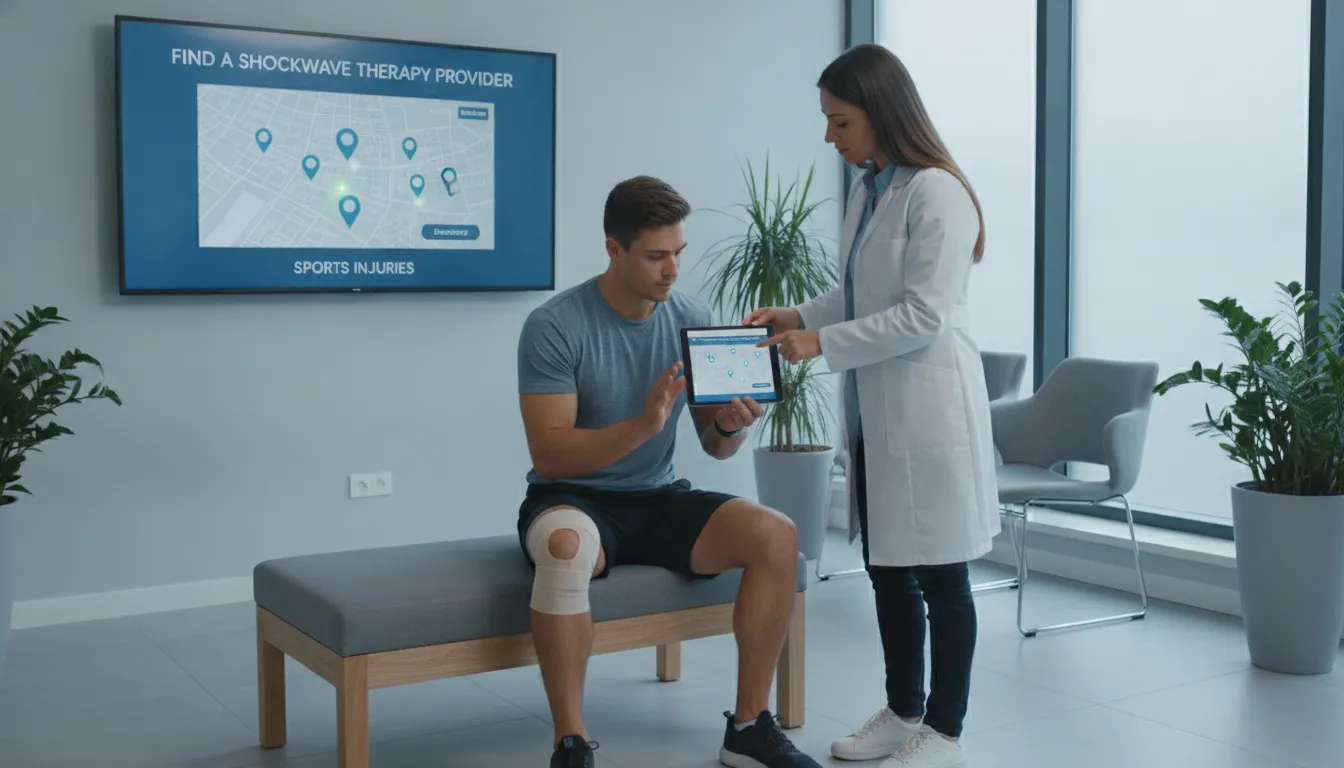
Understanding the technology, clearance boundaries, and outcomes data can help you evaluate whether SoftWave fits your clinical goals and patient conversations. Providers can learn how to become a SoftWave provider and review the next steps. Patients should use the SoftWave provider directory to find a clinic for an individualized discussion about their needs and available options.