 Summarize with ChatGPT
Piezowave therapy is a non-invasive shockwave modality used in musculoskeletal and regenerative medicine to treat chronic pain, soft tissue injuries, and certain vascular conditions. As shockwave technologies continue to evolve, understanding how systems differ in wave generation, treatment depth, and energy distribution has become essential for clinical decision-making. These variables directly influence how effectively energy reaches target tissue, how patients experience treatment, and how efficiently providers can deliver care.
We explore what piezowave therapy is, how piezo wave therapy works, where it is used clinically, and how it compares to other shockwave technologies available in modern practice.
What Is Piezowave Therapy?
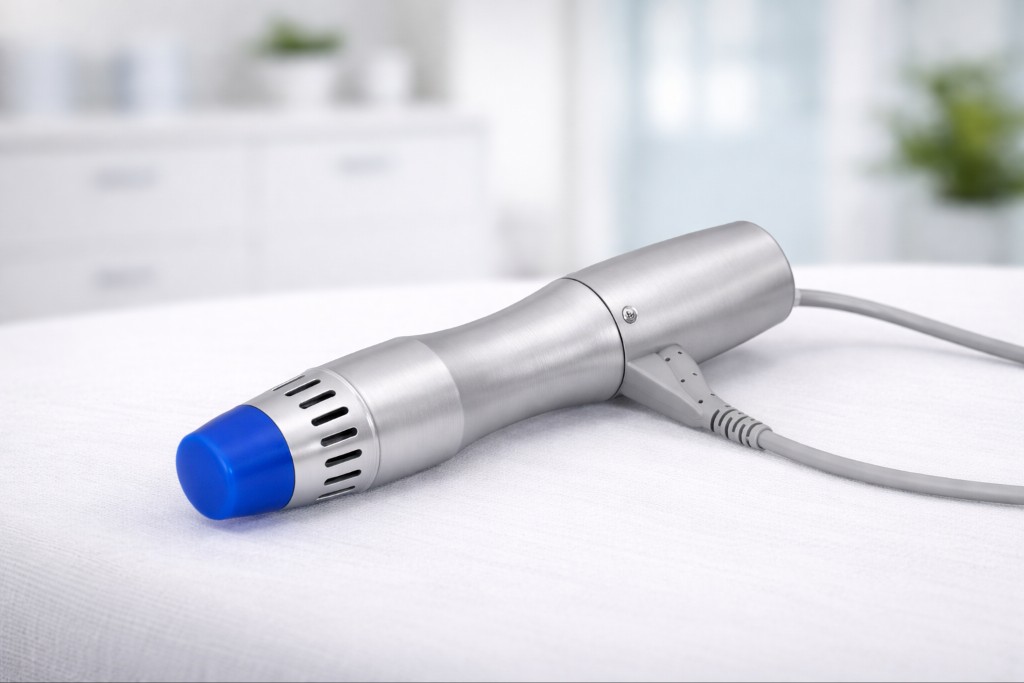
Piezowave therapy is a focused extracorporeal shockwave therapy system that uses piezoelectric crystals to generate high-energy acoustic pulses. When electrical current is applied, these crystals rapidly change shape, producing shockwaves that naturally converge at a predefined focal point.
This self-focusing mechanism allows the system to deliver energy with a high degree of precision, typically reaching depths of up to several centimeters depending on settings. Because the energy is concentrated rather than dispersed, piezo therapy is particularly suited for treating localized tissue pathology such as tendon insertions, calcifications, or focal areas of degeneration.
Modern piezo systems, such as next-generation PiezoWave platforms, have expanded this concept further by enabling multiple focus configurations, including point-focused, linear-focused, and planar shockwave delivery. This variability allows clinicians to adjust treatment volume, penetration depth, and energy distribution based on tissue type and pathology. Compared to conventional single-point systems, linear focusing significantly increases treatment volume and homogeneity of energy delivery, improving efficiency in broader or multi-layer conditions.
How Piezo Wave Therapy Works
Piezoelectric shockwave generation
Piezowave systems use piezo-ceramic elements positioned on a concave therapy source. A short electrical pulse causes the elements to expand at the same time. The resulting pulse converges at the focal zone inside tissue.
Because the focusing occurs through the geometry of the piezo elements, the system does not require a separate reflector.
Focus, depth, and treatment volume
Piezowave depth depends on the therapy source, gel pads, and device configuration. ELvation reports that PiezoWave² models include focal center depths such as 30 mm, 40 mm, and 60 mm. The broader technical page also notes that gel pads can adjust penetration depth in 5 mm increments, with possible penetration depths from 20 mm to 100 mm depending on the therapy source.
Biologic response
Shockwave therapy acts as a mechanical stimulus. In clinical literature, ESWT has been associated with local tissue responses involving perfusion changes, angiogenic signaling, inflammatory modulation, and pain modulation. In practice, these mechanisms are relevant when clinicians use shockwave therapy for chronic tendinopathy, plantar fascia pain, wound care, and vascular applications.
Clinical Indications of Piezowave Therapy
Piezowave is most relevant when the pathology is defined enough for focused energy placement. This can include focal tendon pathology, calcific deposits, trigger points, and select urologic or wound care protocols, depending on device configuration and local regulatory status.
Musculoskeletal applications
In orthopedic, rheumatology, sports medicine, and rehabilitation settings, Piezowave is commonly discussed for focal soft tissue and tendon presentations. Examples include plantar fascia pain, Achilles tendon disorders, lateral elbow pain, calcific shoulder tendinopathy, and trigger point applications.
Clinical evidence supports piezoelectric shockwave therapy in plantar fasciitis. Vaamonde-Lorenzo et al. (2019) reported sustained pain and function improvements for up to six months after piezoelectric shockwave therapy in patients with plantar fasciitis.
Urology and vascular applications
Piezoelectric shockwave therapy has also been studied in vasculogenic erectile dysfunction. Motil et al. (2016) evaluated linear focused shockwave therapy using PiezoWave² technology and reported improvements in erectile function measures in men with vasculogenic erectile dysfunction.
Wound care and regenerative protocols
Manufacturer materials identify dermatology and wound healing disorders among the application areas for certain PiezoWave² MultiUse systems. In wound care and regenerative protocols, clinicians should evaluate therapy source geometry, penetration depth, treatment field, patient tolerance, and the evidence available for the specific indication under consideration.
Alternative Shockwave Technologies and How They Compare
Piezowave is one option within a broader shockwave category. The main alternatives differ in generation method, depth profile, treatment field, and clinical workflow.
Broad-Focused Electrohydraulic Systems
Broad-focused electrohydraulic systems, including SoftWave Gold Li Series, use electrohydraulic energy and a patented parabolic reflector to deliver true shockwaves across a wider treatment field. SoftWave describes this as a broad-focused field designed to reach both superficial and deeper tissues, rather than concentrating energy at a single focal point.
For clinical providers, this can be relevant when the indication involves a broader treatment area, multi-layer tissue involvement, or vascular compromise. SoftWave lists FDA 510(k) clearances that include activation of connective tissue, treatment of chronic diabetic foot ulcers, treatment of acute second-degree burns, temporary increase in blood flow, and relief of minor muscle aches and pains.
In practice, SoftWave may be considered across musculoskeletal care, podiatry, wound care, orthopedics, sports medicine, physical therapy, and regenerative medicine where providers want wider tissue coverage with efficient treatment delivery.
Clinicians comparing device options can also review the Best Shockwave Therapy Machine for Providers .
Radial Shockwave Devices
Radial devices, including systems from Storz Medical, BTL Industries, and Zimmer MedizinSysteme, generate pressure waves that spread outward from the applicator tip rather than converging at a defined focal point.
These systems are commonly used in musculoskeletal and sports medicine settings for non-invasive pain management, mobility support, and soft tissue conditions. Radial shockwave therapy is often selected for its ease of use, accessibility, and fit within rehabilitation workflows. SoftWave’s radial shockwave overview notes that RSWT is widely used for musculoskeletal disorders, chronic pain, and soft tissue applications, while also distinguishing radial pressure waves from true shockwaves.
Because radial energy disperses through tissue, it is generally better suited for superficial or mid-depth presentations rather than deeply localized targets. It may be used for conditions such as myofascial pain, lateral elbow pain, and plantar fascia-related symptoms, depending on the provider’s protocol and patient presentation.
READ: Radial Shockwaves Therapy Machines Compared
How Providers Should Think About Device Selection
Focused piezoelectric systems such as Piezowave are designed for precision. They may be a strong fit when the target is localized, such as a tendon insertion, calcific deposit, or defined area of tissue degeneration.
Radial systems emphasize accessibility and superficial to mid-depth coverage. Broad-focused electrohydraulic systems such as SoftWave TRT are designed for wider tissue coverage with therapeutic depth, which may support care when symptoms involve broader or multi-layer tissue regions.
For clinical practitioners, the device decision should come down to indication, target depth, treatment area, patient tolerance, and workflow needs.
READ: Piezowave Shockwave Therapy vs Other Shockwave Devices
Expanding Clinical Options in Shockwave Therapy
Piezowave and similar focused systems are best suited for situations where treatment needs to be directed at a specific anatomical point. This makes them useful in clearly localized conditions where precision is more important than coverage.
Other technologies in the shockwave category may prioritize broader or more superficial energy distribution, depending on the clinical indication and treatment strategy. Each approach serves a different role in practice, and selection typically depends on whether the condition is focal or involves a wider tissue region.
Within this spectrum, SoftWave technology offers a broader treatment footprint with deeper biological stimulation in a single pass, which can be beneficial in cases where clinicians are addressing more complex or multi-layered presentations and aiming to improve overall treatment efficiency and patient comfort.Become a provider or schedule a demo to see how SoftWave TRT can support your clinical outcomes and practice growth.