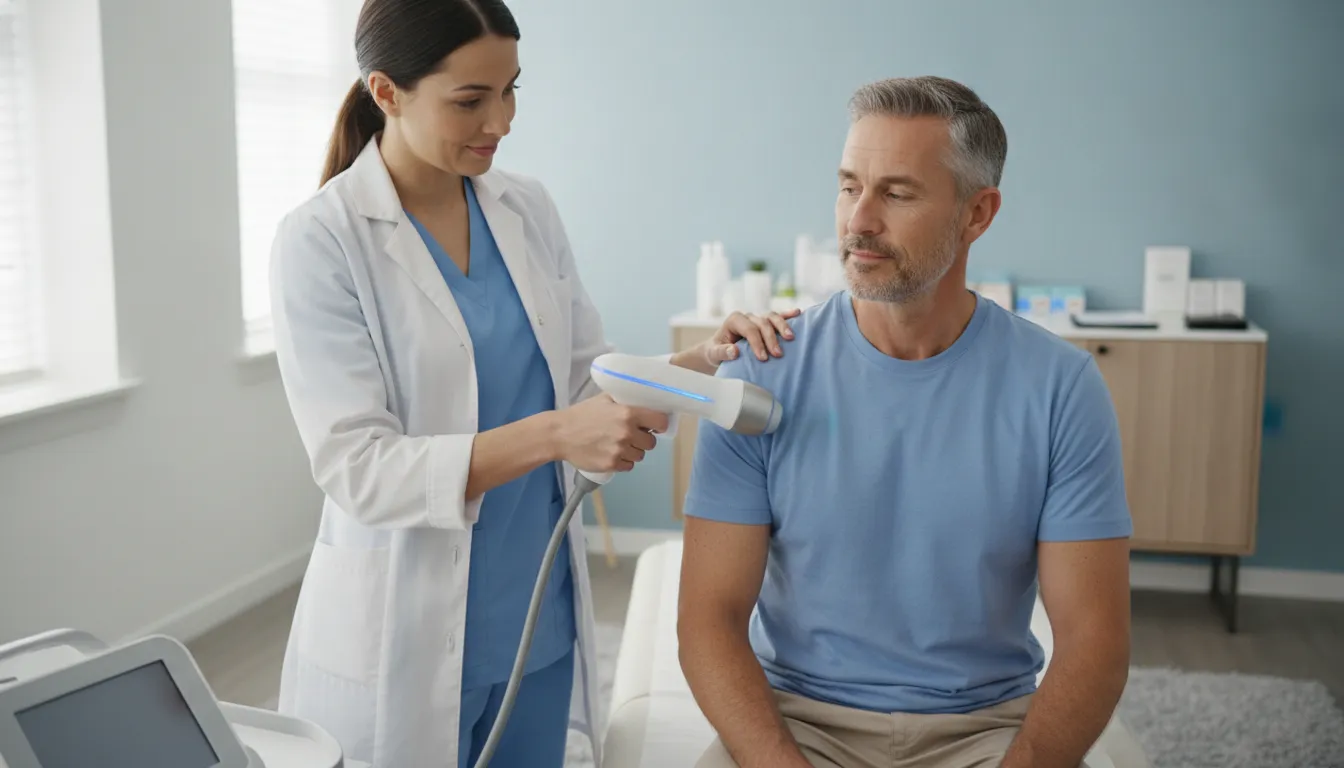
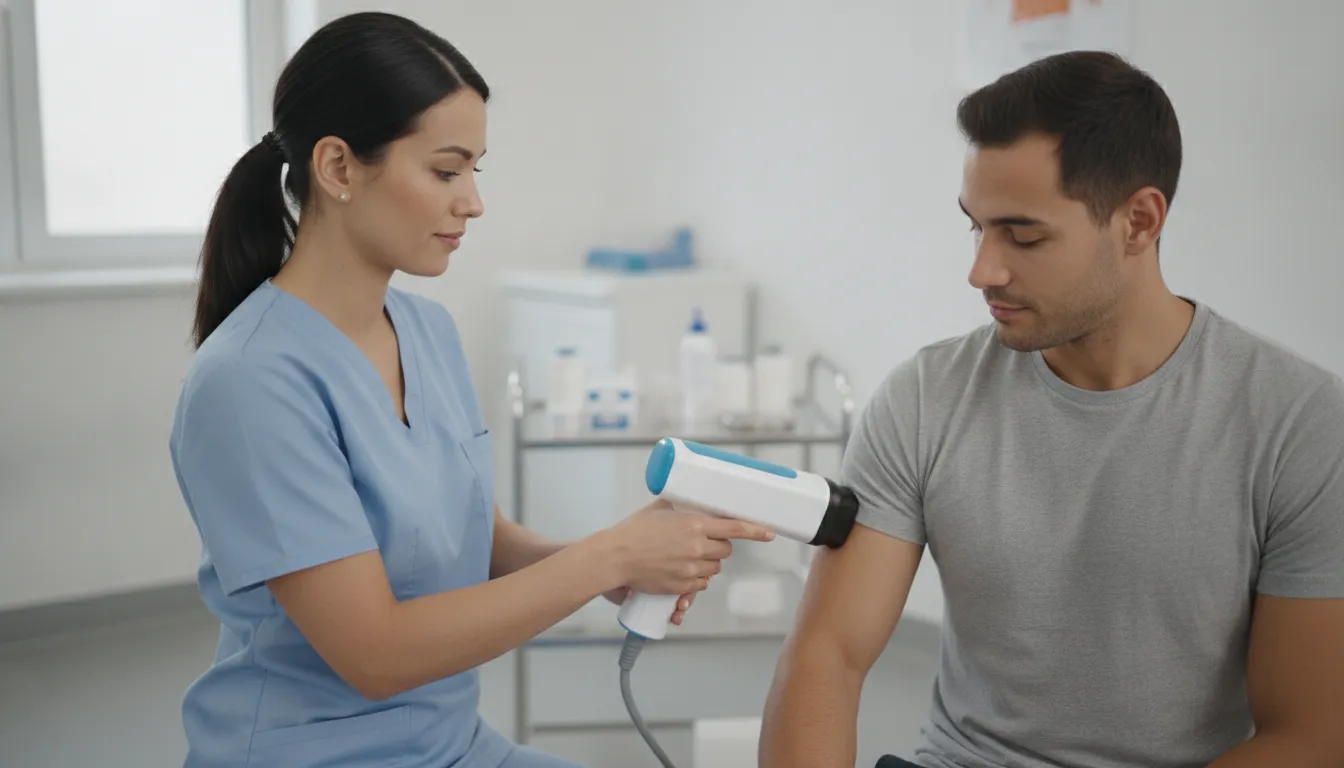
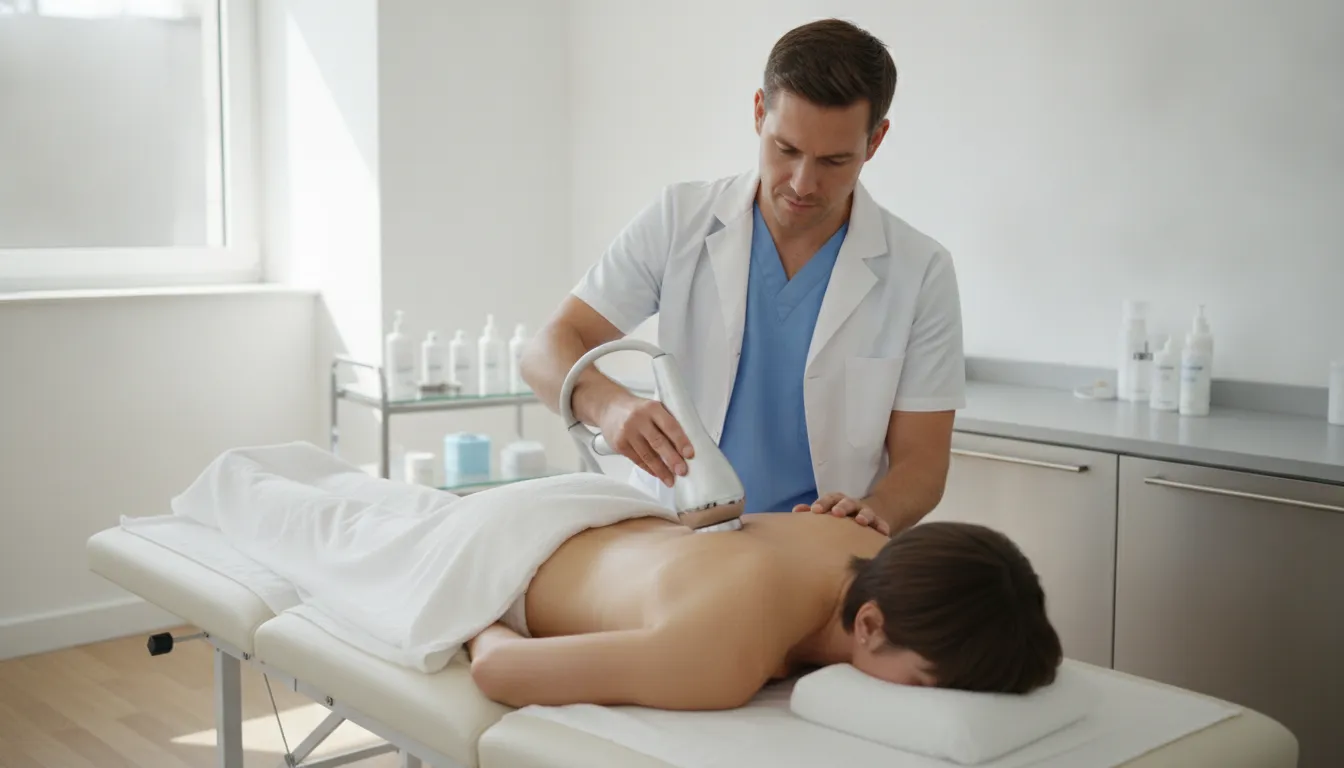
Shockwave therapy has become a core modality in non-invasive musculoskeletal care, enabling clinicians to stimulate biologic repair, reduce pain, and restore function without surgical intervention. As adoption expands across orthopedics, sports medicine, urology, and rehabilitation, physicians are increasingly evaluating not just clinical efficacy, but also how device design impacts workflow, treatment consistency, and patient experience.
One of the systems in this space is STORZ Medical shockwave devices, particularly the Duolith series. At the same time, advances in shockwave engineering, specifically broad-focused electrohydraulic systems, are reshaping expectations around treatment coverage, biologic activation, and efficiency in regenerative medicine.
Understanding these distinctions is essential for evidence-based device selection in modern clinical practice.
What Is Extracorporeal Shockwave Therapy?
Extracorporeal shockwave therapy (ESWT) is a non-invasive modality that delivers acoustic waves into targeted tissue to stimulate biologic healing processes. These waves promote angiogenesis, modulate inflammatory pathways, and activate cellular signaling involved in tissue repair and regeneration.
Clinically, ESWT has been used across a range of musculoskeletal and soft tissue indications. Common applications include plantar fasciitis, Achilles tendinopathy, lateral epicondylitis, patellar tendinopathy, and calcific shoulder tendinopathy. It has also been explored in regenerative and wound-related settings, including superficial second-degree burns, chronic wounds, and scar remodeling. However, differences in protocols abound between devices.
These findings highlight that shockwave therapy is not a single uniform modality. Different systems vary significantly in how energy is generated and delivered, which directly influences:
- Depth of penetration
- Treatment field size
- Energy distribution
- Patient tolerability
These variables are central when comparing focused, radial, and broad-focused shockwave technologies, each of which engages tissue differently and produces distinct clinical effects.
Storz Medical Shockwave Systems in Clinical Practice
Storz Medical is a Switzerland-based developer of non-invasive shockwave technologies, with a long-standing presence in both Extracorporeal Shock Wave Therapy (ESWT) and Extracorporeal Shock Wave Lithotripsy (SWL). The company provides systems used across urology, orthopedics, sports medicine, dermatology, cardiology, and neurology.
Device Portfolio and Technology Approach (Are all these available in the US?)
Storz Medical offers a diverse portfolio of shockwave and adjunct technologies rather than a single unified platform. Key systems include:
- DUOLITH® SD1 ultra with modular focused and radial shockwave therapy and optional ultrasound integration for orthopedic applications
- MASTERPULS® series (icon, R-SW, ONE, ultra+) designed for radial shockwave therapy and commonly paired with vibration therapy (V-ACTOR®) for musculoskeletal and myofascial conditions
- DUOLITH® SD1 T-TOP ultra DERMA used in dermatology and wound healing, where focused shockwaves support angiogenesis and tissue regeneration
- MODULITH® SLX-F2 for urological lithotripsy, including pediatric indications
- MAGNETOLITH® for extracorporeal magnetotransduction therapy (EMTT), often used alongside shockwave therapy in rehabilitation settings
This reflects a modular, indication-specific approach where doctors often configure different systems or add-ons depending on treatment depth, specialty, and clinical goals.
Practical Considerations for Doctors
Because Storz Medical systems span focused, radial, and adjunct technologies, adoption typically involves:
- Selecting multiple devices or modules for different specialties
- Adjusting devices and device heads based on energy type and penetration depth
- Managing workflow across different indications and system configurations
This structure can influence efficiency, especially in practices aiming to treat a wide range of conditions within a single workflow.
Positioning in Clinical Decision-Making
Storz Medical provides a comprehensive and well-established range of shockwave technologies with strong global adoption and multi-specialty use.
At the same time, its modular structure means versatility is often achieved through combining systems rather than relying on a single platform. For doctors evaluating scalability, workflow efficiency, and coverage across indications, this distinction is an important part of the decision-making process.
For a deeper technical comparison, check Storz Duolith Machines Compared
Limitations of Traditional Storz Shockwave Approaches
While STORZ Medical Shockwave systems are clinically established, their design introduces several practical limitations that are important considerations in daily clinical use.
Separation of modalities
Focused and radial therapies operate as distinct technologies. Focused only systems provide depth but treat small focal zones, while radial systems offer broader coverage but remain limited to superficial tissues. This separation often requires multiple handpieces or device configurations within a single treatment plan.
Treatment efficiency and coverage
Focused only shockwave delivers high-energy waves to precise targets but covers a limited area, requiring repeated repositioning. Radial systems could cover larger areas but lack penetration depth, reducing effectiveness in deeper structures.
Workflow complexity
Switching between modalities or adjusting parameters can increase treatment time and operator dependency, particularly in high-volume practices.
Patient comfort considerations
Higher focal intensities in focused systems and surface-dominant pressure in radial systems may reduce tolerability in some patients, occasionally requiring numbing agents depending on the area treated.
These factors highlight a key limitation: traditional systems often require clinicians to trade off between depth and coverage, rather than achieving both simultaneously.
SoftWave Therapy as an Advanced Broad-Focused Approach
As clinicians evaluate alternatives to STORZ Medical shockwave platforms, attention has shifted toward broad-focused shockwave systems such as SoftWave TRT.
SoftWave uses a patented electrohydraulic mechanism that generates true shockwaves through plasma spark discharge in a fluid medium. These waves are reflected through a parabolic reflector, producing parallel, broad-focused wavefronts that distribute energy evenly across tissue.
Unlike modular systems, this design enables:
- Treatment of superficial and deep tissues with one device
- A large therapeutic field (~7 cm × 12 cm per pulse)
Energy is not consistent, it varies through the treatment. Consistent energy delivery across the treatment zone
SoftWave holds multiple FDA 510(k) clearances, including:
- Increase in local blood circulation
- Activation of connective tissue
- Chronic diabetic foot ulcers treatment
- Acute second-degree burns treatment
- Temporary pain relief and increased local blood flow
Clinical literature supports the biologic effects of electrohydraulic shockwave therapy across multiple indications, including improvements in pain, tissue regeneration, and wound healing (Fansa et al., 2021; Ottomann et al., 2012; Wigley et al., 2022).
READ: SoftWave TRT vs Storz Shockwave Machines Compared
Clinical Advantages of SoftWave Therapy
SoftWave offers practitioners a more time efficient, more tolerable, and more versatile approach to shockwave therapy in clinical practice.
Efficient in a busy workflow
The broad-focused treatment zone can eliminate the need for repeated adjustments to the applicator head during a session. That can help make treatment visits shorter and easier to integrate into a full clinic schedule.
Comfortable for patients
Energy is distributed across a wider focal area, which can improve tolerability during treatment. In many practices, this supports better patient acceptance across multi-session care plans.
Useful in complex tissue presentations
SoftWave can be helpful when symptoms involve superficial and deep tissue layers and even when the pain source is not confined to a very small point. A wider biologically active field that can be adjusted based on energy level used gives clinicians the ability to treat both superficial and deeper structures in one session.
Flexible across indications
For practices that treat musculoskeletal conditions alongside wound or vascular cases, SoftWave offers a platform that can fit more than one clinical use case. That makes it easier to incorporate into a broader regenerative treatment strategy.
Supports consistent delivery
SoftWave is also well-suited to practices looking for reproducible treatment sessions. That consistency can help support a more standardized experience across patients and providers.
Comparative Overview of Shockwave Technologies
| Technology Type | Energy Profile | Treatment Depth | Coverage Area | Clinical Implication |
|---|---|---|---|---|
|
Radial Storz MASTERPULS® systems |
Pneumatic pressure waves with lower peak energy and gradual rise time | Shallow (~2–3 cm) | Broad superficial only | Commonly used for myofascial pain and superficial musculoskeletal conditions |
|
Focused Storz DUOLITH® systems |
Electromagnetic shockwaves with high peak energy at a defined focal point | Deep, up to ~6–12 cm depending on settings and applicator heads | Narrow, targeted focal zone | Suitable for precise, localized pathologies such as calcific tendonitis; requires accurate targeting and positioning |
|
Broad-Focused SoftWave TRT |
Electrohydraulic true shockwaves distributed in parallel across the treatment field | Deep and superficial tissues can be treated with one head | Wide (~7 × 12 cm treatment zone) | Enables coverage of larger and smaller anatomical areas in a single session, supporting multi-depth treatment without replacing heads |
This comparison reflects a key distinction in how energy is delivered. Storz Medical Systems typically separates radial and focused technologies into different applications or modules, while SoftWave’s broad-focused approach is designed to treat both superficial and deeper tissues within a single treatment field.
What Doctors Should Consider When Choosing a Shockwave System
When selecting the best shockwave therapy machine, doctors should evaluate both clinical performance and operational fit. Key considerations include:
- Ability to treat multiple tissue depths with one head; no adjustments to applicator head needed
- Treatment field size variability and efficiency
- Patient comfort and tolerability
- Consistency of energy delivery
- Strength of clinical evidence and regulatory clearances
- Ease of integration into existing workflows
While STORZ Medical Shockwave Focused Only Systems remain relevant for targeted applications, many providers are increasingly evaluating broad-focused technologies for their ability to deliver consistent outcomes across a wider range of indications.
Advancing Clinical Practice with SoftWave
Shockwave therapy continues to evolve as a cornerstone of regenerative and non-invasive care. As expectations around efficiency, patient experience, and measurable outcomes increase, the choice of technology plays a defining role in clinical success.
SoftWave Therapy reflects this evolution through its integration of biologic effectiveness, engineering precision, and workflow efficiency. Its expanding clinical adoption across orthopedics, sports medicine, physical therapy, urology, podiatry, and rehabilitation highlights its role in modern multidisciplinary practice.
For doctors seeking to enhance both patient outcomes and operational performance, partnering with SoftWave provides access to advanced technology, structured training, and a growing network of providers focused on regenerative care.
Become a Provider or Schedule a Demo to explore how broad-focused shockwave therapy can support your clinical goals.