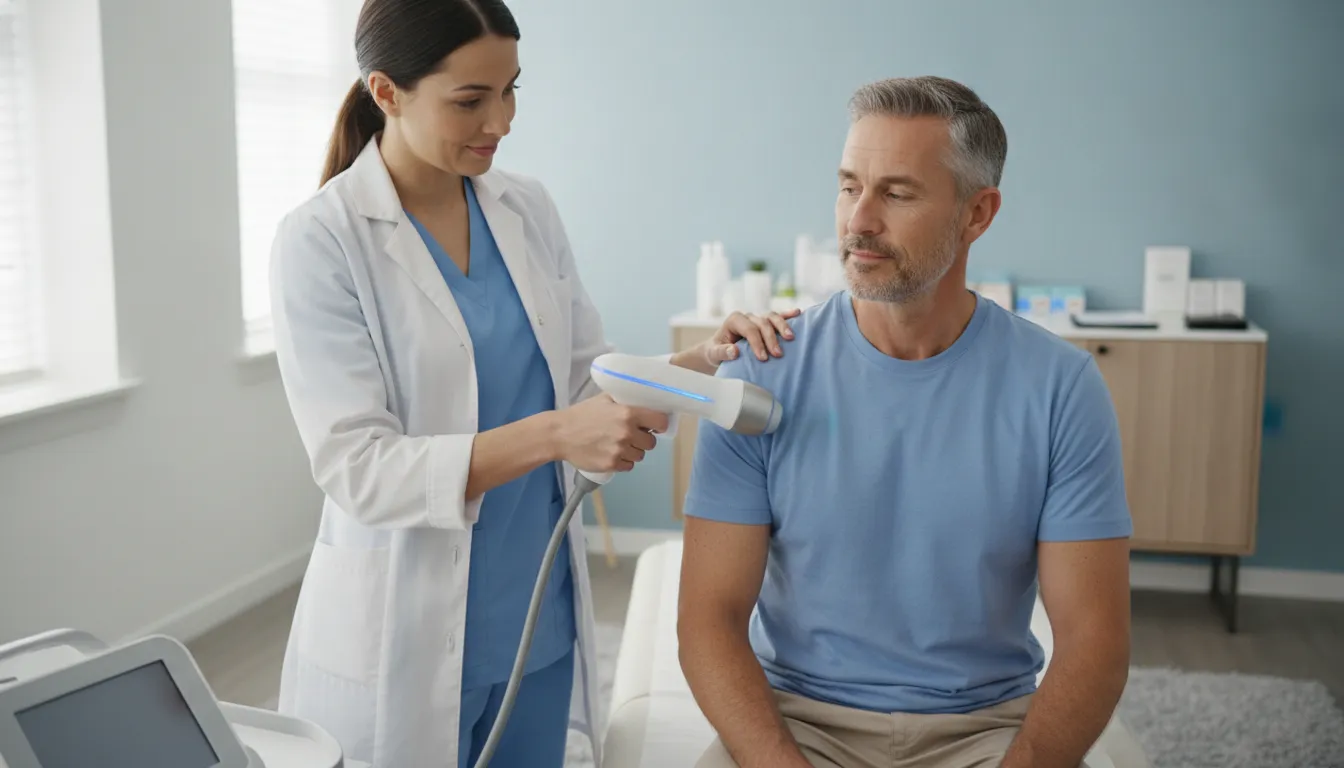
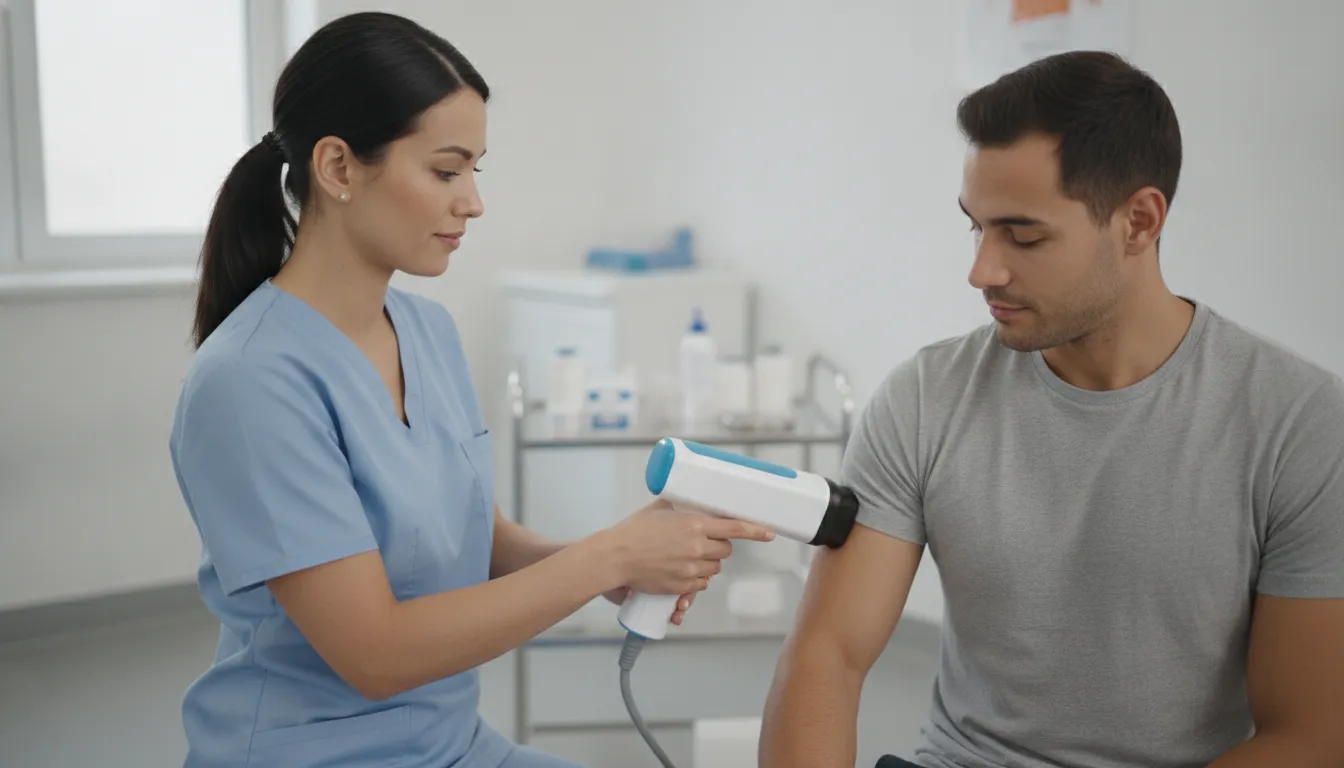
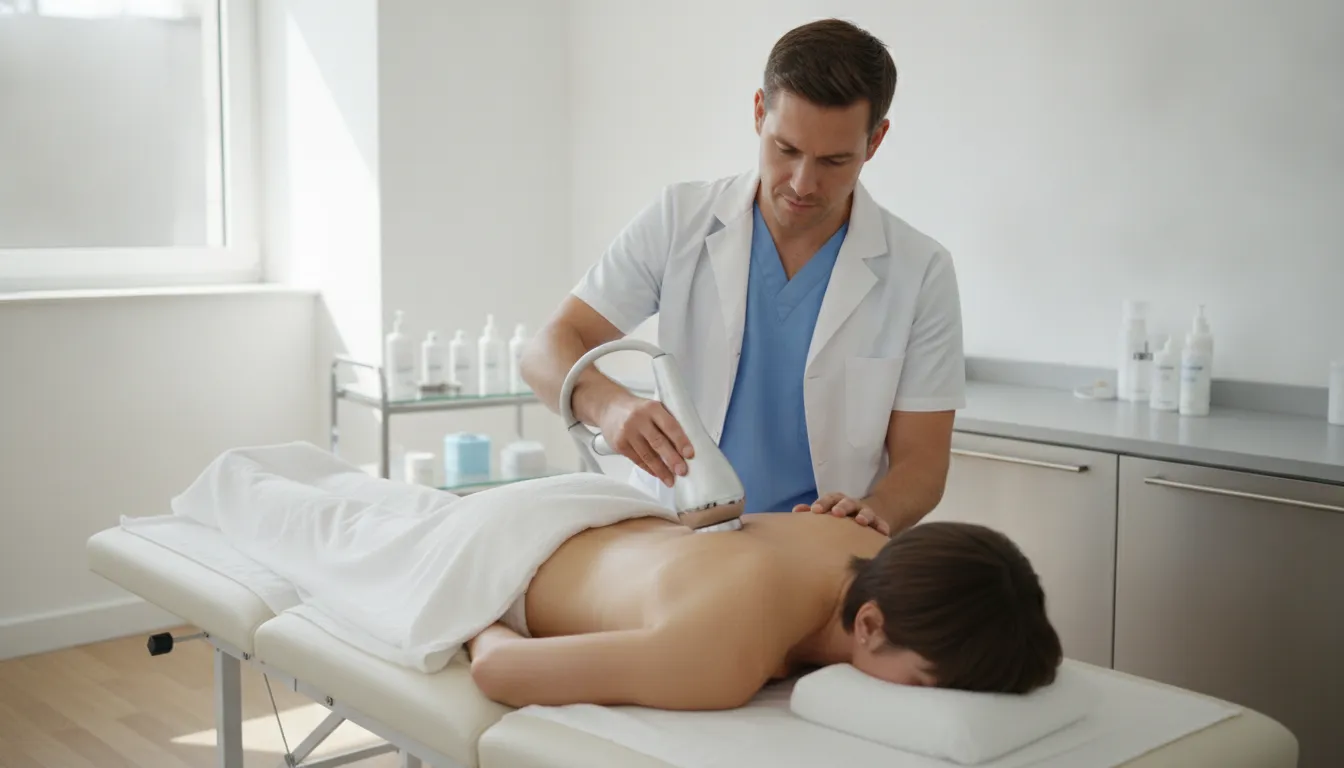
StemWave therapy is part of a broader category of extracorporeal acoustic wave technologies used in musculoskeletal and regenerative medicine. It is classified as a focused electrohydraulic system designed to deliver localized acoustic energy to targeted soft tissue structures.
Within clinical practice, StemWave therapy is most often evaluated alongside radial and broad-focused shockwave platforms. These systems differ in energy distribution, tissue depth, and treatment field size, which directly impacts clinical application and workflow integration.
For clinicians, understanding what StemWave therapy is, how it functions biologically, and how it compares to alternative shockwave systems is essential for informed device selection in orthopedic, podiatric, sports medicine, and rehabilitation environments.
What Is StemWave Therapy?
StemWave therapy is a non-invasive acoustic wave treatment that uses focused electrohydraulic energy to stimulate biological activity in musculoskeletal tissue.
It is used primarily in orthopedic and rehabilitation settings for chronic pain conditions, tendon dysfunction, and localized soft tissue injuries. Common treatment areas include the shoulder, knee, elbow, hip, foot, and lower back.
Unlike broad-focused systems that treat larger anatomical regions simultaneously, StemWave concentrates energy into a defined focal point for localized tissue stimulation.
How StemWave Therapy Works
StemWave therapy functions through mechanotransduction, a process in which mechanical acoustic energy is converted into intracellular biochemical signaling.
Focused acoustic waves generate controlled mechanical stress within tissue, which is associated with increased microcirculation, modulation of inflammatory activity, and activation of cellular repair pathways involving fibroblasts and growth factor signaling.
The system delivers energy that converges at a specific point, allowing targeted penetration based on tissue density and treatment parameters.
Clinical Indications for StemWave Therapy
StemWave therapy is used when conservative care has not fully resolved musculoskeletal symptoms.
Common indications include chronic tendinopathies such as Achilles and rotator cuff conditions, plantar fasciitis, and localized joint pain related to overuse or degeneration.
Its clinical role is primarily focused on treating localized dysfunction rather than multi-region or diffuse tissue pathology.
Cost of StemWave Therapy in Clinical Practice
StemWave therapy is typically offered as a cash-based service rather than an insurance-reimbursed procedure.
Per-session pricing generally ranges from 125 to 300 USD, with full treatment protocols commonly involving 8 to 12 sessions. Total program costs typically range from 1500 to 2500 USD, depending on clinical setting and treatment plan design.
StemWave Therapy Compared With Other Technologies
StemWave vs Radial Shockwave Therapy
Radial shockwave systems distribute pressure waves superficially across tissue and are commonly used for surface-level musculoskeletal conditions.
StemWave differs by delivering focused electrohydraulic energy that converges at a single point, allowing deeper and more localized tissue stimulation.
Read: Focused vs Radial Shockwave Therapy Machines Explained
StemWave vs PRP and Injection-Based Therapies
PRP and stem cell therapies rely on biologic delivery through invasive injection techniques.
StemWave is non-invasive and stimulates endogenous repair mechanisms through externally applied acoustic energy without biologic implantation or blood draw.
StemWave vs SoftWave Therapy
SoftWave Therapy is a broad-focused electrohydraulic shockwave system that differs significantly in energy distribution and clinical application.
The following comparison summarizes key clinical differences:
| Parameter | StemWave Modus-F | SoftWave TRT |
|---|---|---|
| Wave Type | Focused electrohydraulic acoustic wave | Broad-focused electrohydraulic shockwave |
| Energy Distribution | Localized focal point | Wide multi-layer tissue field |
| Treatment Coverage | Narrow region requiring repositioning | Large treatment zone per pulse |
| Clinical Application | Localized musculoskeletal pain | Orthopedic, wound care, urology, regenerative applications |
| Workflow Design | Manual water handling required | Closed-loop automated system |
| Treatment Efficiency | Site-specific application | Larger area coverage per session |
The SoftWave Gold Li Series uses a patented parabolic reflector to create a wide and deep treatment field, allowing simultaneous engagement of multiple tissue layers. StemWave delivers focused energy intended for localized zones.
SoftWave vs StemWave Comparison: Patient Experience and Outcomes
| Feature | SoftWave TRT | StemWave Modus-F |
|---|---|---|
| FDA Status | Multiple FDA clearances | FDA-registered only |
| Energy Field | Wide + deep tissue coverage | Narrow focal point |
| Patient Sensation | Mild soreness, short-lived | Localized pressure sensation |
| Treatment Coverage | Larger zones per session | Requires repositioning for coverage |
| Session Efficiency | 10–20 minutes, broad treatment | Comparable time, narrower scope |
| Durability of Response | Reported multi-year relief in many cases | Variable outcomes, limited long-term data |
| Cost Range | 150–250 USD per session | Similar per-session pricing |
| Device Design | 36.5 lb tabletop system | 110 lb floor-standing system |
Both systems are generally well tolerated and are commonly used in cash-based clinical models, with HSA and FSA payment options often utilized.
Read: SoftWave vs StemWave
Why SoftWave Stands Out in Shockwave Therapy
SoftWave TRT is distinguished by multiple FDA clearances, extensive clinical research, and broad multi-specialty adoption across orthopedics, podiatry, physical therapy, sports medicine, and urology.
Its clinical use is supported by over two decades of application, more than 240 peer-reviewed studies, and adoption in leading institutions and professional sports environments.
The system’s patented parabolic applicator produces a broad-focused energy field that enhances tissue coverage and improves procedural consistency. Its closed-loop water system and ergonomic design support efficient clinical workflow and reduce operational variability.
SoftWave also maintains a large provider network across North America, supported by structured clinical training and onboarding programs that facilitate integration into practice settings.
Defining the Role of StemWave Within Modern Shockwave Practice
StemWave therapy represents a focused acoustic wave approach within regenerative musculoskeletal medicine, designed for precise, localized tissue stimulation through mechanotransductive signaling pathways.
Its clinical value lies in targeted intervention for specific anatomical regions where pathology is concentrated. However, differences in energy distribution, treatment field size, and clinical versatility become important when comparing it to broad-focused systems.
In modern shockwave practice, device selection is increasingly guided by whether a condition requires localized precision or multi-layer tissue coverage. StemWave fits within the precision-focused category, while broad-focused electrohydraulic systems such as SoftWave TRT are designed for wider regenerative applications and higher treatment versatility.
For clinicians integrating shockwave technology into practice, understanding these structural differences is central to optimizing patient outcomes, workflow efficiency, and long-term clinical strategy.
Become a provider or schedule a demo today to see how SoftWave TRT can expand your clinical capabilities and enhance patient outcomes.