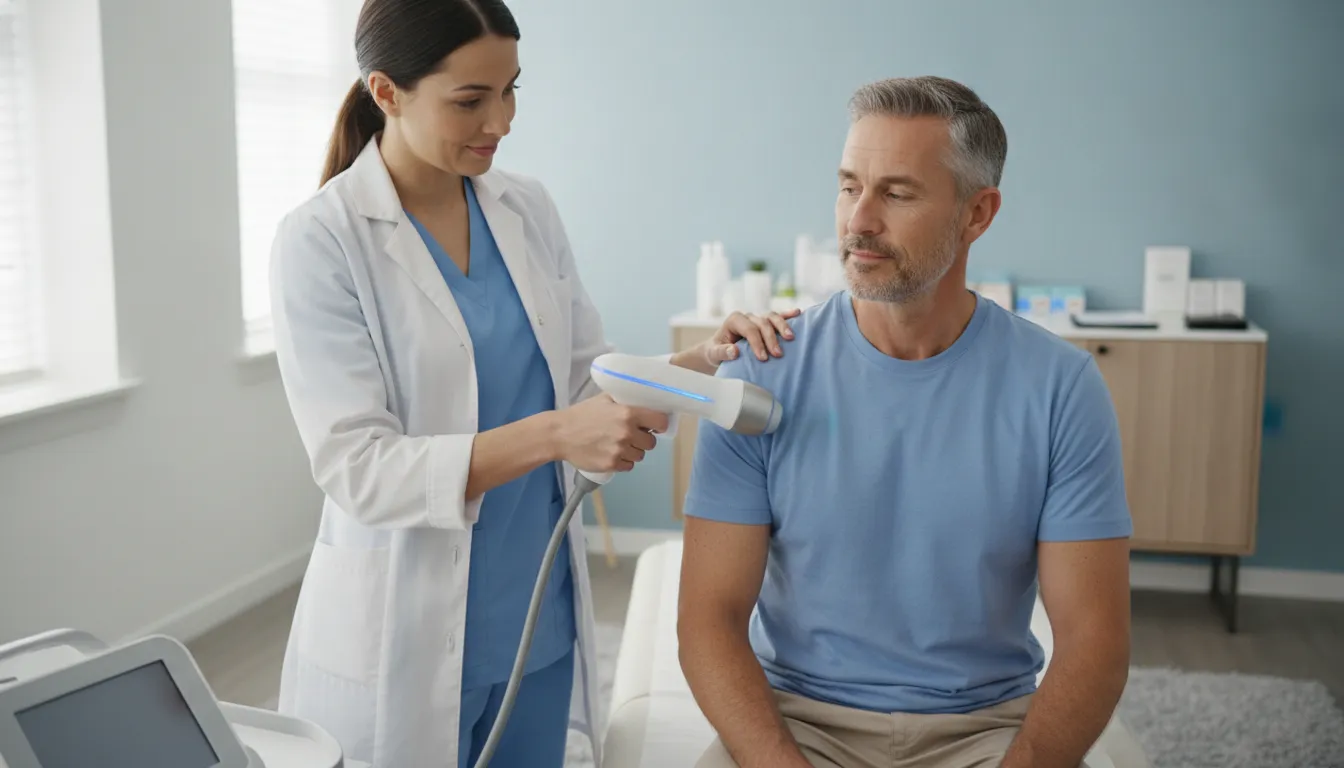
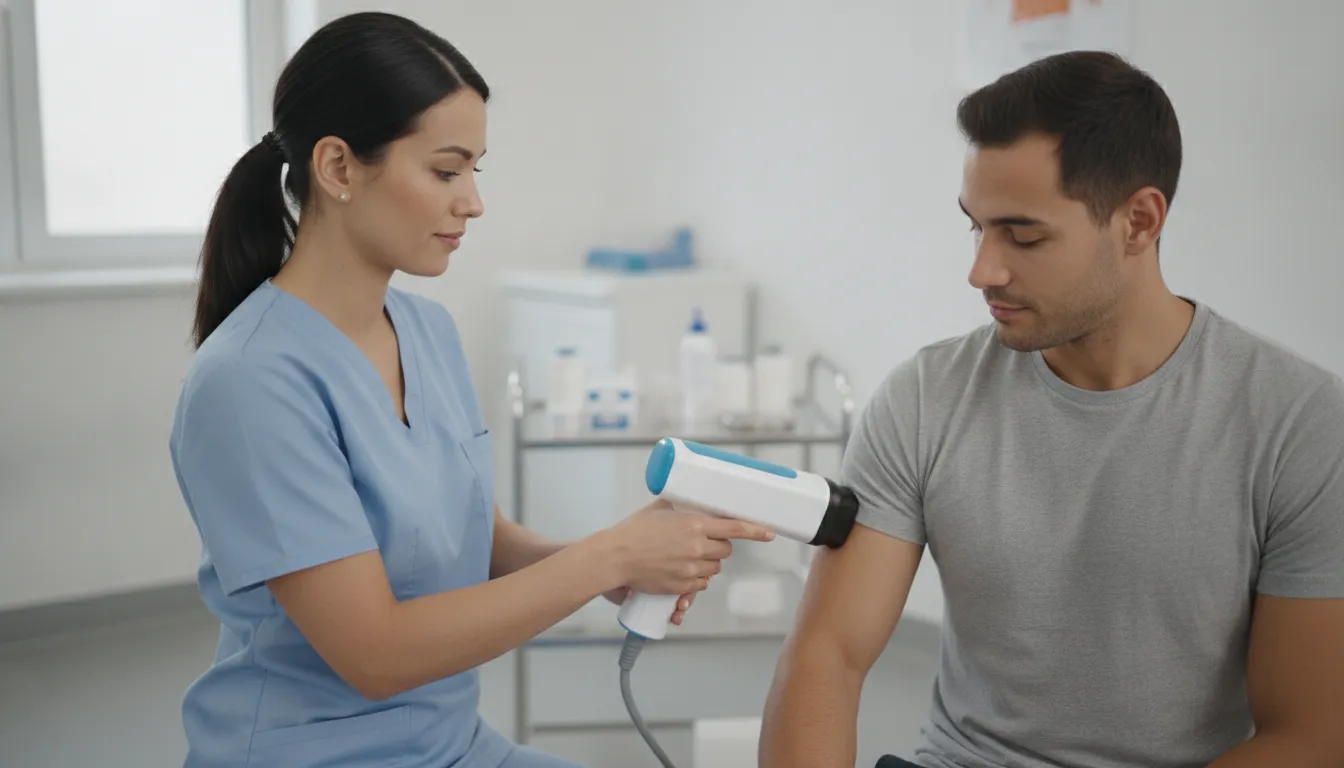
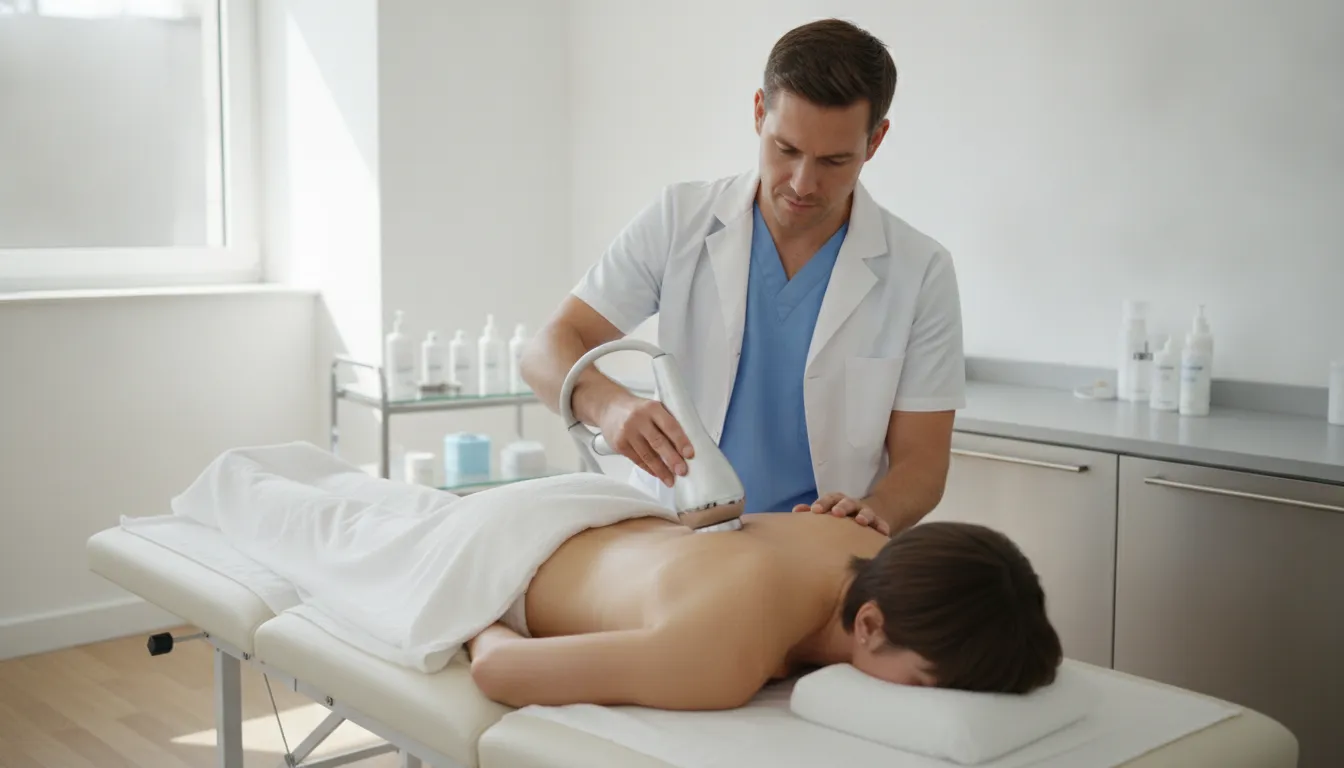
Shockwave therapy and therapeutic ultrasound are both established acoustic-energy modalities in musculoskeletal and rehabilitation medicine. Despite that shared foundation, they differ significantly in how energy is delivered, how tissue responds biologically, and where each fits within a clinical treatment pathway.
Providers across orthopedics, sports medicine, chiropractic, physical therapy, podiatry, and regenerative medicine routinely compare these technologies when evaluating non-invasive options for acute and chronic conditions. The decision is clinical and operational at once, influencing workflow design, treatment frequency, and patient throughput.
Therapeutic Ultrasound: Mechanism and Clinical Role
Therapeutic ultrasound delivers high-frequency sound waves, typically at 1-3 MHz, that produce primarily thermal energy in soft tissue. Energy transmits through a transducer with conductive gel and requires continuous movement across the treatment area to avoid localized overheating. The physiological effects are largely driven by controlled tissue heating and low-amplitude mechanical vibration.
Treatment operates in either continuous or pulsed mode. Continuous ultrasound emphasizes thermal effects through sustained energy delivery, while pulsed settings reduce heating and shift focus toward mechanical stimulation. Phonophoresis adds further clinical versatility by using ultrasound to enhance transdermal absorption of topical medication.
The clinical role of therapeutic ultrasound is largely in acute and subacute soft tissue management. Common indications include muscle strains, sprains, bursitis, myofascial pain, and tightness affecting joint mobility. Typical protocols call for 8-15 sessions delivered two to three times per week.
Shockwave Therapy: Mechanism and Clinical Role
Extracorporeal shockwave therapy (ESWT) delivers high-energy acoustic pulses that produce mechanical stress in tissue, triggering biologic repair pathways rather than thermal change. The primary mechanism is mechanotransductive: acoustic energy is converted into cellular signaling associated with angiogenesis, modulation of inflammatory activity, and fibroblast-mediated tissue repair. The mechanical stress can also contribute to breakdown of calcific deposits and remodeling of chronic scar tissue.
Devices fall into three categories that differ meaningfully in physics and clinical application. Focused systems (electrohydraulic, electromagnetic, or piezoelectric) generate true shockwaves with a defined focal point and deep tissue penetration. Radial systems use a pneumatic mechanism to produce dispersive pressure waves with shallower energy delivery. Broad-focused electrohydraulic systems combine true shockwave physics with a wider, deeper treatment field. Penetration depth ranges from approximately 5 to 12 cm depending on device type.
Shockwave therapy is most commonly applied in chronic musculoskeletal conditions where tissue degeneration, calcification, or impaired healing has not responded to conservative care. Primary indications include plantar fasciitis, Achilles tendinopathy, lateral epicondylitis, calcific shoulder tendinopathy, and persistent myofascial pain. The modality also has established applications in urology and chronic wound care. Treatment protocols typically involve 3-6 sessions delivered once weekly.
Key Differences Between Shockwave Therapy and Ultrasound
Both modalities use acoustic energy, but their biological targets and clinical outcomes diverge significantly. The table below summarizes the parameters that most often shape clinical decision-making.
| Feature | Ultrasound Therapy | Traditional ESWT | SoftWave TRT |
|---|---|---|---|
| Mechanism | Thermal + vibrational | Focused mechanical stress | Broad-focused regenerative activation |
| Depth | 2-5 cm | Up to 12 cm | Wide and deep treatment field |
| Primary Goal | Tissue heating | Tissue remodeling | Cellular regeneration support |
| Biological Effects | Increases circulation, reduces stiffness, relaxes muscles | Stimulates angiogenesis and growth factors, reduces chronic inflammation | Multi-layer biological activation, broader tissue regeneration |
| Best For | Acute and subacute soft tissue conditions | Chronic tendinopathies | Multi-layer chronic and regenerative indications |
| Sessions | 8-15 (2-3x/week) | 3-6 (1x/week) | Fewer sessions with sustained outcomes |
| Comfort | Painless | Mild transient soreness | Generally well tolerated |
| Indications | Sprains, bursitis, myofascial pain, wound adjuncts | Plantar fasciitis, Achilles tendinopathy, calcific deposits, bone healing, urology | Chronic pain, tendon/ligament injuries, wounds, multi-specialty use |
The clinical positioning that emerges is consistent: ultrasound fits early-stage rehabilitation where thermal effects support recovery in tissue that is still biologically active, while shockwave fits later in the care continuum where chronic or refractory pathology requires active biologic stimulation rather than thermal support.
Clinical Evidence: How Each Modality Performs
The strongest evidence base for this comparison comes from randomized controlled trials, particularly studies that evaluate each modality across its strongest indications. The shockwave literature is best understood by device type, since focused, radial, and unfocused electrohydraulic systems produce different clinical profiles.
Shockwave Evidence by Device Type
Radial shockwave for chronic plantar fasciopathy. A randomized placebo-controlled trial by Ibrahim et al., 2017 demonstrated that radial shockwave therapy produced significant pain relief and functional improvement in chronic plantar fasciopathy, with benefits sustained at two-year follow-up.
Focused shockwave for diabetic foot ulcers. The Snyder et al., 2018 phase III multicenter trial of focused ESWT found 35.5% of treated ulcers healed by 20 weeks compared to 24.4% in controls (p = 0.027), supporting focused ESWT as an effective adjunct for neuropathic DFUs unresponsive to standard care.
Unfocused electrohydraulic shockwave for soft tissue wounds. A prospective feasibility study by Schaden et al., 2007 enrolled 208 patients with acute and chronic soft tissue wounds and administered outpatient unfocused electrohydraulic ESWT with a parabolic reflector. Complete epithelialization was achieved in 75% of patients, with no treatment-related toxicity or wound deterioration. The unfocused electrohydraulic architecture used in this study is the same design category as the SoftWave platform.
Ultrasound Evidence by Indication
Ultrasound’s evidence base is strongest in acute and subacute soft tissue conditions where thermal effects support normal healing.
Knee osteoarthritis. A meta-analysis of five RCTs by Zhou et al., 2018 found low-intensity pulsed ultrasound significantly reduced pain and improved function in knee osteoarthritis compared with controls.
Myofascial pain syndrome. In a placebo-controlled trial, Yildirim et al., 2018 reported significant improvement in pain and pressure thresholds following ten sessions of conventional ultrasound applied to trapezius trigger points.
Rotator cuff tendinopathy. Diyarbakir et al., 2025 found therapeutic ultrasound combined with home exercise improved pain, function, and sleep disturbance, with outcomes comparable to low-level laser therapy.
Chronic wound applications. The evidence is less favorable. The Cochrane review of therapeutic ultrasound for pressure ulcers concluded there is no clear evidence of benefit, and the Karsli et al., 2017 randomized trial comparing high-voltage electrical stimulation with ultrasound in Stage II-IV pressure ulcers found electrical stimulation produced significantly greater wound area reduction.
What the Evidence Pattern Shows
Across the literature, ultrasound performs reliably in acute and subacute soft tissue presentations where thermal effects support normal healing. Shockwave outperforms ultrasound in chronic tendinopathy, calcific pathology, and non-healing wound applications where the clinical need is active biologic stimulation rather than thermal support.
Where SoftWave’s Broad-Focused Electrohydraulic Technology Fits
Within the shockwave category, device architecture significantly affects clinical performance. Traditional focused systems concentrate energy at a single focal point, which produces strong activation at depth but limits the treatment field per session. Radial systems offer wider surface coverage but at shallower depth and without true shockwave physics.
SoftWave operates as a third category: broad-focused electrohydraulic shockwave. The patented parabolic reflector distributes acoustic energy across a wider and deeper treatment field in a single applicator position, engaging multiple tissue depths in one pass without repositioning. Energy is delivered consistently in the anabolic range (at or below 0.18 mJ/mm²), the zone that promotes tissue regeneration without the cellular damage associated with catabolic energy delivery.
For practices, that architecture translates into operational efficiency: larger anatomical regions can be treated in a single session, repositioning is reduced, and the same platform supports applications across orthopedics, sports medicine, podiatry, physical therapy, regenerative medicine, and wound care. SoftWave TRT is FDA-cleared for indications including activation of connective tissue, chronic diabetic foot ulcers, second-degree burns, and increased local blood circulation. Full clearance documentation is available on the FDA Safety Page.
Read: Best Shockwave Therapy Machine for Providers
Selecting the Right Modality for Your Practice
For clinicians evaluating these two technologies, the choice depends on the clinical presentations that drive your patient volume and the operational realities of your practice.
Ultrasound therapy fits best in acute and subacute soft tissue conditions where thermal effects support normal recovery. Traditional ESWT is appropriate for chronic musculoskeletal pathology requiring deep mechanical stimulation, particularly tendinopathies and calcific deposits. SoftWave TRT addresses the broader regenerative category, designed for multi-layer tissue activation and wider treatment coverage in chronic, refractory, or wound care presentations.
Operationally, ultrasound’s higher session count and lower per-session margin suit early rehabilitation throughput. Shockwave’s shorter protocol and cash-pay structure align with regenerative medicine service lines and chronic-pain practices building toward outcomes-based reimbursement. SoftWave’s multi-specialty applicability is most relevant for practices serving overlapping patient populations across orthopedics, sports medicine, podiatry, physical therapy, regenerative medicine, and wound care.
The clinical question is ultimately whether short-term symptom modulation or sustained regenerative activation aligns with the patient’s presentation. The operational question is whether your practice is positioned to deliver early-stage rehabilitation or deeper, outcomes-driven regenerative care.
Become a SoftWave Provider or schedule a demo to evaluate how SoftWave TRT fits your patient population and practice goals.