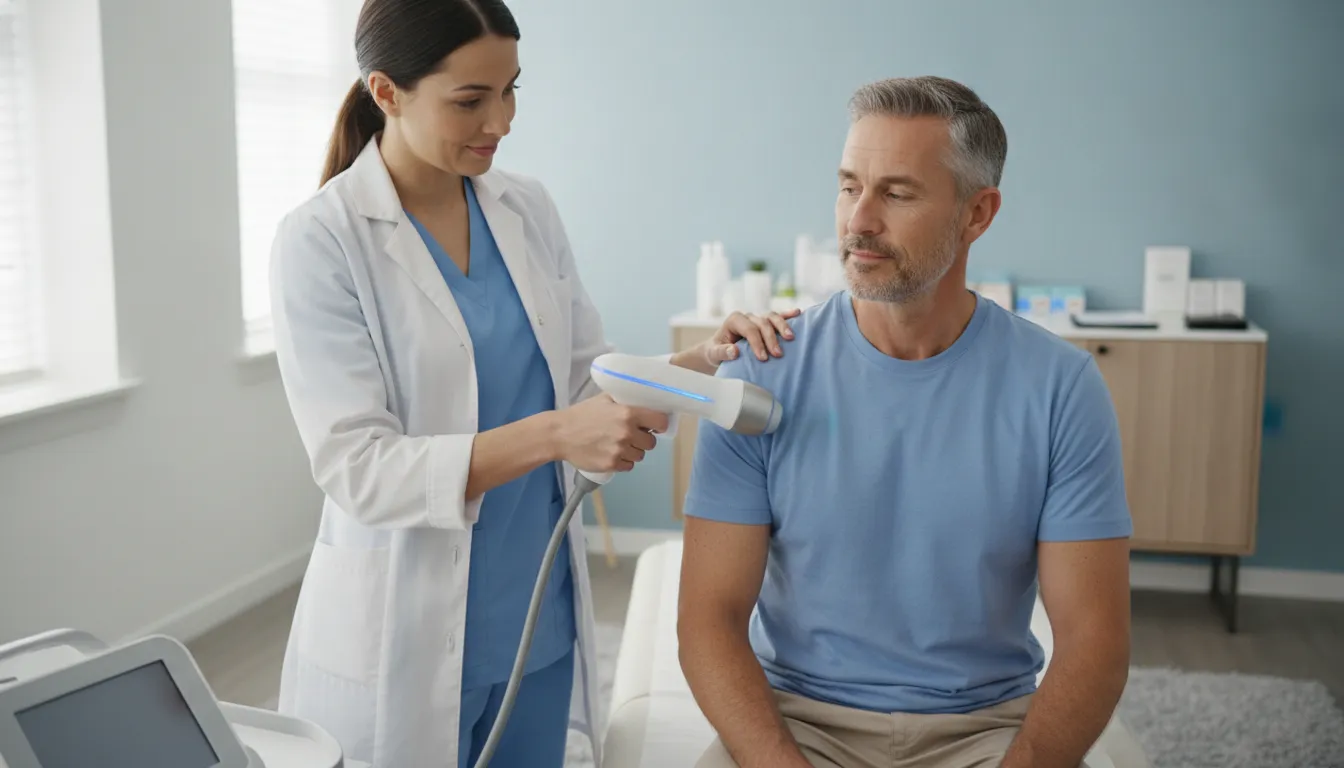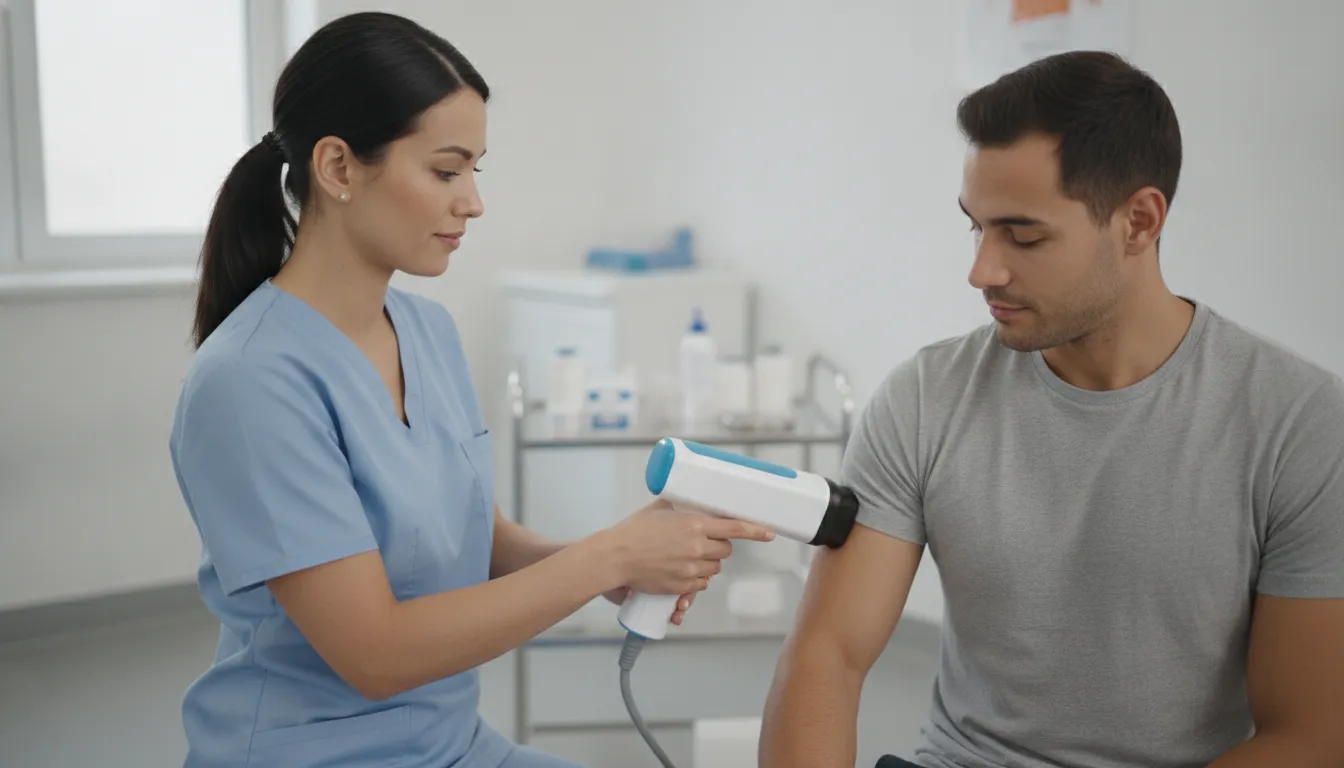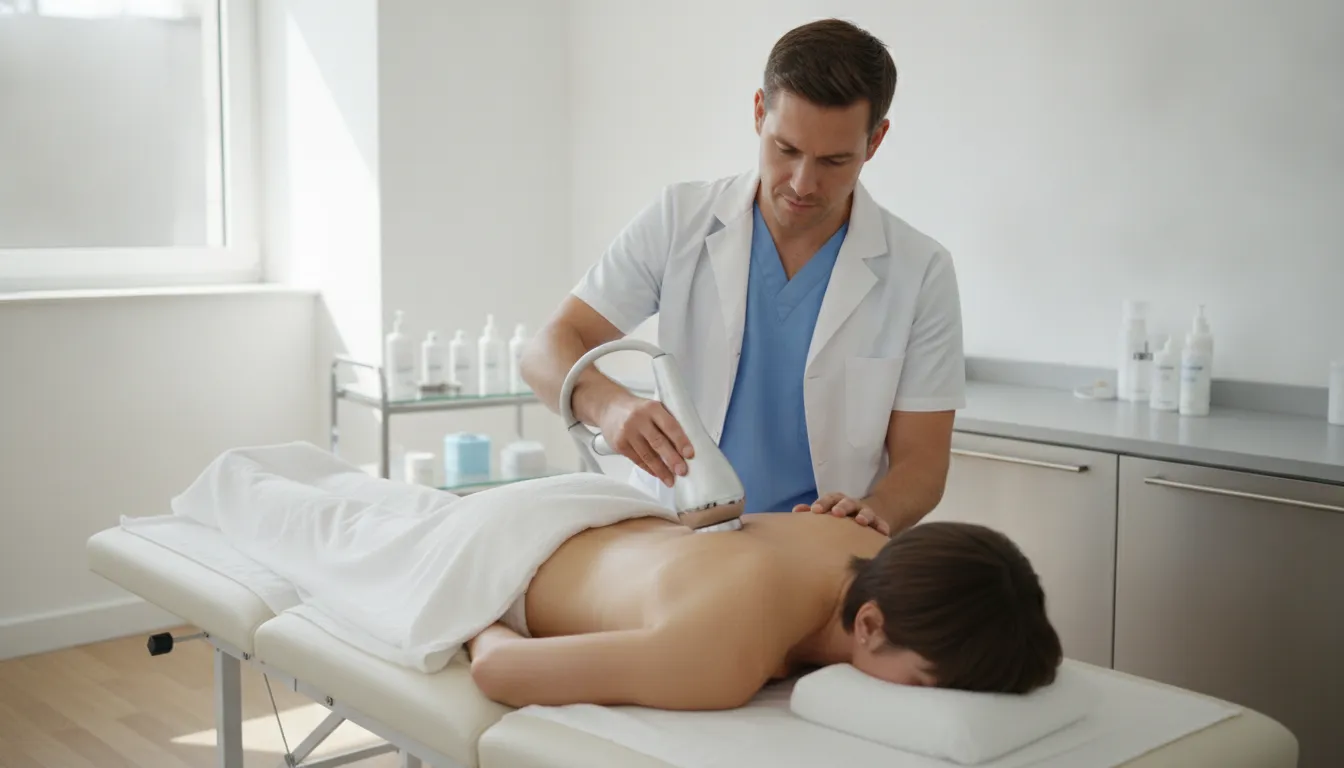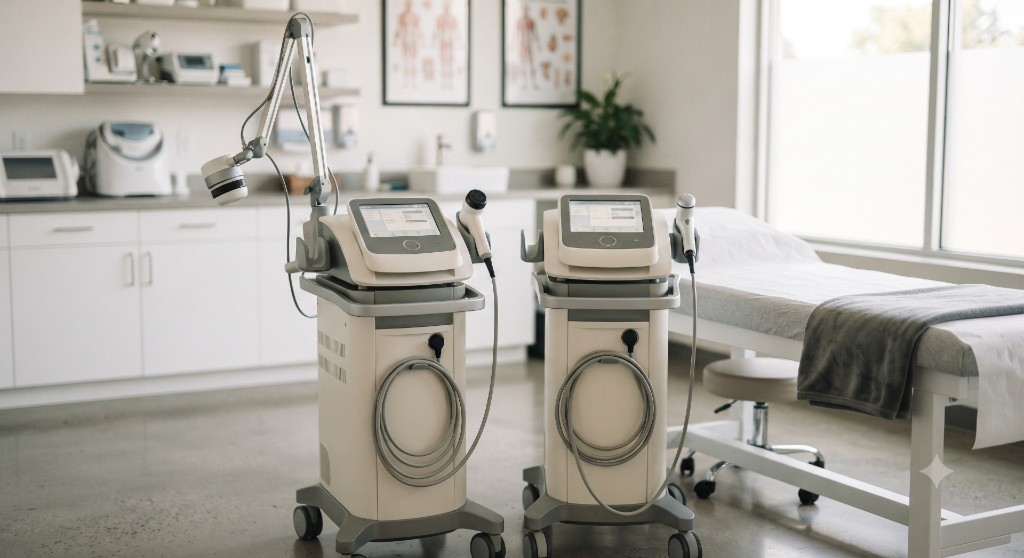
Shockwave therapy continues to expand across orthopedics, sports medicine, podiatry, chiropractic, urology, and rehabilitation practices as clinicians adopt non-invasive technologies that support musculoskeletal healing and tissue regeneration. The StemWave machine is frequently evaluated within that landscape for its clinical utility, cost structure, and role in outpatient regenerative care.
For practice owners, evaluating StemWave involves more than reviewing pricing. The full picture includes its shockwave category, FDA clearance status, supporting evidence, and how it compares with alternative technologies such as radial systems and broad-focused electrohydraulic platforms like SoftWave TRT. The sections below cover each of those areas, with a focus on what’s publicly verifiable about the device.
StemWave Machine Overview
StemWave is the brand name for the Modus-F device, a non-invasive focused acoustic wave system developed for outpatient musculoskeletal and regenerative use. According to StemWave’s website, the device uses focused electrohydraulic technology with a spark-gap mechanism and saline-filled head to deliver low-intensity focused acoustic waves into tissue. The company markets penetration depths of up to 12 cm and treatment sessions of approximately 3-8 minutes.
The Modus-F is categorized within the focused electrohydraulic shockwave family, distinct from radial pressure wave devices, piezoelectric systems, and broad-focused electrohydraulic platforms. Its energy delivery concentrates at a focal point rather than distributing across a wide treatment field.
FDA clearance status. StemWave is FDA Class I registered. Per StemWave’s own intended use statement, the Modus-F “is intended for use in addressing minor aches and pains in accordance with the User Manual (IFU). Use of the product for any other purpose has not been reviewed by the U.S. Food and Drug Administration and is considered off-label use.” This is a meaningful distinction from FDA Class II-cleared shockwave devices, such as SoftWave, which have been reviewed for safety and effectiveness across specific medical indications.
Clinical applications StemWave describes. StemWave’s website and marketing materials describe the device as being used across orthopedics, sports medicine, chiropractic, podiatry, and physical therapy, with stated applications including plantar fasciitis, Achilles tendinopathy, lateral epicondylitis, calcific shoulder tendinitis, patellar tendinopathy, and myofascial pain. Per StemWave’s own disclaimers, all applications beyond minor aches and pains fall outside the device’s FDA clearance and are considered off-label use.
What the published evidence supports. No peer-reviewed clinical studies have evaluated the Modus-F or any other StemWave-branded device specifically. Available research on focused electrohydraulic shockwave therapy as a category does support its use across several musculoskeletal indications. A 2024 systematic review and meta-analysis of 21 RCTs found focused ESWT produced clinically significant improvements in pain and function for calcific rotator cuff tendinopathy (Brindisino et al., 2024), and a 2026 systematic review and meta-analysis found ESWT effective for chronic plantar fasciitis (Wu et al., 2026). Clinicians evaluating StemWave should note that category-level evidence does not transfer directly to specific devices, since outcomes depend on energy delivery parameters, treatment field size, and device architecture.
How Much Does a StemWave Machine Cost?
StemWave does not publish device pricing on its website and instead directs prospective buyers to request a quote. Industry reports place focused electrohydraulic systems in the same general capital equipment range as comparable shockwave platforms, though specific configuration, distributor package, training, and service agreements all affect the final price.
For most clinics, the relevant cost picture extends beyond the device purchase:
- Initial equipment investment and financing options
- Service agreements and long-term maintenance
- Training, onboarding, and clinical integration support
- Multi-year cost of consumables and parts replacement
- Expected patient volume and revenue model
Shockwave therapy in outpatient settings is typically delivered as a cash-pay service. Per-session pricing commonly ranges from approximately $150 to $300 depending on geography, provider type, and treatment complexity. Most protocols involve multiple sessions per patient, which contributes to recurring revenue when integrated into a regenerative care service line.
What to Evaluate When Reviewing the StemWave Machine
Clinicians evaluating StemWave generally assess the device on both clinical and operational dimensions. Public reviews from independent sources are limited, so much of the evaluation comes from direct demonstrations and provider-to-provider feedback rather than peer-reviewed data.
The factors most often raised in practice include:
- Energy delivery and treatment field. Focused systems concentrate energy at a defined point. For pathology that is discrete and well-localized, that precision is a clinical advantage. For larger or multi-layer presentations, it can require repositioning to cover the full treatment area.
- FDA classification. Class I clearance covers only minor aches and pains. Practices treating specific clinical indications outside this scope should understand the off-label framing.
- Maintenance and consumables. Spark-gap electrodes have finite use cycles and require replacement, which factors into long-term operating cost.
- Training and onboarding. StemWave includes a structured training and marketing program with device purchase, which is a meaningful differentiator for practices new to shockwave therapy.
- Multi-indication flexibility. A focused device with a narrow focal zone fits some practice profiles better than others. Higher-volume musculoskeletal practices managing diverse presentations may find broader-field platforms more efficient.
Read: Best Shockwave Therapy Machine for Providers
Alternatives to the StemWave Machine
SoftWave Therapy
SoftWave Therapy is a broad-focused electrohydraulic shockwave system that distributes acoustic energy across both superficial and deeper tissue layers in a single application pass. Its patented parabolic reflector produces a treatment zone approximately 7 cm wide and up to 12 cm deep, allowing larger anatomical regions to be addressed without repositioning.
SoftWave TRT holds multiple FDA Class II clearances for indications including activation of connective tissue, chronic diabetic foot ulcers, superficial second-degree burns, and increased local blood circulation. The platform is used across orthopedics, sports medicine, podiatry, physical therapy, urology, and regenerative medicine. New SoftWave Gold Li Series units typically range from approximately $40,000 to $95,000 depending on configuration, with financing options available.
Read: SoftWave vs StemWave
Storz Medical Shockwave Systems
Storz Medical offers both radial pressure wave and focused shockwave systems. Radial technology disperses energy superficially across broader surface areas, while focused systems concentrate energy deeper into targeted tissue structures.
In practice, radial Storz systems are commonly applied to plantar fasciitis, Achilles tendinopathy, and myofascial pain syndromes. Focused Storz systems are used for deeper pathologies including chronic tendinopathies and calcific shoulder conditions. The dual-technology approach offers flexibility, though treatment depth and coverage vary by applicator. Pricing varies meaningfully by line: the Masterpuls (radial) range falls around $15,000 to $25,000, while the Duolith SD1 (focused) typically ranges from $30,000 to $60,000+ for standard configurations, with new units from Storz Medical reaching $60,000 to $120,000 at the high end.
Read: Storz Duolith Machines: Cost, Efficacy, and Alternatives
BTL Focused Shockwave
BTL systems use focused acoustic energy delivered through electrohydraulic or electromagnetic mechanisms depending on the model. The systems are designed for precise energy targeting in deeper musculoskeletal structures and are most commonly applied to chronic tendinopathies, calcific shoulder pathology, delayed bone healing, and localized trigger points. BTL systems generally range from approximately $18,000 to $45,000 depending on package and configuration, with high-end focused units priced similarly to premium Storz lines.
Piezoelectric Shockwave Systems (PiezoWave2T)
Piezoelectric systems such as PiezoWave2T generate focused shockwaves using an array of piezoelectric crystals, allowing stable energy output with adjustable treatment patterns based on transducer selection. Clinical applications include plantar fasciitis, tendinopathies, enthesopathies, calcific deposits, and select spinal or facet joint protocols. Richard Wolf (the manufacturer) and its distributors do not publish list pricing for the PiezoWave2T; pricing is quote-based and depends on therapy source selection (point-focused, linear, or planar), accessories, and service inclusions.
Selecting the Right Shockwave Platform for Your Practice
The right platform depends on the clinical presentations driving your patient volume and the operational realities of your practice. Energy delivery architecture, FDA clearance scope, treatment field, and the strength of device-specific evidence shape both clinical outcomes and how the platform integrates into a regenerative service line. Capital cost matters, but it rarely matters more than fit.
SoftWave TRT meets those priorities through clinical adoption few competitors match. The platform is in active use at Mayo Clinic, Cleveland Clinic, HSS, and team medical staffs across the NFL, NBA, MLB, and PGA, with more than two decades of clinical use and over 240 peer-reviewed studies supporting the underlying technology. The operational case is equally direct: shorter treatment protocols, fewer sessions per patient, and lower per-treatment labor cost than focused or radial alternatives, supported by structured on-site onboarding and ongoing clinical education. Become a SoftWave Provider or schedule a demo to evaluate fit for your patient mix and practice goals.