Podiatry practices are facing compounding financial pressure from declining reimbursements, rising overhead, and growing patient demand for non-invasive alternatives to surgery and injections. Traditional insurance-dependent models built around routine visits and procedural billing create real limits on both profitability and scalability. Improving podiatry practice ROI increasingly depends on a different approach: one that diversifies revenue, tightens operational workflows, and builds care pathways that improve outcomes and retention at the same time.
What Shapes Podiatry Practice ROI
Podiatry practice ROI reflects the financial return generated across investments in technology, staffing, workflow systems, and clinical services. Several variables interact to determine how efficiently a clinic converts patient volume into sustainable revenue:
- Revenue per visit
- Patient throughput
- Treatment utilization rate
- Operational efficiency
- Patient retention and lifetime value
- Reimbursement dependence
- Administrative cost per visit
Most podiatry profitability challenges trace back to the same combination: high administrative workload paired with low-margin insurance reimbursement. Documentation requirements, prior authorizations, and claim denials consume provider time that could otherwise go toward clinical care, and even busy clinics can find themselves generating high volume at poor margins.
The patient side of this equation is shifting too. Patients increasingly seek non-invasive alternatives to corticosteroid injections, opioids, and surgery. Practices that have not updated their service mix to reflect this shift face a quiet competitive disadvantage: patients willing to self-pay for effective regenerative care often seek out clinics that offer it.
How Regenerative Services Improve Podiatry Revenue
The most direct way to improve podiatry practice ROI is to add services that operate outside the reimbursement system. Self-pay regenerative treatments collect at the point of service, carry no prior authorization burden, and capture full procedure value without the contractual discounts that compress insurance margins. These sessions are typically priced in the $150 to $250 range per visit, paid at the time of treatment, which changes the margin structure of those visits compared to a 60-day insurance reimbursement cycle on a discounted contracted rate.
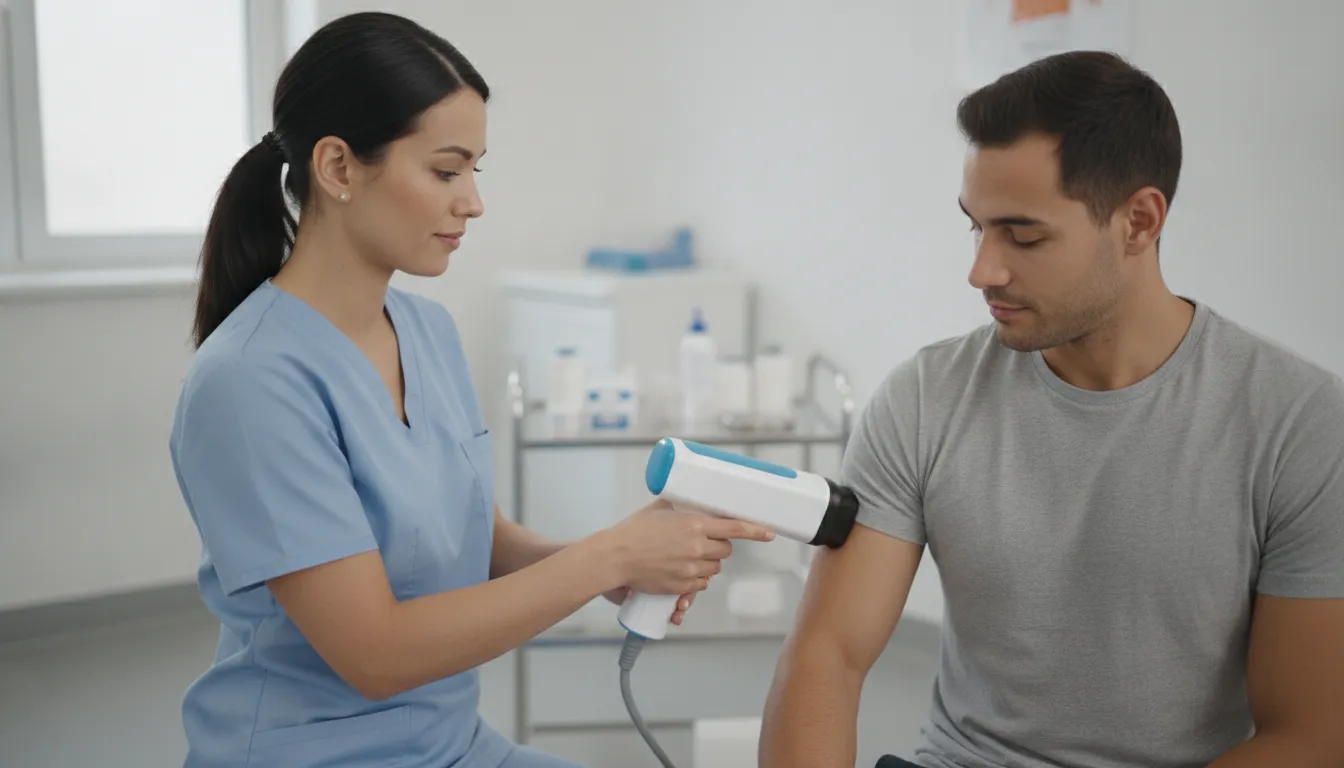
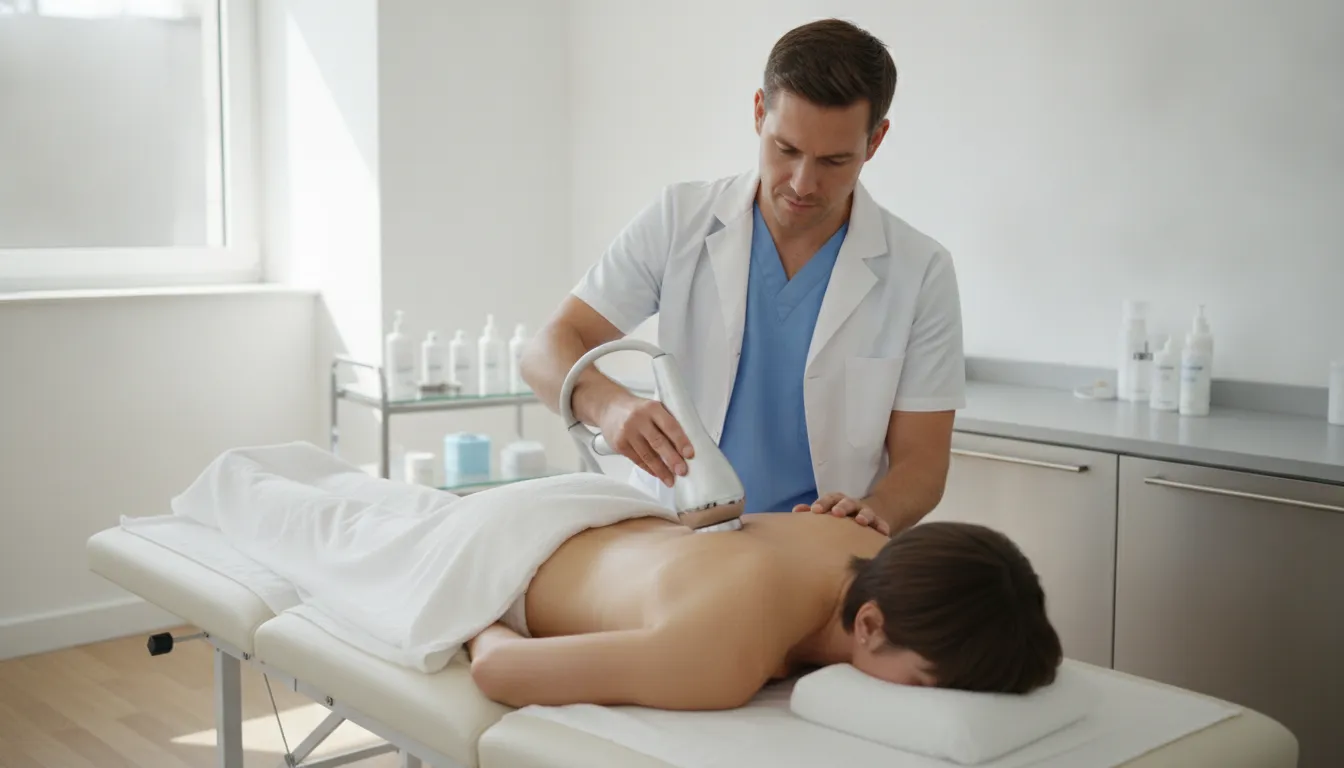
SoftWave is a regenerative shockwave system built specifically for this kind of integration in podiatry. It is FDA-cleared for multiple indications relevant to a podiatry practice and can be delegated to trained clinical staff once a treatment plan is established. Most sessions take 10 to 15 minutes, require no needles, biologics, or anesthesia, and carry no consumable cost beyond setup gel. That combination keeps the operational cost per treatment low while revenue per session holds steady, and it lets a single provider supervise multiple treatment rooms in parallel rather than committing the full clinical hour to one procedural patient.
A regenerative device that serves one condition has a limited utilization ceiling. SoftWave integrates across a wide range of podiatric presentations:
- Plantar fasciitis and heel pain syndromes
- Achilles tendinopathy
- Peripheral neuropathy
- Diabetic foot ulcers and chronic wounds
- Stress-related soft tissue injuries
- Post-surgical recovery support
That coverage means the same device generates revenue across musculoskeletal, wound care, and diabetic foot populations rather than a single patient cohort, which is what separates a high-utilization regenerative platform from one that contributes to only a fraction of clinical volume.
How SoftWave Supports a High-ROI Podiatry Practice
SoftWave is the only broad-focused electrohydraulic shockwave device on the market. The SoftWave Gold Li Series has patented parabolic reflector distributes plasma-driven shockwaves across a wider and deeper treatment field than focused or radial systems, which matters in podiatry where conditions often involve overlapping connective tissue, vascular, and neural components rather than isolated pathology. A broader field addresses more tissue per pulse, reducing session time without sacrificing penetration depth.
The device holds multiple FDA Class II clearances directly relevant to podiatric practice: improvement in local blood circulation, activation of connective tissue, relief of minor muscle aches and pains, and treatment of chronic diabetic foot ulcers. Device-specific clearances carry more weight than category-level registrations when a practice is deciding which technology to build its regenerative service line on.
Sports Medicine and Musculoskeletal Heel Pain
A review in Current Physical Medicine and Rehabilitation Reports documents ISMST-approved standard indications including plantar fasciitis, Achilles tendinopathy, and lateral epicondylopathy (Keilani & Crevenna, 2021). SoftWave is typically integrated alongside orthotics, rehabilitation, and biomechanical correction in the podiatry setting.
Diabetic Foot and Wound Care
SoftWave’s FDA clearance for chronic diabetic foot ulcers positions it within the high-risk diabetic population podiatrists manage long-term. A meta-analysis of randomized controlled trials found that ESWT significantly improved healing outcomes in diabetic foot ulcers across wound area and re-epithelialization measures (Huang et al., 2020). The combination of a specific FDA clearance and published meta-analysis evidence gives practices a defensible foundation for integrating the technology.
Post-Surgical Recovery
Some providers incorporate SoftWave into post-operative protocols following foot and ankle procedures, where scar tissue, soft tissue restriction, and impaired circulation can delay functional recovery. Used as part of a multimodal rehabilitation approach, shockwave therapy may support tissue remodeling and improve recovery timelines without adding procedural risk
Operational Foundations That Protect Long-Term ROI
A high-margin regenerative service line only compounds into long-term growth if the practice around it is built to support it. Operational efficiency keeps the cost per visit low, while patient retention extends the lifetime value of each patient who enters that service line. Both protect and multiply the margin a regenerative offering creates.
Operational inefficiency is where many practices quietly lose margin. Three areas drive most of the gains:
- Automated scheduling and patient communication. SMS and email reminders, online booking, and automated recall campaigns for diabetic foot checks and orthotic follow-ups reduce no-shows and front-desk workload. The financial impact grows once regenerative services are added, since a missed slot represents lost revenue rather than a deferred insurance visit.
- Podiatry-specific EMR and documentation. Pre-built templates for plantar fasciitis evaluations, diabetic foot assessments, gait analysis, and wound care reduce charting time significantly compared to generic systems, and AI-assisted documentation tools return clinical time to providers who would otherwise spend it on administrative work.
- Billing and revenue tracking. Tools that flag denied claims, surface underperforming payer contracts, and track treatment conversion rate, package utilization, and revenue per visit give clinics adding non-reimbursed services a clearer picture of actual podiatry practice ROI than aggregate insurance billing reports.
Patient Retention Extends Lifetime Value
Retention is where long-term practice profitability gets built. Shockwave therapy fits naturally within broader treatment plans rather than as a standalone service. In podiatry, it is commonly incorporated alongside orthotics, rehabilitation protocols, gait correction strategies, and post-operative recovery programs, which increases the number of services delivered within a single practice rather than referred out.
Non-invasive treatments with short session times also align well with patient preferences, particularly for patients who have failed conservative care or want to avoid surgery. Patients who experience meaningful clinical improvement are more likely to continue care, refer others, and return for follow-up services, which makes regenerative care lines an organic driver of practice growth and reduces long-term dependence on paid acquisition.
Building a Profitable Podiatry Practice with Regenerative Technology
Podiatry practice ROI improves when clinical technology, operational infrastructure, and care model work together. Regenerative services create high-margin revenue outside the reimbursement system. Workflow tools protect the throughput and time that make those services profitable. Integrated treatment pathways extend retention and lifetime patient value. Each lever reinforces the others, and the practices that build all three tend to be the ones growing sustainably.
SoftWave is built for this kind of integration. Broad enough in its indications to serve a full podiatry practice, efficient enough in its workflow to fit into daily clinical operations, and backed by the FDA clearances and clinical evidence that defend the capital decision. For podiatrists evaluating where to direct their next investment in regenerative technology, it is the system worth evaluating first.
Become a Provider or Schedule a Demo to see how SoftWave fits your practice.