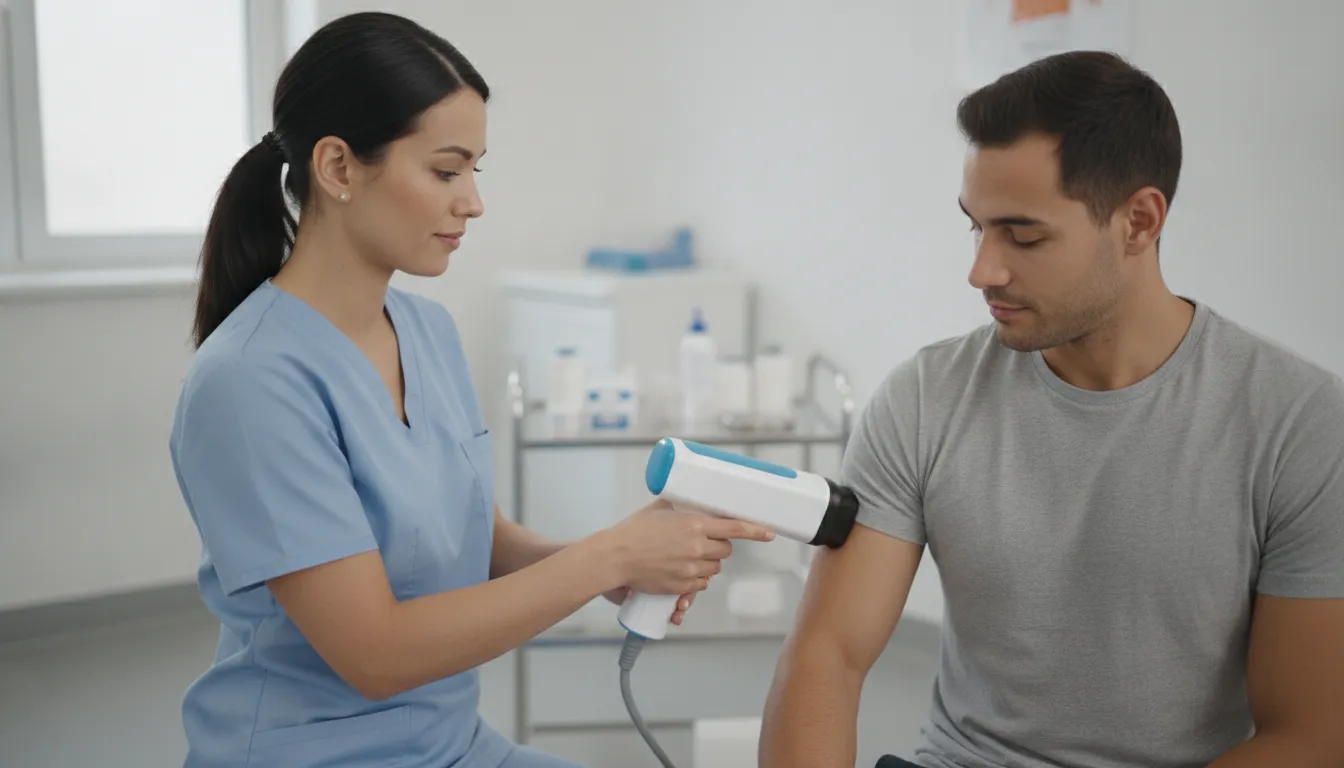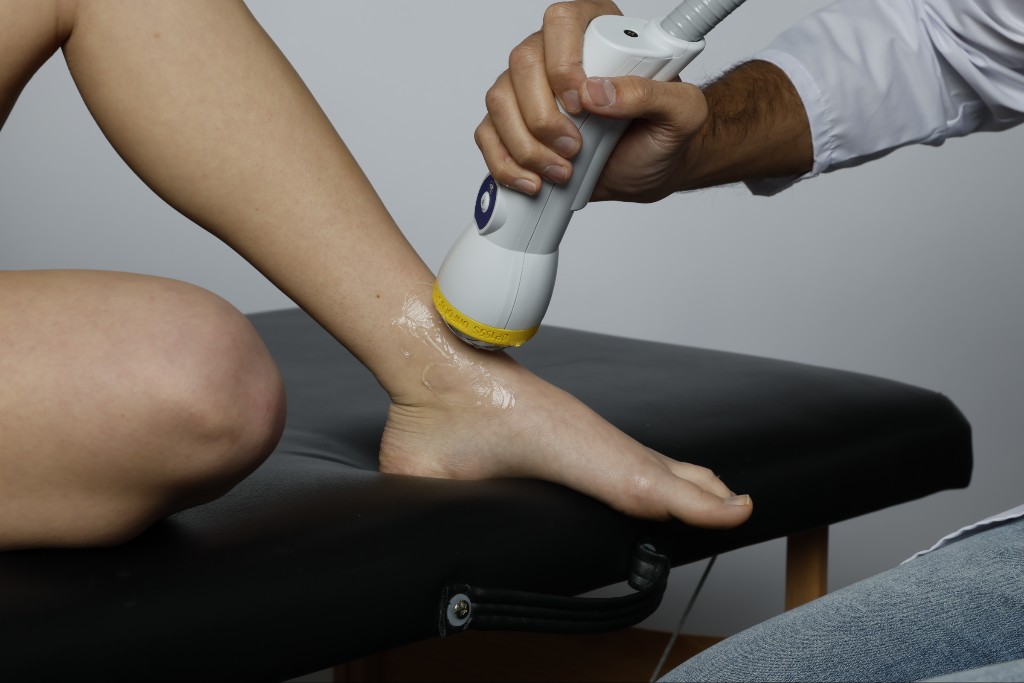
Shockwave therapy is widely used in orthopedic and rehabilitative care, yet device designs differ in ways that affect biological response and clinical consistency. Gymna ShockMaster is marketed as a radial shockwave system for musculoskeletal indications, but the peer-reviewed literature that identifies this platform is limited and based on small studies in specific conditions.
Existing reports do not define the treatment field size, depth distribution, or dose consistency in detail, so most expectations still come from broader radial shockwave research rather than robust device-level data. Placing Gymna ShockMaster within this wider evidence base helps clinicians judge how its design and validation align with current practice patterns.
What Gymna Shockmaster Machines Claim To Be
Gymna ShockMaster is marketed as a radial shockwave therapy system intended for clinical use in musculoskeletal and rehabilitative settings. The platform is described as using a pneumatic mechanism in which an accelerated projectile generates radially dispersing pressure waves that transmit mechanical energy into superficial soft tissue structures. This approach is positioned as suitable for localized musculoskeletal conditions commonly addressed in physical therapy, orthopedics, and sports medicine environments.
The manufacturer emphasizes usability features and protocol guidance rather than proprietary biological mechanisms. While radial shockwave therapy has been studied as a treatment modality, the specific performance characteristics attributed to Gymna ShockMaster have not been independently characterized in detail.
Only a limited number of points can be stated with confidence:
- Peer-reviewed studies that clearly identify Gymna ShockMaster devices are difficult to locate in the indexed literature, and available reports are limited and focused on narrow musculoskeletal indications, such as venous leg ulcers and non-insertional Achilles tendinopathy (Dolibog et al., 2018; Stania et al., 2024).
- Manufacturer datasheets describe pressure ranges, frequencies, and applicator options, yet independent publications do not provide detailed maps of treatment field size, depth distribution, or dose consistency specific to ShockMaster systems.
- Most of the clinical expectations associated with Gymna ShockMaster are inferred from the general literature on radial shockwave therapy rather than from outcomes demonstrated with this platform.
This distinction is important when interpreting manufacturer claims within the context of established shockwave science.
Clinical Evidence Supporting Radial Shockwave Therapy
Although Gymna ShockMaster does not have a strong device-specific clinical literature base, radial shockwave therapy has been evaluated as a treatment category across multiple musculoskeletal conditions. Findings in the literature describe outcomes that inform how clinicians interpret radial shockwave platforms in practice.
Documented findings in the radial shockwave literature include:
- Plantar fasciitis improvement was reported in a randomized clinical trial comparing radial extracorporeal shockwave therapy with high-intensity laser therapy, with both groups demonstrating reductions in pain and functional limitation (Thammajaree et al., 2023).
- Achilles tendinopathy outcomes, with a randomized trial by the same author showing improved pain and functional scores following radial shock wave therapy compared with ultrasound therapy.
- Lateral epicondylitis response, evaluated in a randomized sham-controlled trial comparing focused and radial shockwave therapies, reporting clinical improvement across outcome measures in both groups (Kaplan et al., 2023).
- Shoulder tendinopathy findings, summarized in a systematic review and meta-analysis of radial shockwave therapy for calcific and non-calcific presentations, reporting consistent pain and functional improvement (Ammendolia et al., 2020).
- Non-calcific rotator cuff outcomes, described in a randomized clinical trial comparing focused and radial shockwave therapy, with both approaches showing clinical improvement without clear superiority (Li et al., 2021).
These findings reflect the broader radial shockwave and ESWT literature. They do not confirm performance, dosing behavior, or reproducibility for any single commercial platform, including Gymna ShockMaster.
Radial shockwave therapy is associated with recurring constraints reported across studies:
- Treatment effects tend to concentrate in superficial tissue layers
- Outcomes may vary with operator technique and handpiece placement
- Protocol heterogeneity limits cross-study comparison and reproducibility
Taken together, the literature supports radial shockwave therapy for select localized musculoskeletal indications while leaving device-specific conclusions unresolved.
Read: Radial Shockwave Therapy Machines Compared
Gymna ShockMaster in Clinical Context and What Remains Unclear
When placed within the broader shockwave literature, Gymna ShockMaster aligns with established principles of radial shockwave therapy rather than representing a distinct or widely independently validated technology. While radial shockwave therapy has been studied as a modality, several factors limit what can be concluded about Gymna ShockMaster specifically.
1. Limited Device Specific Clinical Trials
Peer-reviewed reports rarely name Gymna ShockMaster directly, and when they do, studies are small and focus on narrow indications without detailed evaluation of performance or reproducibility. Clinicians still lack robust device-level data that would support precise protocol development.
2. Incomplete Independent Characterization of Technical Output
Manufacturer materials and trials report parameters such as pressure, frequency, and pulse counts, but independent studies give limited detail on three-dimensional field geometry or depth-specific pressure profiles for Gymna ShockMaster. Even in randomized work on diabetic frozen shoulder, dosing is described without clearly outlining field size or depth distribution in a way that can be applied to this hardware (Elerian et al., 2021).
3. Reliance on Modality Level Evidence
Clinical expectations for Gymna ShockMaster are extrapolated from radial shockwave research in plantar fasciitis, Achilles tendinopathy, and shoulder pathology rather than from large prospective trials using this device. This modality level inference can limit device-specific differences in output, ergonomics, and treatment field geometry.
4. Narrow Evidence Across Specialties
Published data supporting radial shockwave therapy concentrate on localized musculoskeletal indications, with little information for wound care, neurology, pelvic health, or complex fascial presentations. As a result, there is no clear evidence base for Gymna ShockMaster in these broader clinical contexts.
These gaps do not negate radial shockwave therapy as a modality, but they limit how confidently published outcomes can be applied to Gymna ShockMaster. For practices that prioritize predictable tissue engagement and evidence-backed use across varied indications, this distinction remains relevant when evaluating shockwave platforms.
Why Broad-Focused Shockwave Technology Has Gained Clinical Adoption
Broad-focused shockwave design delivers mechanical energy across a wide treatment field, reaching both superficial and deeper tissues simultaneously. This approach reflects the clinical reality that many musculoskeletal and soft-tissue conditions involve regional tissue interaction rather than a single, superficial structure.
When symptoms are influenced by connective tissue, fascia, musculotendinous interfaces, and local vascular response, treatment strategies that address only a limited surface area may not sufficiently engage the surrounding biological environment. In these scenarios, the ability to influence a broader tissue zone becomes clinically relevant.
Broad-focused shockwave delivery is often considered in such cases because it:
- Engages superficial and deep tissue layers within the same application
- Distributes energy across a larger anatomical region rather than restricting exposure to a small area
- Reduces reliance on precise handpiece localization during treatment
- Supports consistent tissue engagement across providers and sessions
- Accommodates indications involving complex anatomy or multifactorial tissue involvement
In comparison, systems that disperse pressure waves outward from the treatment surface are commonly applied to more localized, superficial targets. When evaluating platforms such as Gymna ShockMaster within this broader context, understanding how treatment field coverage differs across shockwave technologies helps clarify how design characteristics may influence regenerative treatment goals.
SoftWave Therapy: A Broad-Focused Shockwave System With Multidisciplinary Use
SoftWave Therapy is a patented broad-focused shockwave system designed for clinical, in-office use across multiple medical specialties. The platform uses an electrohydraulic source combined with a parabolic reflector to generate a wide and deep therapeutic field, allowing shockwaves to reach both superficial and deeper tissues within the same application.
Rather than concentrating energy at a single depth or dispersing pressure primarily at the surface, SoftWave delivers shockwaves across a broad treatment zone measuring approximately 7 cm by 12 cm. This field geometry supports engagement of a larger tissue environment, which is relevant in regenerative indications involving connective tissue, fascia, and regional vascular responses.
SoftWave has received FDA 510(k) clearances for several clinical indications, including:
- Activation of connective tissue
- Treatment of chronic diabetic foot ulcers
- Treatment of acute second-degree burns
- Temporary increase in blood flow
- Temporary pain relief
The system is used in multidisciplinary clinical settings, including orthopedics, podiatry, sports medicine, physical therapy, urology, and wound care. Its broad-focused design supports consistent tissue engagement with high patient tolerance, which can be relevant for workflows that require coverage of larger anatomical regions within limited treatment time.
How Clinicians Compare Shockwave Devices When Selecting a Platform
When selecting a shockwave platform for clinical use, clinicians typically evaluate features that influence reproducibility, tissue engagement, and integration into existing workflows. These considerations extend beyond brand positioning and focus on how the technology performs across real-world clinical scenarios.
Common criteria include:
- Therapeutic field size and geometry, including how broadly energy is distributed across the treatment area
- Depth of tissue engagement, particularly whether both superficial and deeper structures can be addressed within a single application
- Patient tolerance at clinically relevant energy levels, which can influence protocol adherence and session completion
- Regulatory clearances and indication scope, reflecting how the system aligns with approved clinical use
- Quality and relevance of published clinical evidence, with attention to device-specific validation rather than modality-level inference
- Suitability for multidisciplinary use, especially when a single platform is expected to support multiple specialties within the same practice
- Operator dependence and learning curve, affecting consistency across providers
- Workflow considerations, such as treatment duration, session efficiency, and suitability for use across multiple service lines
Evaluating these factors together helps clinicians determine whether a given shockwave system aligns with their practice’s clinical objectives, patient populations, and operational demands.
Choosing a Shockwave System Aligned With Clinical Practice
Gymna ShockMaster is positioned within the radial shockwave therapy category, yet no published, device-specific, peer-reviewed clinical studies validate its therapeutic performance. Clinical expectations are therefore inferred from general radial shockwave literature rather than outcomes demonstrated with this platform. Radial shockwave therapy has been studied for select localized musculoskeletal indications, though application is influenced by surface-weighted energy dispersion and operator-dependent technique.
Broad-focused electrohydraulic shockwave systems, such as SoftWave, represent a different design approach, emphasizing engagement of larger tissue regions and simultaneous treatment of superficial and deep structures. These systems support multidisciplinary use and hold FDA clearances across multiple indications, aligning more closely with regenerative treatment goals, workflow efficiency, and consistency of tissue engagement in clinical practice.
Learn more about the Best Shockwave Therapy Machine for Providers.
Integrate SoftWave Into Your Clinical Practice
SoftWave supports broad focused shockwave delivery with high patient tolerance and multidisciplinary applicability across musculoskeletal and regenerative care. Clinicians who want to evaluate how this platform fits into multiple medical specialties’ workflows can review published outcomes, request a demo, and explore how SoftWave is used in real-world clinical settings.
Learn more about SoftWave clinical research.