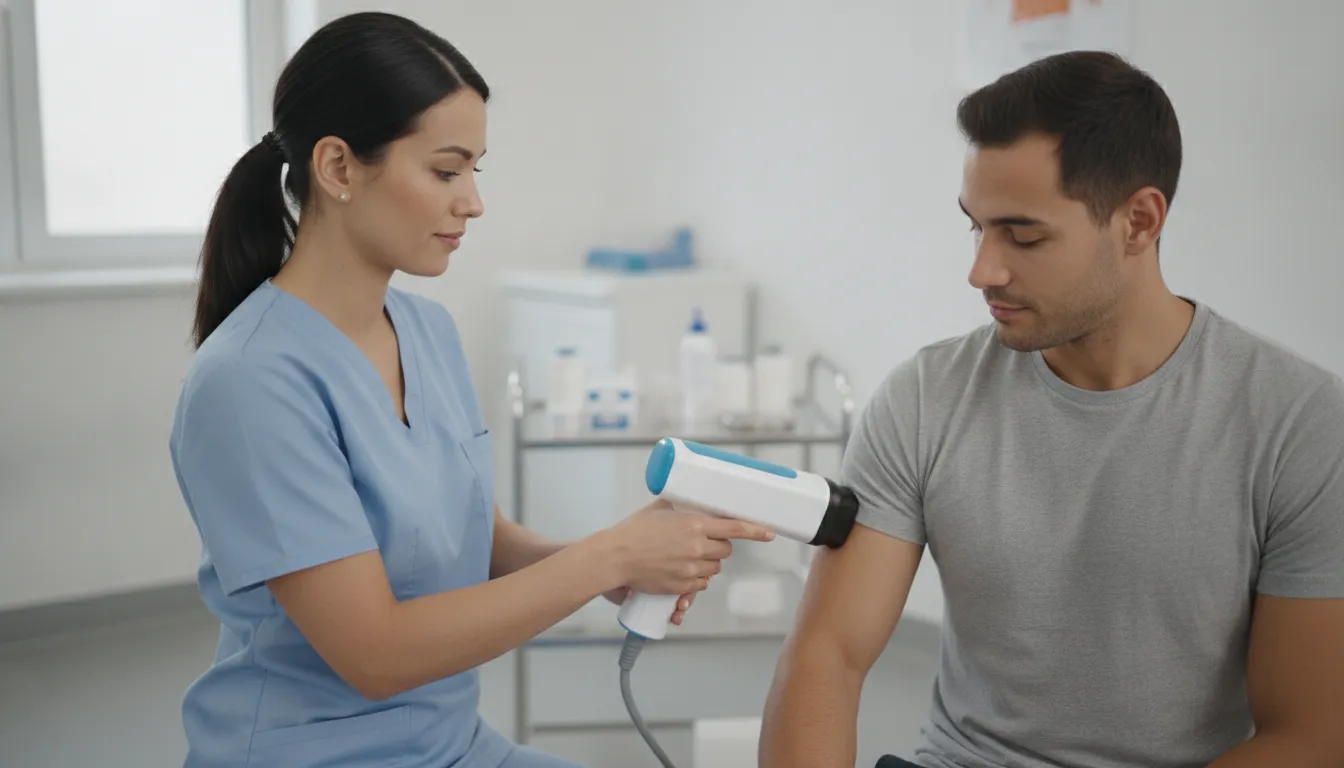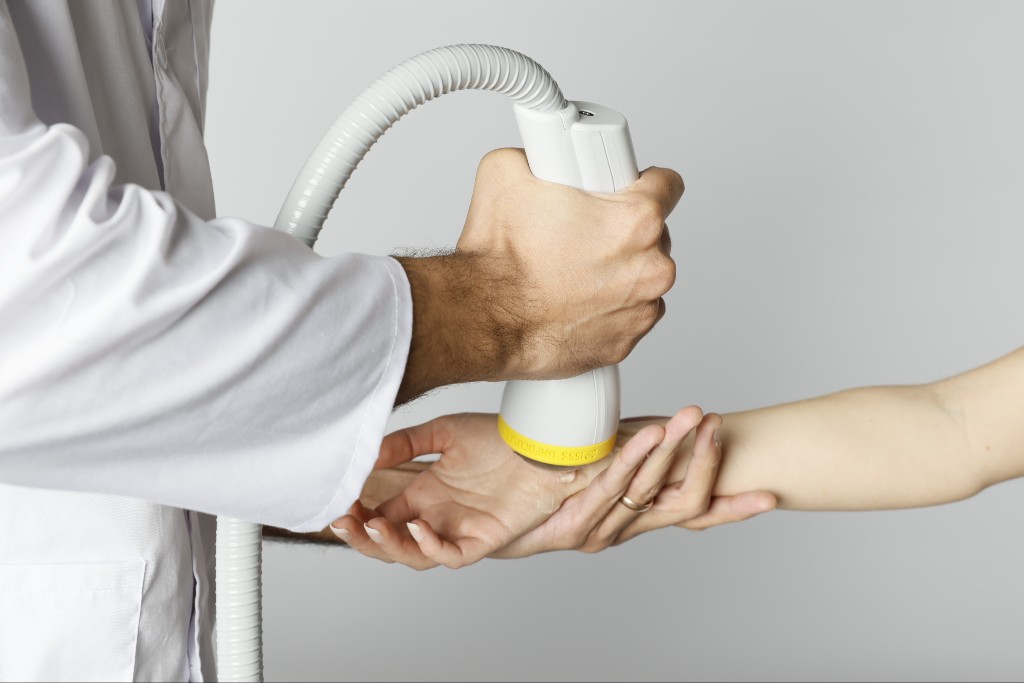
Linear shockwave therapy is discussed widely across regenerative and urologic care, yet the underlying device-specific technology is not consistently defined in the scientific literature. Many devices are promoted as though they deliver uniform biological effects, even though their mechanisms differ in terms of treatment field, depth profile, and energy distribution. Linear configurations are presented as an evolution of shockwave therapy, although published evidence describing their specific performance remains limited.
For clinicians who rely on consistent mechanotransductive signaling and predictable tissue engagement, clarifying how linear shockwave therapy is positioned within the broader shockwave landscape provides important context for interpreting its marketed indications and expected clinical effects.
How Linear Shockwave Therapy Is Represented In Manufacturer Claims
Manufacturers often use the term linear as a device label for systems designed to produce an elongated treatment zone, often described as a strip of exposure rather than a single focal point. This phrasing is used to differentiate the shape of the treatment field, yet it does not represent a standardized clinical category with uniform parameters. Some brands pair the linear label with descriptors such as low intensity, although intensity is not clinically meaningful unless energy flux density, pulse counts, and session structure are specified.
Common claims made in marketing for devices labeled linear include:
- Wider coverage per pass through an elongated treatment zone, intended to reduce the need for repeated repositioning
- More uniform exposure along a segment of tissue, often framed as consistent distribution across a defined strip
- Targeted application along an anatomical structure, such as the penile shaft and crura, in erectile dysfunction protocols
Renova, for example, is marketed as a linear shockwave device for erectile dysfunction and is positioned around claims of inducing controlled angiogenesis and improving penile hemodynamics, with language that emphasizes a linear segment conforming to the treated organ and targeted delivery in office-based care settings.
A few points about devices marketed as linear can be stated with clarity:
- Published clinical research exists for linear protocols in urologic applications, yet device-specific validation remains limited for many named systems marketed as linear.
- Independent reporting of measurable treatment field characteristics is often incomplete, including field size, depth distribution, and dose consistency across the intended linear segment.
- When studies do not specify field geometry and dose mapping, clinical expectations are often extrapolated from broader extracorporeal shockwave literature rather than confirmed through transparent device-level characterization.
This framing supports a practical interpretation of linear shockwave labeling. It keeps the focus on what can be measured and verified, rather than on implied performance that has not been fully documented in peer-reviewed device-specific literature.
Evidence Supporting Linear Shockwave Therapy in the Literature
Linear shockwave therapy protocols have been evaluated in several peer-reviewed clinical studies, most often in urologic regenerative care. However, there are limited device-specific studies for named commercial systems marketed as linear, since many publications assess a linear treatment approach without consistently identifying the exact platform used or fully documenting field geometry, depth distribution, and dose consistency. Available data suggest physiologic activity related to vascular and erectile tissue response, though outcomes vary and durability remains under investigation.
These clinical effects have been described in the literature:
- Improvement in erectile function scores over time following linear low-intensity shockwave therapy was observed in a double-blinded, sham-controlled randomized trial, with no consistent early superiority over sham treatment (Fojecki et al., 2017).
- Six- and twelve-month follow-up of the same linear protocol demonstrated persistence of erectile function changes in both the treatment and sham groups without sustained long-term differentiation (Fojecki et al., 2018).
- Use of linear low-intensity shockwave therapy for penile rehabilitation after nerve-sparing radical prostatectomy was feasible and well tolerated in a randomized, sham-controlled trial, with modest differences between groups during recovery (Motil et al., 2022).
- Clinical and technical review literature discussing low-intensity shockwave therapy across erectile dysfunction and post-prostatectomy rehabilitation includes linear configurations and emphasizes variability in treatment geometry and protocol design (Porst, 2019).
- An umbrella review of randomized trials evaluating low-intensity shockwave therapy for vascular erectile dysfunction, including studies using linear applicators, reported overall improvements in erectile function while highlighting substantial heterogeneity across devices and dosing strategies (Medrano-Sánchez et al., 2024).
These findings represent the current body of evidence supporting linear shockwave therapy as a modality rather than validating any specific linear device. Most published data are limited to urologic populations and vary in protocol structure and follow-up duration.
Clinical considerations associated with linear shockwave therapy include:
- The therapeutic field is narrow, which can limit coverage when pathology extends beyond a discrete vascular or anatomical line.
- Treatment outcomes may depend on consistent alignment along the intended linear path.
- Reproducibility can vary across providers, particularly in presentations involving broader or multifactorial tissue involvement.
Read: Low Intensity Shockwave Therapy vs High Intensity: Which Works Best?
Linear Shockwave Therapy in Clinical Context: What Is Missing
When linear shockwave therapy is reviewed within the broader shockwave landscape, several limitations become relevant for clinicians evaluating its role in practice. These gaps reflect the current state of evidence and reporting of the modality itself.
1. Limited Clinical Trials
Peer-reviewed trials evaluating named linear shockwave devices are scarce. Most published studies describe linear low-intensity protocols at a category level, which limits confidence in technology-specific performance and reproducibility.
2. Limited Regulatory and Multidisciplinary Validation
Regulatory clearances and peer-reviewed evidence for linear shockwave therapy are confined mainly to urologic applications. Support for use across musculoskeletal, wound care, neurologic, or other specialties is limited and often inferred rather than established through direct clinical validation.
3. Limited Technical Data
Independent reporting on treatment field size, depth of penetration, and tissue volume engagement is minimal. This lack of technical transparency complicates comparisons with other shockwave designs.
4. Limited Multidisciplinary Evidence
Peer-reviewed data supporting linear shockwave therapy outside of urology remain limited. Evidence for musculoskeletal, wound care, or neurologic use is sparse and not well standardized.
Together, these gaps highlight the importance of aligning expectations for linear shockwave therapy with the current scope of published evidence and regulatory validation.
Why Broad-Focused Shockwave Design Has Become Widely Used in Regenerative Care
Broad-focused shockwave designs are used in regenerative care because they engage a wider biological environment and reflect the layered structure of musculoskeletal and soft tissue pathology. This approach is commonly applied when symptoms arise from interconnected tissues rather than a single isolated structure.
Clinically relevant characteristics associated with broad-focused shockwave designs include:
- Engagement of a larger therapeutic environment that can influence adjacent and interconnected tissues.
- Consistent patient tolerance that supports delivery of biologically active dosing.
- Reduced reliance on exact handpiece placement, supporting reproducible application.
- Applicability across multiple specialties, including orthopedics, sports medicine, physical therapy, podiatry, urology, and wound care.
Taken together, these design principles explain why broad-focused shockwave therapy is often favored when regenerative goals extend beyond a single focal target and require engagement of a broader biological environment.
SoftWave Therapy as a Broad Focused Shockwave System With Multidisciplinary Validation
SoftWave Therapy is a patented, broad-focused shockwave system developed for in-office clinical use. It uses an electrohydraulic source with a patented parabolic reflector to generate a broad therapeutic field measuring approximately 7 cm by 12 cm, allowing simultaneous engagement of both superficial and deep tissues within a single application. This design supports the treatment of layered and complex anatomical structures relevant to regenerative care.
The broad-focused field produced by this electrohydraulic architecture is associated with biologic responses involved in tissue healing, including modulation of inflammation, activation of connective tissue, and promotion of neovascularization. These effects are achieved without concentrating energy into a single focal point, supporting consistent patient tolerance across sessions.
SoftWave has received multiple FDA 510(k) clearances, including:
- Activation of connective tissue
- Temporary increase in blood flow
- Temporary pain relief
- Treatment of chronic diabetic foot ulcers and acute second-degree burns.
The system is designed exclusively for clinical use and has been integrated across specialties, including orthopedics, podiatry, sports medicine, physical therapy, urology, and wound care.
For clinicians, the distinction lies in coverage: linear shockwave therapy delivers energy along a narrow path, while SoftWave engages a wider surrounding tissue environment in a single session, aligning with regenerative strategies that address interconnected tissue systems.
How Clinicians Compare Shockwave Devices When Selecting a Platform
When evaluating shockwave platforms, clinicians often apply a structured set of criteria that reflects both mechanistic considerations and practical workflow demands. These factors help determine whether a system aligns with the clinic’s indications, patient population, and long-term treatment goals.
- Therapeutic Field Size and Geometry: Field dimensions determine the amount of tissue that can be treated within a single application.
- Depth of Penetration: Adequate depth supports engagement of tendons, fascia, and deeper connective tissues.
- Patient Tolerance at Therapeutic Dosing: Comfort influences dosing consistency and adherence across treatment sessions.
- Regulatory Clearances and Indication Range: FDA-cleared indications provide guidance on intended use and help clinicians align device selection with the services offered within their practice.
- Device-Specific Clinical Evidence: Peer-reviewed outcomes inform expectations for reproducibility and performance.
- Operator Dependence and Consistency: Reduced reliance on precise technique supports consistent application across providers.
- Suitability for Multidisciplinary Use: Versatility across specialties supports integration within a single platform.
- Workflow Considerations: Treatment time per session, protocol complexity, and ease of integration into existing schedules influence efficiency and scalability in busy practices.
Choosing the Right Shockwave System for Clinical Use
Linear shockwave therapy is one approach within low-intensity shockwave protocols, with published evidence primarily concentrated in urologic applications and limited device-specific validation. While studies suggest physiologic activity related to vascular response, variability in protocols and outcomes remains an important consideration for clinical adoption.
Broad-focused electrohydraulic systems such as SoftWave are designed to engage larger tissue volumes within a single application and hold FDA 510(k) clearances across multiple indications relevant to regenerative and wound care practice. When selecting a shockwave platform, clinicians often prioritize regulatory alignment, quality of evidence, treatment field characteristics, and workflow efficiency to ensure compatibility with their patient population and service lines.
Learn more about the Best Shockwave Therapy Machine for Providers.
Integrate SoftWave into Clinical Workflows
SoftWave applies a patented broad-focused shockwave design that supports treatment of complex tissue environments within an in-office clinical setting. Its electrohydraulic architecture and wide therapeutic field enable engagement of both superficial and deep tissues in a single application, aligning with regenerative care approaches across multiple specialties.
Clinicians who want to understand how SoftWave integrates into orthopedic, sports medicine, physical therapy, podiatry, wound care, or urology workflows can review published clinical data, examine real-world protocol implementation, and request a demo.
Learn more about SoftWave clinical research.