Active patients frequently experience recurrent ankle pain due to tendinopathy, ligament injury, mechanical overload, or early degenerative change, which can limit performance and delay return to activity. Conventional management, such as rest, immobilization, analgesics, or rehabilitation, reduces symptoms but does not always restore tissue quality or prevent chronic recurrence. Interest in regenerative treatments for ankle pain has increased as clinicians explore approaches that promote biologic repair rather than focusing solely on symptom control. This perspective supports a more durable recovery pathway for active individuals and frames the clinical context for evaluating regenerative options.
The Role of Regenerative Treatments in Managing Ankle Pathologies for Active Patients
Regenerative treatments for ankle pain aim to modulate biological processes that support tissue repair. These approaches are relevant for active individuals because tendon overload, ligament insufficiency, and repeated sprains can progress despite appropriate conservative care. A living systematic review on Achilles tendinopathy found that a substantial number of patients remained symptomatic after standard management, underscoring the need for strategies that address underlying tissue quality rather than symptoms alone (van der Vlist et al., 2021).
Regenerative treatments for ankle pain like platelet-rich plasma and shockwave-based interventions, have gained interest because they engage biologic mechanisms that contribute to structural recovery. A randomized study on acute lateral ankle sprain found that a biologic adjunct produced greater short-term functional gains than standard care (Blanco-Rivera et al., 2020). In chronic tendon-related ankle conditions, another trial reported that targeted mechanical stimulation improved pain and function more effectively than comparator treatments (Stania et al., 2024). These findings support the relevance of regenerative strategies for active patients who require restoration of tissue integrity to meet physical demands.
Regenerative Treatment Approaches Applied to Ankle Conditions in Active Patients
Clinicians often incorporate regenerative treatments for ankle pain when structural recovery does not progress with standard or conservative care. These approaches support tissue repair through biologic or mechanotransductive processes relevant to tendon, ligament, and periarticular structures. Although techniques differ, the overall objective is to influence healing capacity in symptomatic tissue.
Extracorporeal Shockwave Therapy (ESWT)
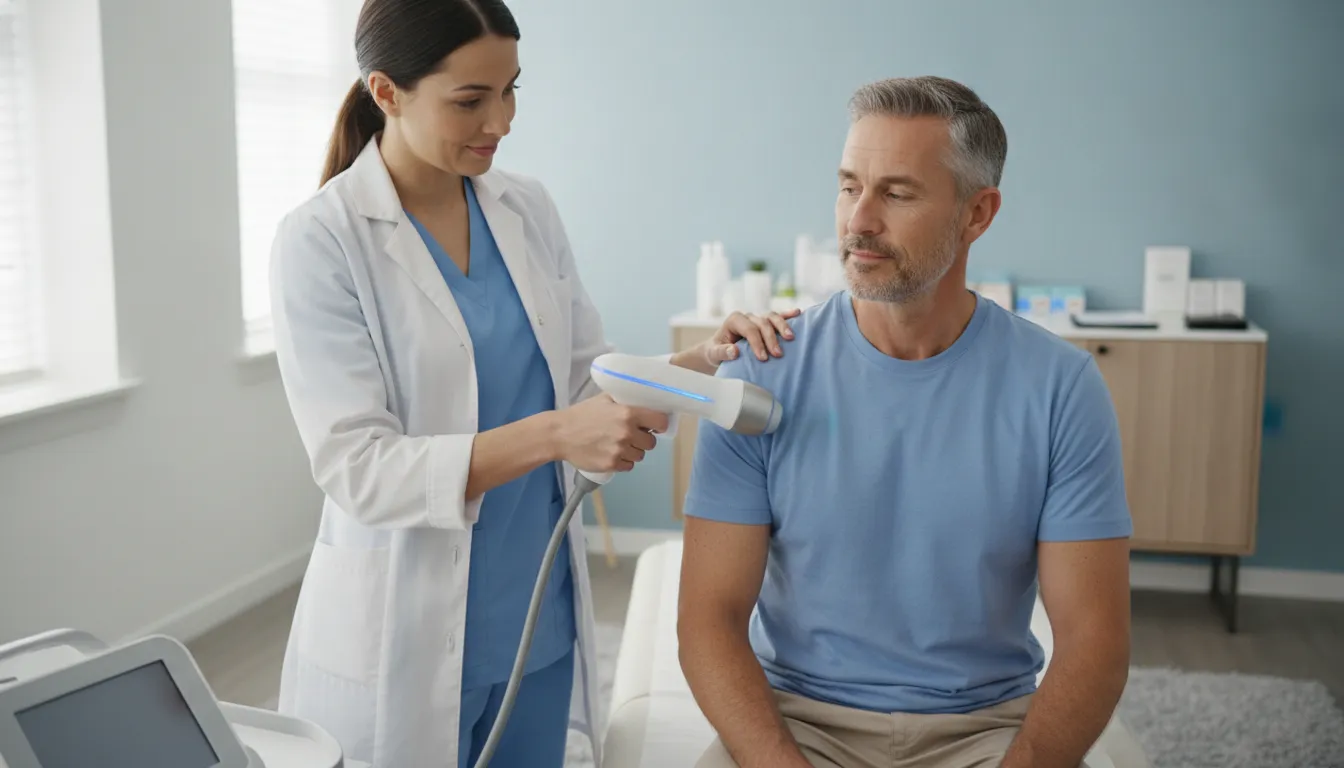
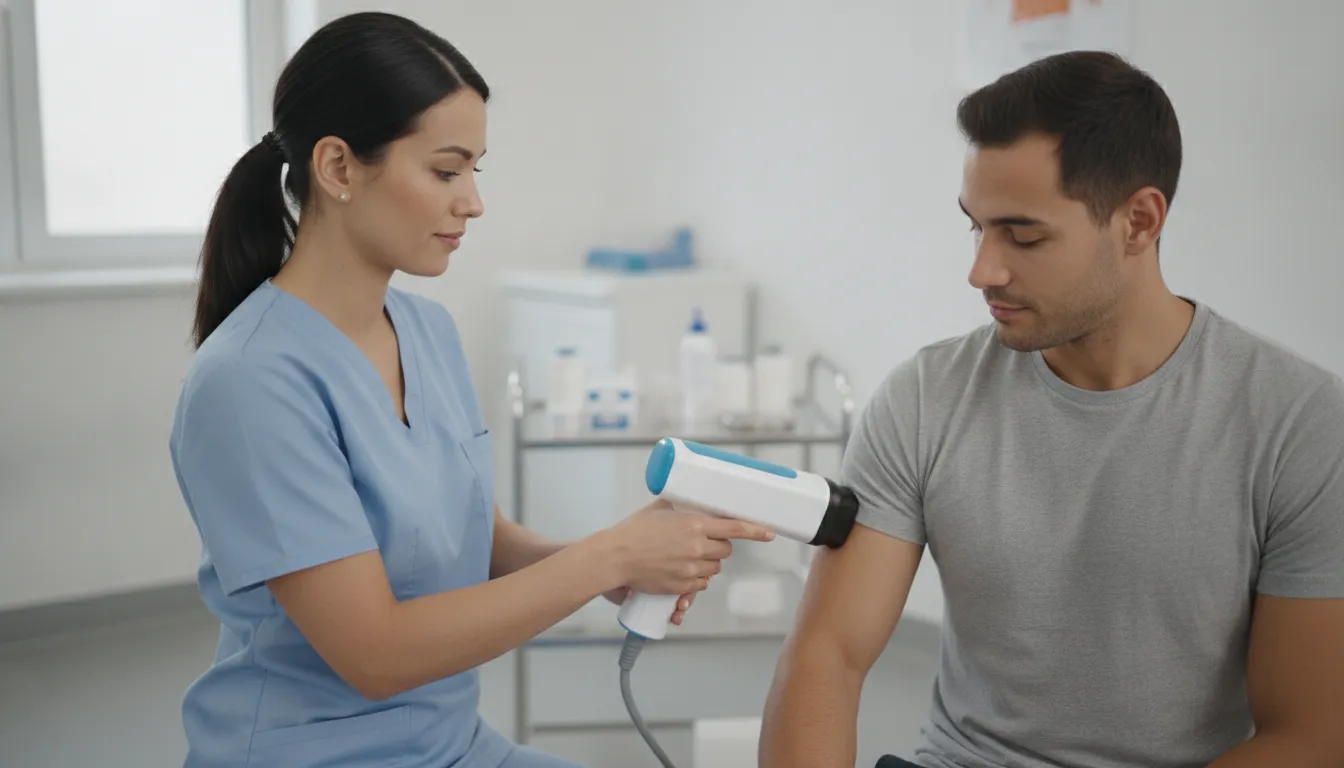
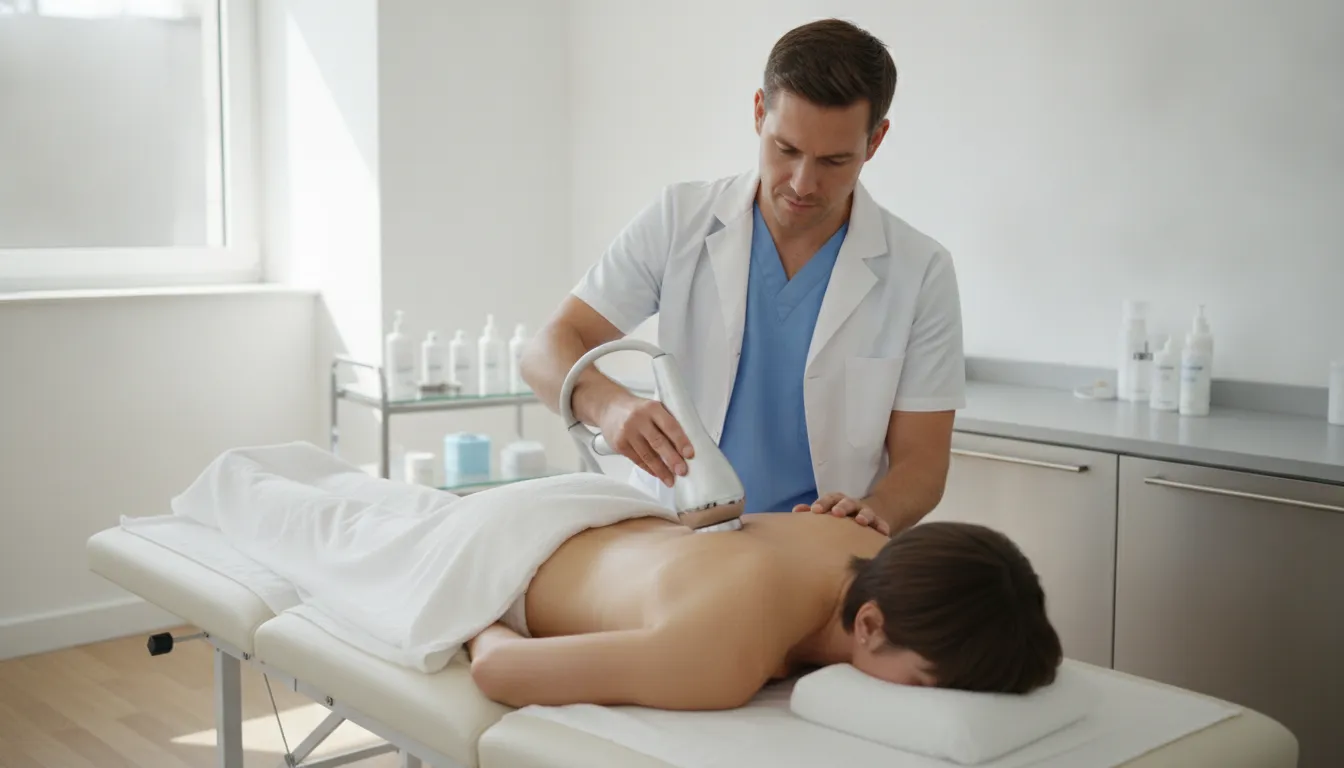
Shockwave therapy is a noninvasive modality that applies controlled acoustic waves to engage cellular and mechanical pathways involved in tendon and ligament repair. The energy delivered to the treatment region promotes neovascularization, modulates inflammatory activity, and contributes to the organized restructuring of collagen within symptomatic tissue. A systematic review of ESWT for lower limb disorders demonstrated consistent improvements in pain and function across multiple tendon-related conditions, including Achilles tendinopathy (Korakakis et al., 2018). These findings reinforce shockwave therapy as a clinically meaningful regenerative approach for patients whose activity demands require solutions that address underlying tissue quality rather than relying solely on conservative symptom management.
Read: Why SoftWave Is the Proven Standard in Regenerative Medicine Devices
SoftWave Therapy for Ankle Pain in Active Patients
SoftWave Therapy is an advanced form of shockwave treatment that uses a patented, broad-focused applicator delivered through a parabolic reflector. This design distributes energy across a therapeutic zone measuring 12 cm in length and 7cm in width, allowing engagement of superficial and deep tissues in the same session. The technology supports biological activities related to angiogenesis, modulation of inflammation, and activation of connective tissue. SoftWave Therapy is FDA-cleared for activating connective tissue, treating diabetic foot ulcers and acute second-degree burns, providing temporary pain relief, and increasing local blood flow. Sessions last about 10 minutes and require no downtime, which is appropriate for patients who maintain higher activity demands.
Explore how the best shockwave therapy machine for providers supports tissue-focused treatment in musculoskeletal practice.
Platelet Rich Plasma (PRP)
Platelet-rich plasma is an autologous concentration of platelets that contains growth factors involved in tissue repair pathways. It is used in ankle-related conditions when clinicians aim to influence healing in symptomatic ligaments or tendons. The author also found, in a randomized clinical study on acute lateral ankle sprain, short-term improvements in pain and function when PRP was added to immobilization compared with immobilization alone.
Outcomes may vary based on preparation methods, platelet concentration, and timing of administration, and PRP is often integrated into structured rehabilitation plans that support tissue recovery.
Exosome Injections
Exosome injections deliver extracellular vesicles that participate in intercellular communication by transporting nucleic acids, proteins, and signaling molecules. These vesicles influence pathways involved in matrix regulation and inflammatory modulation within injured tissue. A systematic review of extracellular vesicle applications in tendon disorders reported improvements in cellular activity and matrix organization across preclinical and early clinical investigations, indicating their applicability for tendon-related ankle symptoms (Kasula et al., 2024). Treatment consistency is influenced by vesicle source and processing methods, and current use is generally concentrated within specialized regenerative settings.
Transcutaneous Electrical Nerve Stimulation (TENS)
Transcutaneous Electrical Nerve Stimulation applies low-voltage electrical currents through surface electrodes to influence nociceptive signaling. It is frequently used to support comfort and functional participation during rehabilitation for ankle-related symptoms. A comprehensive evaluation of meta-analyses showed reductions in musculoskeletal pain intensity and analgesic use when TENS was compared with control groups (Paley et al., 2021). Dosing parameters and electrode placement influence treatment response, and TENS is commonly included within broader musculoskeletal care to assist progression toward mechanical loading.
Strengthen Your Regenerative Treatment Capabilities Through SoftWave Therapy
Regenerative treatments for ankle pain support tissue repair when symptoms continue despite standard care. Approaches that influence biological activity are valuable when clinicians aim to address underlying tissue quality. SoftWave Therapy aligns with this objective through a noninvasive approach that delivers regenerative stimulation across a broad treatment zone, supporting the biologic activity involved in tissue recovery.
SoftWave Therapy devices are used across orthopedics, sports medicine, physical therapy, urology, and podiatry, supporting regenerative strategies in clinics that manage a wide range of musculoskeletal conditions. Its clinical validation and expanding body of research reinforce its role as a modality that supports tissue repair while fitting seamlessly into established treatment pathways.
Become a SoftWave Provider today and bring advanced regenerative treatment capabilities to your practice.