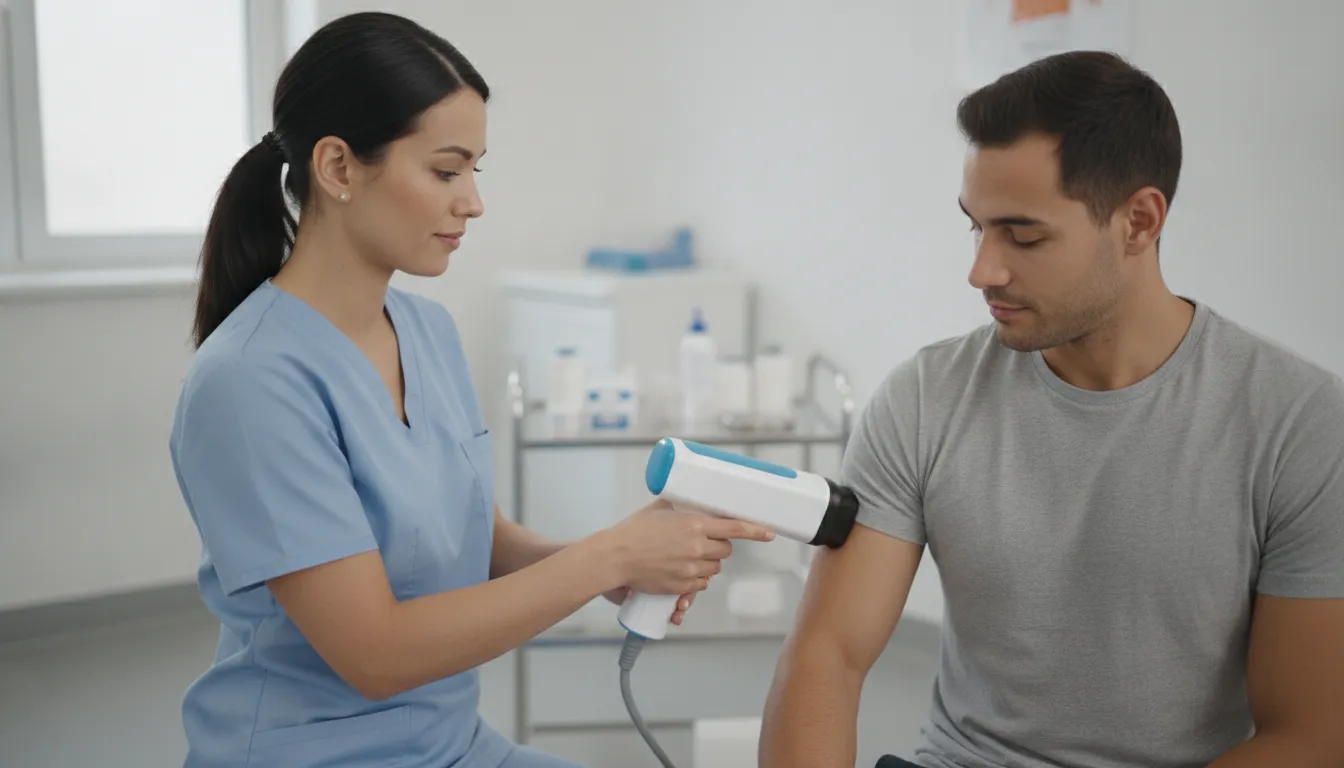
Shockwave therapy is widely used as a non-invasive treatment option across multiple medical specialties. While some procedures are reimbursed under specific codes and circumstances, others are reviewed on a case-by-case basis depending on the payer and medical necessity. Understanding how reimbursement works can help providers expand access to care while sustaining clinic operations and maximizing return on technology investments.
What Is Shockwave Therapy and How Does It Work?
Shockwave therapy uses acoustic energy to stimulate biological healing responses in targeted tissues. Within this category, SoftWave Therapy represents an advanced application of this approach, delivering broad-focused shockwaves through a patented parabolic reflector that distributes energy in a parallel waveform. This wide treatment zone enables deeper penetration and optimized tissue coverage without causing microtrauma.
Inflammation & Regeneration
SoftWave Therapy supports the body’s natural healing mechanisms through enhanced perfusion, angiogenesis, cytokine release, and cellular signaling. It modulates inflammation and activates regenerative processes that contribute to recovery. Applications span orthopedics, sports medicine, physical therapy, urology, and podiatry. With FDA clearances, Health Canada licensing, and success in treating a range of challenging indications, SoftWave devices are positioned to improve patient outcomes while maximizing provider efficiency.
Read more about the Best Shockwave Therapy Machine for Providers.
Is Shockwave Therapy Covered by Insurance?
Coverage of extracorporeal shock wave therapy (ESWT), including SoftWave, is highly variable across commercial and government payers. Insurers typically classify ESWT as investigational for many indications. However, some plans offer coverage when specific clinical criteria are met and documentation supports medical necessity.
Reimbursement may also be possible under particular CPT codes for wound care, musculoskeletal applications, or sexual health, depending on the patient’s diagnosis, the payer’s policy, and the strength of documentation. Successful reimbursement begins with understanding payer requirements and aligning therapy indications with established coverage pathways.
How Does Shockwave Reimbursement Work for Providers: A Step-by-Step Guide
Providers seeking insurance payment for shockwave therapy benefit from a clear process. This guide spans from establishing medical necessity through to final billing, incorporating best practices in coding, documentation, and regulatory protocols:
1. Confirm Medical Necessity and Diagnosis
Begin by verifying that the patient’s condition corresponds to a CPT code recognized for reimbursement, such as high‑energy codes 0101T or 0102T, or wound‑healing codes 0512T/0513T. Ensure clinical evidence, like imaging results, functional impairment, and pain scales, is recorded to support the diagnosis in the medical record. This documentation forms the foundation for demonstrating that the service aligns with payer guidelines and reflects true medical necessity, strengthening the justification for shockwave reimbursement.
2. Document Previous Conservative Care
Insurance carriers typically require evidence of conservative treatment attempts before approving ESWT coverage. Detailed chart entries should reflect a trial of therapies such as orthotics, NSAIDs, physiotherapy, or rest. Document duration, response, and objective metrics demonstrate insufficient improvement. This history is key for satisfying Medicare’s Local Coverage Determinations (LCDs), which often mandate six months of failed conservative management in indications like plantar fasciitis.
3. Submit Prior Authorization When Applicable
When dealing with commercial insurers or Medicare Advantage plans, secure prior authorization if required. Include a detailed rationale for ESWT using accurate ICD‑10 diagnoses and selected CPT codes, referencing failed conservative treatment. Tailor the clinical justification to payer-specific policies. Providing thorough documentation up front reduces claim denials and accelerates approval.
4. Issue an Advance Beneficiary Notice (ABN)
For Medicare Part B patients with uncertain coverage, issue the CMS Form R‑131 ABN before treatment. Medicare stipulates that ABNs must be issued when services might be considered “not medically reasonable and necessary,” such as ESWT in investigational indications. This ensures the patient is fully informed and shields the practice from financial liability in the event of a Medicare denial.
5. Submit Claims Using Precise Coding and Modifiers
When billing, apply the approved CPT codes (0101T–0102T, 0512T–0513T, X170T) along with appropriate ICD‑10 designations. Distinguish between facility and non-facility settings to ensure compliance with Medicare’s varying fee schedules and RVU structures. Include modifiers such as -59 for distinct procedural circumstances and indicate service location. Append the GA modifier to signify a valid ABN on file where required. Attach clinical documentation and prior authorization approval with the claim to support the request.
6. Monitor Denials and File Appeals if Needed
Occasionally, payers may deny ESWT claims, citing investigational status or a lack of documentation. In such instances, file a formal appeal that includes peer-reviewed research, FDA/Health Canada clearances, and clinical outcome data. SoftWave provides a model denial letter in its reimbursement manual to aid providers in crafting compelling appeals.
Common Challenges and Pitfalls in Shockwave Reimbursement and How to Address Them
Reimbursement challenges often arise due to misalignment between documentation, coding, and payer expectations. The following are common pitfalls with strategies to help providers address them effectively.
Coding Mismatches
Incorrect use of CPT or diagnosis codes can result in denied claims. To avoid this, cross-reference code descriptions with the treated indication and verify that your documentation supports using each code.
Inadequate Documentation
Missing or incomplete progress notes, treatment history, or clinical findings reduce the chance of reimbursement. Standardize intake and charting templates to prevent this issue and ensure all required elements are captured consistently.
Classification as Investigational
Some payers deny claims by citing shockwave therapy as experimental. Include peer-reviewed studies in your appeals and document failed conservative treatments to address this. Referencing systematic reviews or data can strengthen your case.
Appeal Delays
Failure to respond to denied claims within payer timeframes can result in missed opportunities. Establish a follow-up system to track pending claims and ensure the timely submission of appeals.
Empower Your Practice with SoftWave Therapy
Shockwave reimbursement is attainable with the right protocols, accurate coding, and documentation aligned to payer expectations. While insurance coverage can vary, providers who invest in structured workflows and reference payer policies are better equipped to deliver regenerative care with less financial friction.
SoftWave Therapy devices stand apart due to its patented applicator and broad treatment applications. Its ability to treat complex cases efficiently, combined with strong patient satisfaction and increasing clinical support, makes it a forward-thinking solution for today’s providers.
Clinicians looking to expand treatment offerings while maintaining reimbursement viability can find a valuable partner in SoftWave by Becoming a SoftWave Provider.