Tissue healing after knee procedures such as ligament reconstruction, meniscal repair, or joint resurfacing is influenced by both structural repair and the surrounding biological environment. Regenerative restorative care treatments are increasingly incorporated to support cellular signaling, improve vascular response, and guide tissue organization throughout recovery. These approaches are being applied across post-surgical protocols to help minimize fibrosis and improve overall healing quality. As interest continues to grow, clinicians are exploring how these therapies contribute to more complete and efficient rehabilitation.
The Clinical Role of Regenerative Restorative Care Treatments After Knee Procedures
Regenerative restorative care treatments are used to activate cellular processes involved in tissue remodeling, with specific application to structures affected during surgical intervention, such as cartilage, ligaments, and tendons. These therapies are designed to influence healing quality and support joint restoration through biologically guided mechanisms.
In post-operative protocols, regenerative options have demonstrated potential to improve clinical outcomes. Zhou et al. (2019) found that extracorporeal shockwave therapy limited intra-articular fibrosis and preserved joint mobility in a controlled knee repair model. In clinical settings, D’Ambrosi et al. (2022) observed that patients who used regenerative approaches, such as pulsed electromagnetic field therapy, after unicompartmental knee arthroplasty reported less pain, reduced swelling, and better functional scores than those receiving standard care alone. These findings support the inclusion of regenerative approaches in rehabilitation strategies aimed at improving postoperative outcomes.
Exploring Regenerative Restorative Modalities for Post-Operative Knee Care
Several biologic and biophysical treatments are integrated into post-operative care to enhance tissue healing and functional recovery. Each of these regenerative restorative care treatments contributes through distinct mechanisms and is applied based on surgical context, patient factors, and clinical objectives. Below is an overview of current modalities considered in post-knee rehabilitation.
SoftWave Therapy
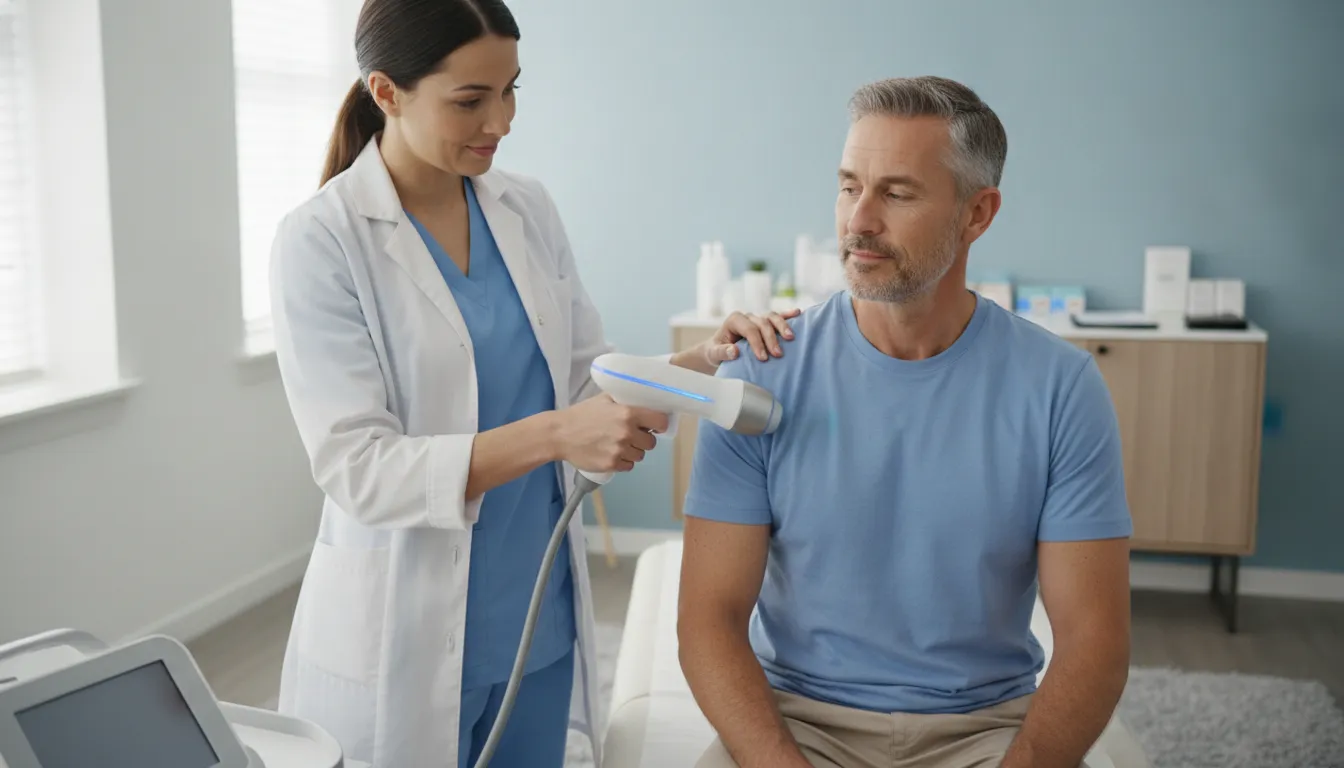
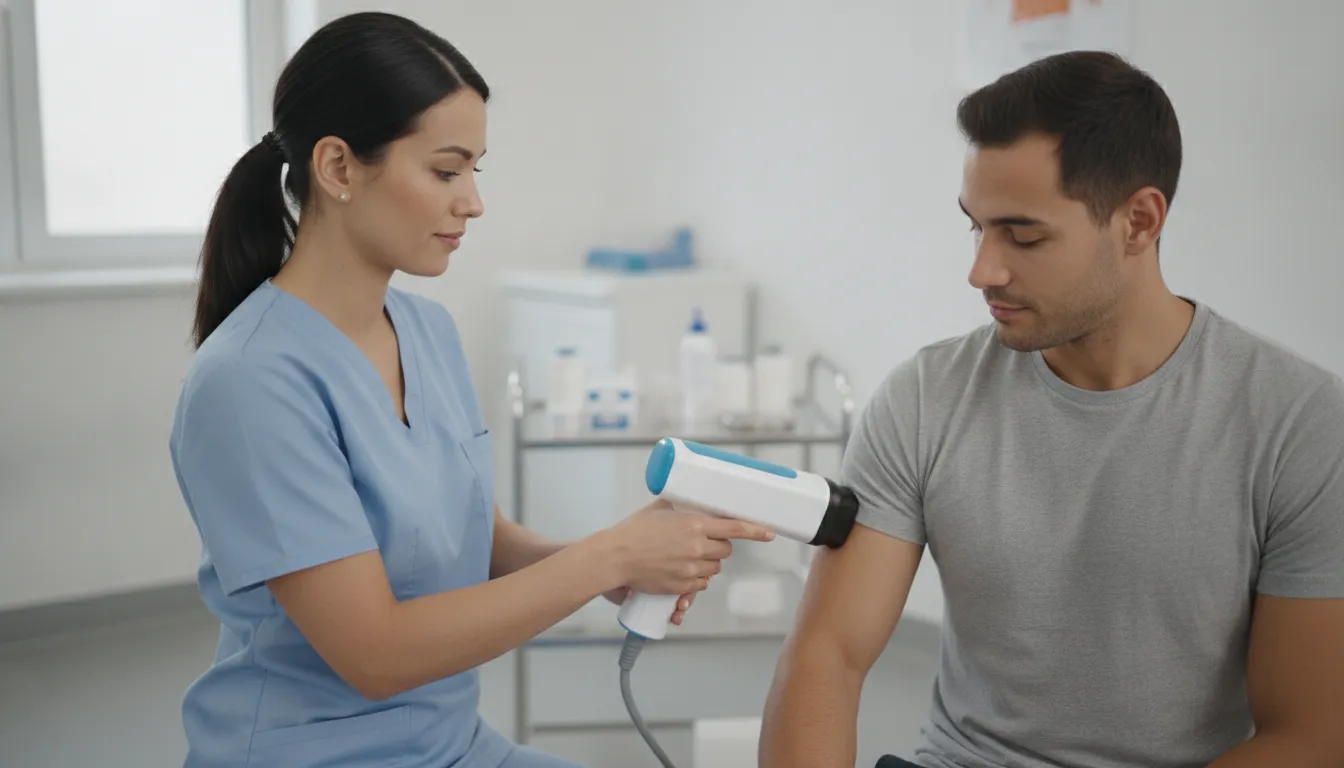
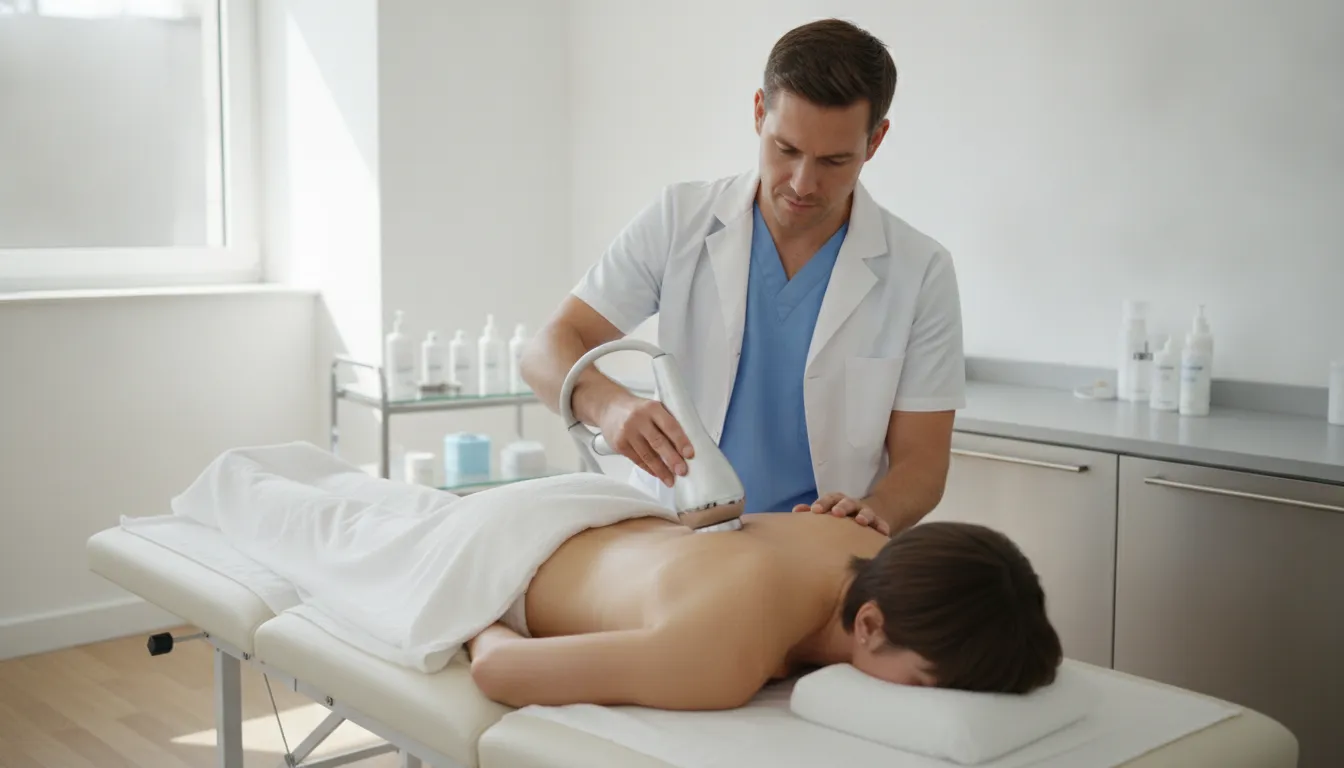
SoftWave Therapy is a broad-focused form of shockwave therapy that delivers electrohydraulic shock waves through a patented parabolic reflector, producing a therapeutic zone approximately 7 cm wide and 12 cm deep without generating microtrauma. This distribution allows engagement of superficial and deep tissues in a single application, supporting angiogenesis, inflammatory modulation, and connective tissue activation.
ESWT has shown clinical relevance in knee-related conditions. In a randomized controlled trial, patients receiving ESWT demonstrated significant improvements in pain levels and functional scores compared with sham treatment, emphasizing its value for post-surgical inflammation and mobility (Zhong et al., 2019). SoftWave sessions typically last around 10 minutes, require no anesthesia, and integrate efficiently into rehabilitation workflows. The technology is FDA-cleared for connective tissue activation and other indications, offering clinicians a non-invasive option with consistent delivery characteristics suited for post-operative protocols.
See why clinicians are adopting the best shockwave therapy machine for providers in regenerative care.
Platelet-Rich Plasma Therapy
Platelet-rich plasma therapy uses autologous platelets concentrated from the patient’s blood to deliver growth factors that influence tissue remodeling. PRP is applied after knee procedures to support the healing of structures such as ligaments, tendons, and meniscal repair sites. Platelets release bioactive mediators that contribute to collagen synthesis and to the regulation of inflammation. Evidence shows its role in post-operative knee care. Utrilla et al. (2024) reported that PRP augmentation in meniscal repair surgery reduced the incidence of repair failure and produced improvements in early postoperative outcomes compared with controls. PRP is used due to its autologous nature, though outcomes may vary with preparation techniques and patient factors.
Stem Cell Therapy
Stem cell therapy in orthopedic applications generally utilizes mesenchymal stem cells derived from bone marrow or adipose tissue to influence tissue regeneration. After knee surgeries involving cartilage repair or joint preservation procedures, these cells may be introduced to enhance the biologic environment of healing tissues. Their activity includes cytokine secretion and support of extracellular matrix formation. A prospective, randomized study examining adipose-derived stem cell injections combined with microfracture surgery demonstrated improvements in pain and MRI-evaluated cartilage quality compared to microfracture alone at two-year follow-up (Koh et al., 2016). While stem cell applications continue to evolve, current evidence suggests a role in supporting tissue integrity after surgical intervention.
Pulsed Electromagnetic Field Therapy (PEMF)
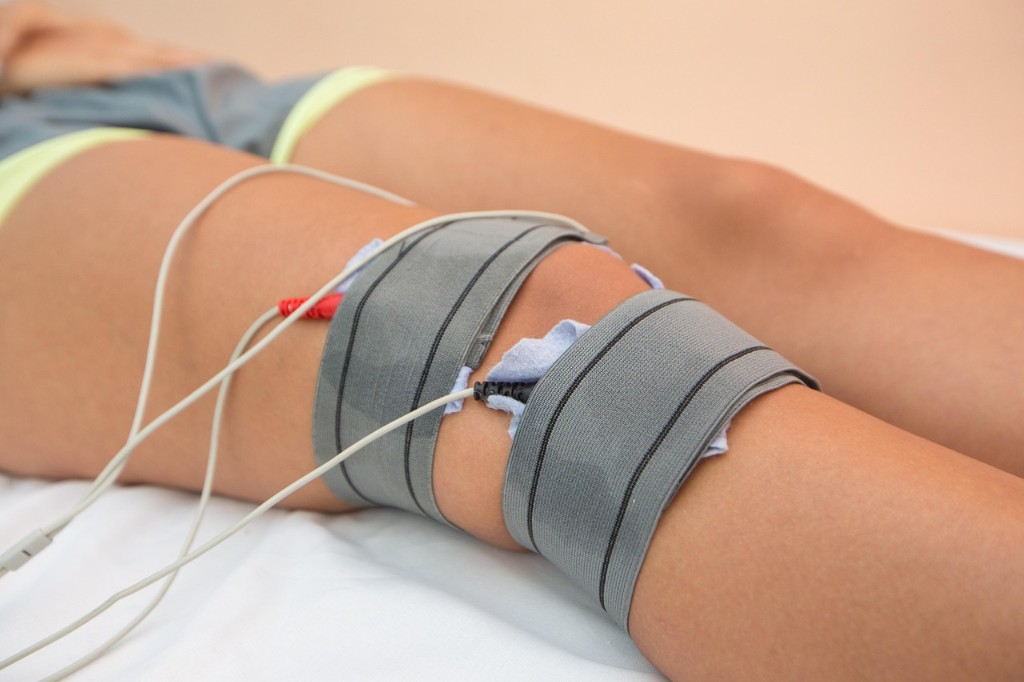
Pulsed electromagnetic field therapy provides low-frequency electromagnetic stimulation that influences ion signaling and nitric oxide pathways involved in tissue repair. PEMF can be applied to the post-operative knee to help manage swelling and support recovery in the early phases of rehabilitation. Evidence supports its clinical relevance. In a randomized controlled trial, the authors also found that patients who received PEMF therapy following unicompartmental knee arthroplasty reported reduced pain, improved functional scores, and decreased reliance on NSAIDs compared with control subjects. PEMF is non-invasive and commonly used as an adjunct to structured therapy sessions.
Physical Therapy
Physical therapy is included in post-operative knee rehabilitation as a method to support mobility and strength through controlled exercise and joint mobilization. These interventions apply mechanobiologic principles that influence tissue organization and help restore functional capacity during recovery. Evidence supports its use within standard care pathways. A meta-analysis examining outcomes after total knee replacement reported improvements in pain, range of motion, and functional measures among patients completing guided rehabilitation programs (Fatoye et al., 2021). Physical therapy is often incorporated alongside biologic and biophysical regenerative approaches, serving as one component within a broader post-surgical treatment plan.
Comparing Regenerative Restorative Modalities Post Knee Surgery
Clinicians selecting regenerative restorative care treatments after knee procedures consider different factors to support healing objectives and rehabilitation timelines. Each modality supports healing through distinct biological pathways, and these differences influence how they are incorporated into postoperative protocols. The table below outlines key characteristics relevant to clinical decision-making.
Therapy Modalities Comparison
| Modality | Mechanism of Action | Clinical Applications | Key Considerations |
|---|---|---|---|
|
SoftWave
Therapy |
Mechanism of Action Broad-focused shockwaves stimulate angiogenesis, modulate inflammatory activity, and activate connective tissue across a wide and deep treatment zone. | Clinical Applications Musculoskeletal injuries, postoperative pain patterns, tissue remodeling, and stiffness management. | Key Considerations FDA-cleared. Treats a large therapeutic field in short, well-tolerated sessions. Non-invasive, reproducible, and compatible with rehabilitation workflows. |
|
Platelet-Rich Plasma
(PRP) |
Mechanism of Action Platelets release growth factors that influence collagen synthesis and inflammatory regulation. | Clinical Applications Meniscal repairs, ligament graft support, early postoperative pain, and swelling. | Key Considerations Clinical effects vary with concentration methods and patient factors. Requires a blood draw and injection. |
|
Stem Cell
Therapy |
Mechanism of Action Mesenchymal stem cells secrete cytokines and growth mediators that support tissue organization and may contribute to cartilage repair. | Clinical Applications Cartilage restoration procedures, joint preservation cases, and biologic augmentation. | Key Considerations Protocols and regulatory pathways vary across settings. Invasive harvest procedures and higher costs are typical considerations. |
|
PEMF
Therapy |
Mechanism of Action Electromagnetic fields influence cellular signaling pathways and nitric oxide activity to support tissue recovery. | Clinical Applications Pain and swelling after arthroplasty, generalized postoperative stiffness, and adjunctive recovery support. | Key Considerations Non-invasive. Requires daily use for defined periods. Response depends on adherence. |
|
Physical
Therapy |
Mechanism of Action Controlled mechanical loading supports collagen alignment, muscle activation, and joint mobility. | Clinical Applications Universal application after knee surgery to restore strength, range of motion, and gait. | Key Considerations Standard of care. Results may depend on patient engagement and consistency. Often paired with regenerative modalities. |
Among these modalities, SoftWave Therapy provides a non-invasive approach with a wide therapeutic field and consistent delivery parameters. Its broad-focused design allows shock waves to reach both deep and superficial tissues with a single application, aligning with clinical goals for tissue responsiveness and treatment efficiency. These characteristics make SoftWave Therapy a distinct option within regenerative restorative care treatments, offering reproducible application and favorable tolerance during postoperative rehabilitation.
Read: Regenerative Treatment for Knees That Fail Conservative Care
Strengthen Your Regenerative Care Protocols With SoftWave Therapy
Post-surgical recovery often involves regenerative restorative care treatments that support tissue organization, help regulate inflammation, and contribute to functional improvement. These modalities reflect a growing interest in therapies that influence biologic activity during rehabilitation. Within this setting, SoftWave Therapy aligns with clinical priorities for non-invasive, consistent, and well-tolerated regenerative approaches.
SoftWave Therapy is used across orthopedics, sports medicine, physical therapy, urology, and podiatry as a regenerative modality supported through ongoing clinical research. Its design allows for consistent application, streamlined workflows, and favorable patient tolerance, which aligns with the needs of clinicians incorporating regenerative strategies into postoperative care.
Become a SoftWave provider today and strengthen your clinical capabilities, or schedule a demo to see how SoftWave Therapy integrates into your workflow.