Regenerative treatments for athletes have gained relevance as clinicians seek strategies that support biologic healing with limited procedural burden. These therapies aim to stimulate tissue remodeling in ways distinct from surgical repair, which restores structure mechanically. Athletes often prefer methods that preserve native tissue, reduce downtime, and maintain performance capacity, prompting clinicians to compare biologic pathways with operative correction in musculoskeletal care.
Regenerative Treatments in Athlete Recovery
Regenerative treatments stimulate biologic repair through mechanisms such as cellular activation, modulation of inflammation, and tissue remodeling. Their use in sports medicine reflects a need for approaches that support recovery while allowing athletes to remain engaged in structured rehabilitation. Evidence supports this direction. A randomized trial found that shockwave therapy improved pain and function in chronic Achilles tendinopathy compared with placebo (Vahdatpour et al., 2018). PRP has also demonstrated short-term improvements in patellar tendinopathy symptoms compared with controls (van der Heijden et al., 2024). These findings illustrate how biologic stimulation can complement rehabilitation in appropriately selected cases.
Common regenerative treatments include shockwave therapy, platelet-rich plasma, bone marrow aspirate concentrate, and pulsed electromagnetic field therapy. Each supports endogenous repair when structural integrity is preserved.
When Regenerative Treatments Are Indicated for Athletes
Regenerative approaches are considered when tissue function is impaired, but structural continuity remains intact. These therapies support biologic activity in tissues that respond to cellular stimulation and rehabilitation. They are applied in cases where enhanced healing can influence recovery without the need for surgical intervention.
- Chronic Tendinopathies and Enthesopathies: Used to stimulate collagen remodeling and improve load tolerance when symptoms persist despite conventional progression.
- Soft-Tissue Overuse Injuries: Applied to muscle strains, partial-thickness ligament injuries, and repetitive-load conditions to support tissue repair during ongoing exercise therapy.
- Early Degenerative Changes: Athletes with initial cartilage wear or joint-surface irritation may receive regenerative interventions that enhance synovial and chondral metabolism, creating a more favorable environment for load distribution and recovery.
- Post-Injury Recovery When Structural Integrity Is Intact: In injuries where continuity remains preserved, regenerative modalities can complement rehabilitative progressions by improving tissue quality and supporting the transition back to sport-specific demands.
Clinical Overview of Regenerative Treatments Used in Athletic Medicine
Regenerative treatments are selected based on injury characteristics, tissue integrity, and functional goals, and they integrate smoothly with rehabilitation. The treatments below represent commonly used options in sports medicine for enhancing tissue recovery without surgical intervention.
SoftWave Therapy
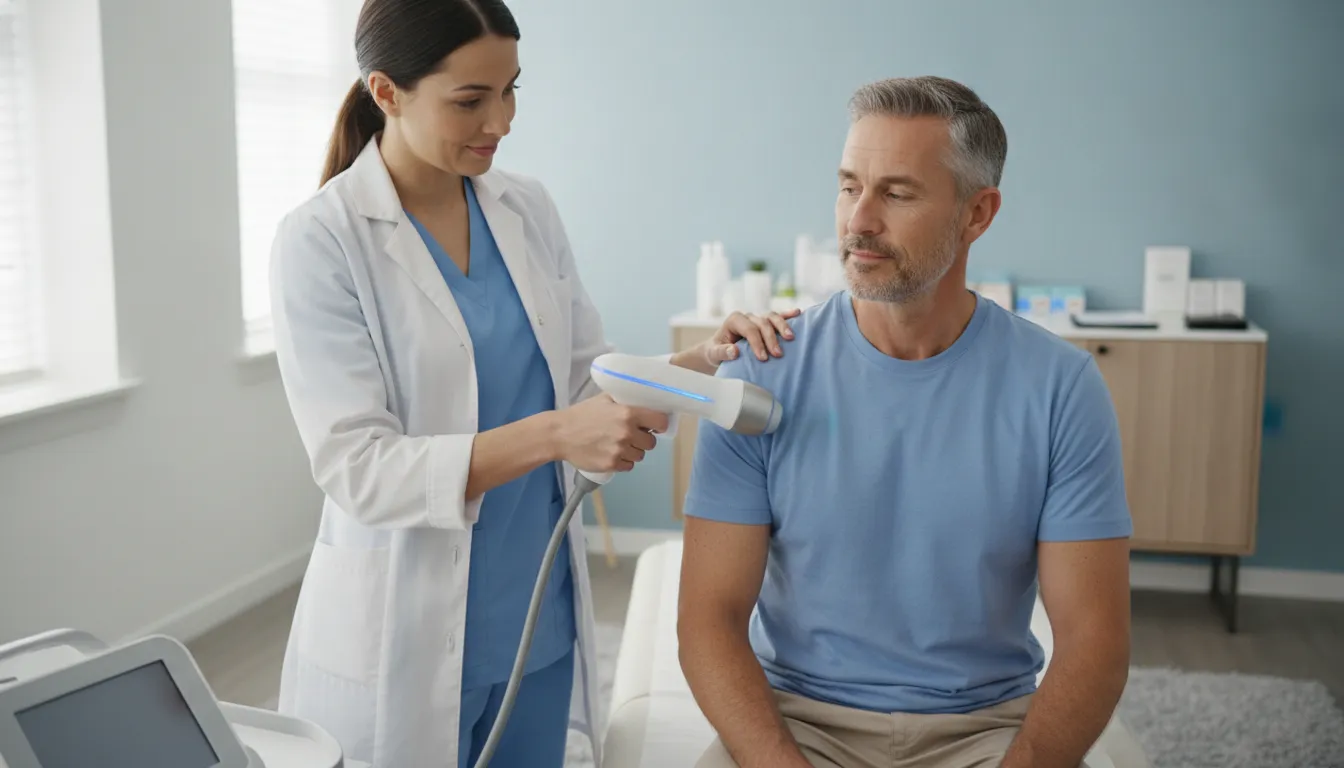
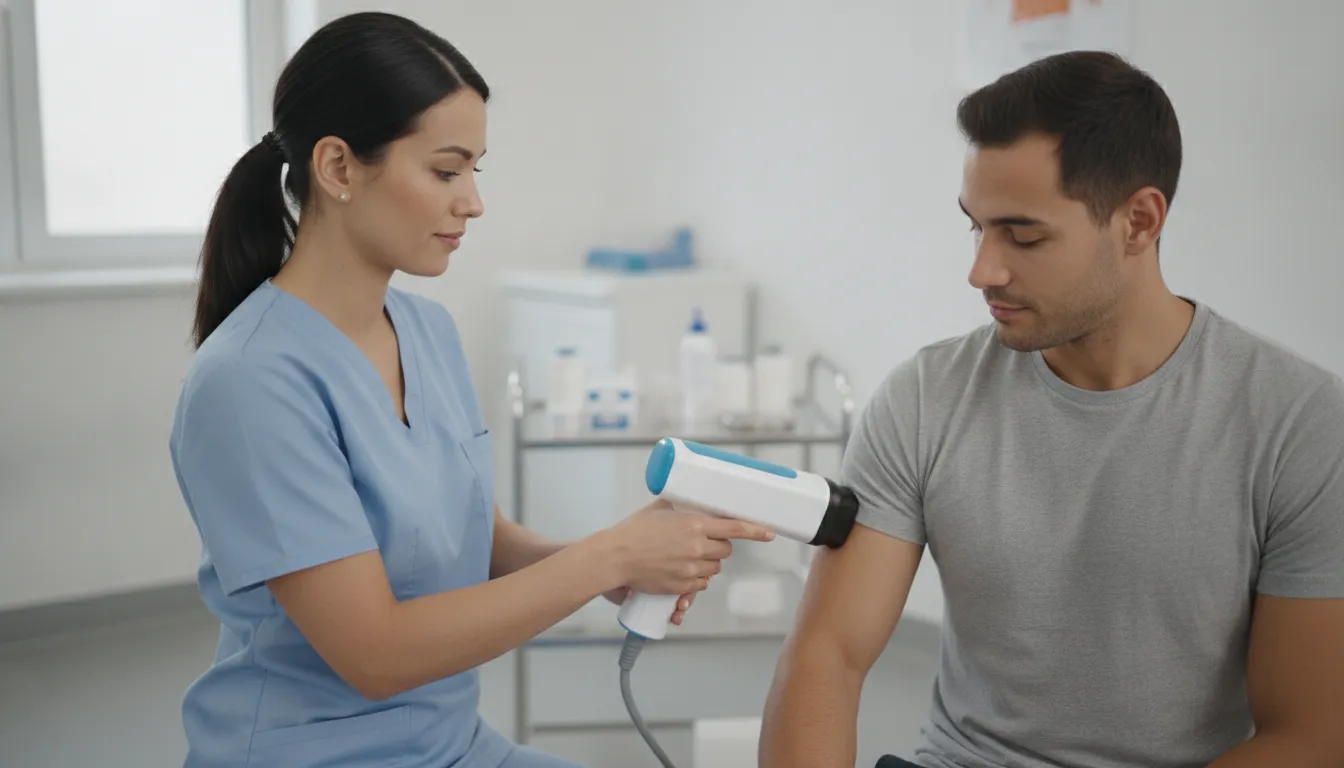
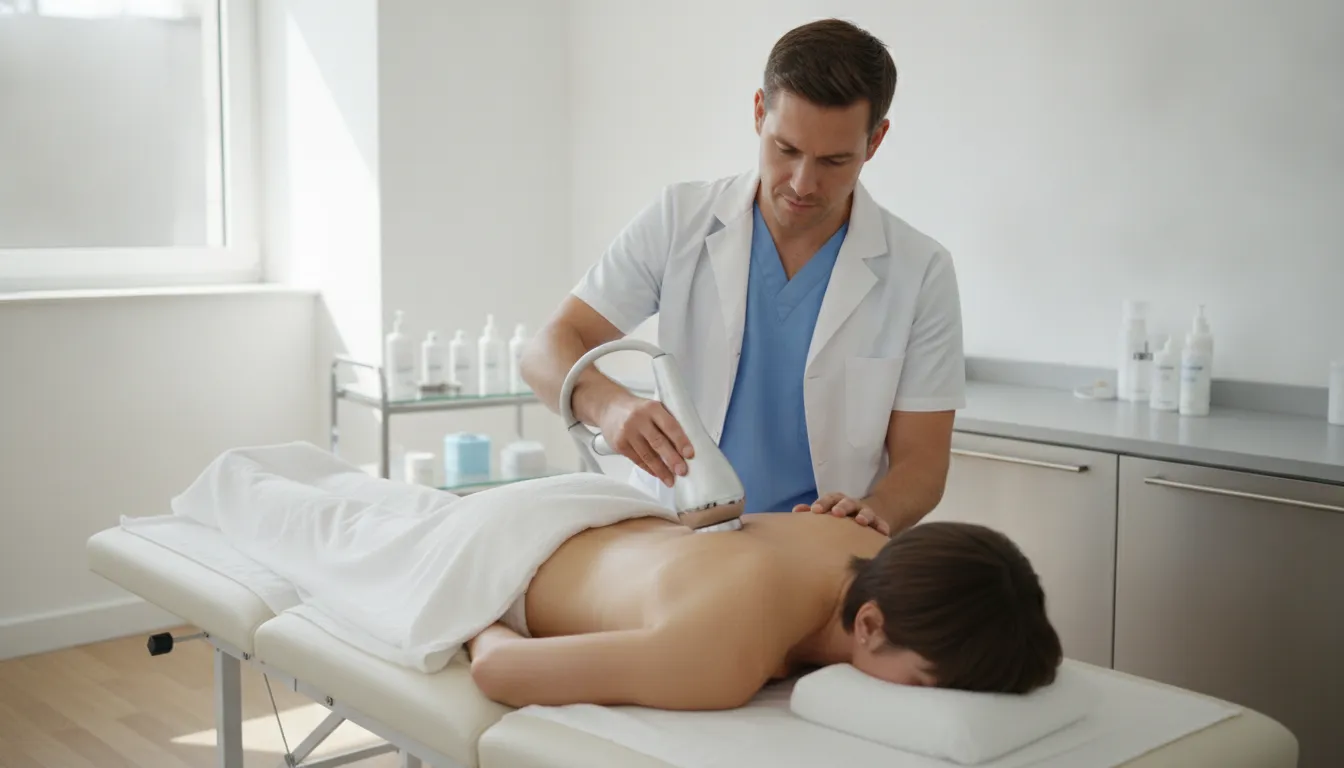
SoftWave Therapy is a broad-focused shockwave modality engineered to deliver shockwaves through a patented parabolic reflector, enabling uniform engagement of superficial and deep tissues across a wide treatment zone. This architecture supports biologic activity related to angiogenesis, modulation of inflammation, and activation of connective tissue, aligning with SoftWave’s FDA clearances for connective-tissue activation, temporary pain relief, increased local blood flow, and wound-care indications. Sessions average 10–15 minutes, offering clinicians an efficient option that integrates smoothly with athletic rehabilitation and performance management.
Evidence from ESWT demonstrates reductions in pain and functional limitation across chronic tendon and fascia conditions (Schroeder et al., 2017). The ability to influence a large tissue volume in a single application reflects the clinical utility of broad-focused shockwave in sports medicine, where consistent coverage, patient tolerance, and biologic engagement contribute to reliable treatment workflows.
Read more about shockwave in regenerative sports medicine.
Platelet-Rich Plasma (PRP)
PRP involves concentrating autologous platelets and injecting them into injured tissue to introduce growth factors that support collagen synthesis and cellular remodeling. In athletic settings, PRP is most frequently used for tendinopathies and soft-tissue irritation, where biologic activation may contribute to recovery. The authors’ evidence from patellar tendinopathy research shows that PRP produced short-term improvements in symptoms and function compared with control treatments, reflecting measurable biologic activity in these cases. These findings indicate that PRP may be considered when clinicians aim to influence tendon healing responses within a structured rehabilitation program.
Bone Marrow Aspirate Concentrate (BMAC)
BMAC is derived from autologous bone marrow and contains mesenchymal cells, cytokines, and growth factors involved in regulating tissue repair and local inflammation. It is used in sports medicine for articular cartilage lesions, chronic tendinopathy, and joint-surface irritation where additional biologic signaling may support tissue quality. A clinical review of BMAC for knee cartilage injuries reported symptom improvement and evidence of biologic integration of reparative tissue (Cotter et al., 2018). These outcomes suggest that BMAC may be considered in cases where clinicians seek to influence cartilage remodeling alongside mechanical loading strategies.
Pulsed Electromagnetic Field (PEMF) Therapy
PEMF therapy applies low-frequency electromagnetic fields to influence cellular activity, microcirculation, and tissue metabolism. It is used for soft-tissue injuries, bone stress reactions, and joint conditions where adjunctive biologic stimulation may assist recovery within rehabilitation. A systematic review found that PEMF improved pain and shoulder function in individuals with rotator cuff–related symptoms (Wang et al., 2025). These findings support its use as a complementary modality when clinicians aim to reinforce tissue adaptability without interrupting training modifications.
Considerations and Limitations of Regenerative Treatments for Athletes
Regenerative treatments are well-tolerated and integrate smoothly into rehabilitation, though individual response can vary with factors such as chronicity, tissue quality, and loading progressions. Variation across biologic protocols has been noted in controlled trials, reinforcing the importance of selecting appropriate candidates and timing (Karjalainen et al., 2021).
When structural continuity is lost, biologic stimulation cannot restore mechanical integrity. Comparative research indicates that surgical repair provides the necessary correction in fully disrupted tissues (Fan et al., 2024). Regenerative methods remain well-suited for sports-medicine injuries in which structure is preserved and biologic activity can support recovery, due to their favorable safety profile, compatibility with rehabilitation, and supportive role in recovery for a wide range of athletic injuries.
How Surgical Repair Addresses Structural Injuries in Athletes
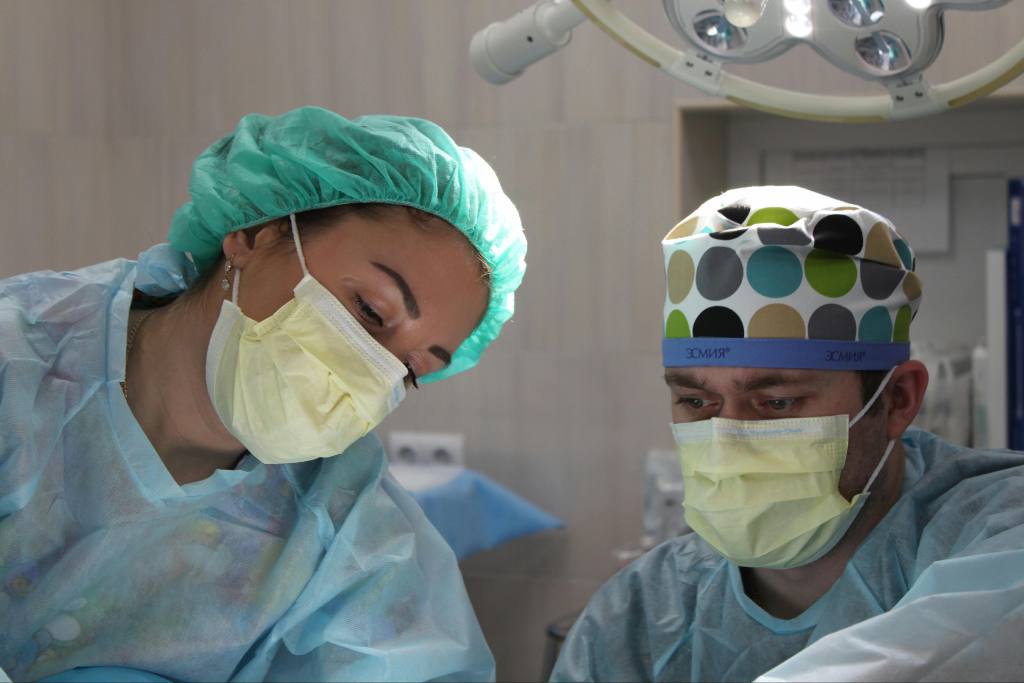
Surgical repair is used when structural disruption exceeds the capacity of biologic treatments and mechanical restoration is required. The following considerations outline when surgery is indicated and the expected implications for recovery and long-term management.
Strengths of Surgical Repair
Surgical repair restores structural continuity when a tendon, ligament, or joint surface is disrupted beyond the capacity of biologic stimulation. This approach can reestablish stability and load transmission needed for athletic function. Research comparing graft types in ACL reconstruction shows consistent restoration of knee stability across graft options, supporting its use when mechanical correction is necessary (Boyd et al., 2024).
When Surgical Repair Is Indicated
Some injuries exceed the repair capacity of biologic treatments and require direct reconstruction. These situations include:
- Complete tendon or ligament ruptures with loss of continuity
- Displaced fractures involving articular structures
- Advanced cartilage lesions requiring reconstruction
- Athletes who need mechanical stabilization to return to high-demand activity
Comparative ACL studies show reconstruction offers consistent joint control when structural integrity is compromised (Cinque et al., 2018).
Trade-Offs, Risks, and Recovery Considerations
Surgery introduces factors that must be considered during clinical decision-making. These include:
- Postoperative discomfort, anesthesia exposure, and wound-healing demands
- Longer recovery periods as tissue remodels under controlled mechanical loading
- Need for close monitoring to address stiffness, neuromuscular deficits, or revision risk
A systematic review found that ACL surgery is associated with a measurable risk of progressing to osteoarthritis, emphasizing the importance of long-term monitoring and guided return to sport (Ferrero et al., 2023). These factors inform expectations for recovery and future joint health.
Limitations and Postoperative Outlook
Although surgery restores anatomy, long-term recovery still depends on biologic processes and functional reconditioning. Clinical patterns often include:
- Persistent biomechanical adaptations despite structural correction
- Need for long-term follow-up to monitor for early degenerative changes
- Reliance on rehabilitation to restore neuromuscular control and load tolerance
- Meta-analysis findings show that both surgical and conservative ACL approaches can achieve functional improvement, yet early degeneration and residual laxity changes may still develop over time (Migliorini et al., 2023)
These patterns highlight the importance of postoperative rehabilitation and ongoing clinical follow-up in athletic populations, even when surgery has been performed.
Comparative Overview of Regenerative Treatments and Surgical Repair
Regenerative treatments and surgical repair play distinct roles in athletic injury management. The comparison below outlines how these approaches differ across commonly evaluated clinical factors.
Regenerative Treatments vs Surgical Repair
Tip: On small screens you can scroll horizontally (or view the card layout).
| Factor | Regenerative Treatments | Surgical Repair |
|---|---|---|
|
Invasiveness
|
Regenerative Treatments Non-invasive or minimally invasive modalities that introduce biologic stimulation without altering anatomy | Surgical Repair Involves operative access to restore continuity or alignment |
|
Tissue Mechanism
|
Regenerative Treatments Supports cellular activity, angiogenesis, and remodeling through targeted biologic pathways | Surgical Repair Provides mechanical correction through fixation or reconstruction |
|
Recovery Profile
|
Regenerative Treatments Allows earlier functional loading and integration into rehabilitation with minimal disruption | Surgical Repair Requires longer timelines for tissue remodeling and staged return to activity |
|
Clinical Indications
|
Regenerative Treatments Appropriate when structural continuity is preserved, and healing potential can be supported biologically | Surgical Repair Required when structural failure prevents recovery through conservative means |
|
Risk Profile
|
Regenerative Treatments Low procedural burden with minimal adverse effects and no anesthesia requirements | Surgical Repair Introduces procedural risk, postoperative discomfort, and wound-healing demands |
|
Long-Term Considerations
|
Regenerative Treatments Compatible with ongoing sport participation and may be repeated if needed | Surgical Repair May involve persistent biomechanical changes or early degenerative findings |
|
Rehabilitation Integration
|
Regenerative Treatments Aligns closely with progressive loading programs and ongoing conditioning | Surgical Repair Requires extended rehabilitation to restore neuromuscular control and functional stability |
This comparison reflects how regenerative methods integrate efficiently into athletic care when tissue structure remains intact, while surgical repair is reserved for injuries that necessitate mechanical restoration.
Learn how clinics integrate the best shockwave therapy machine for providers into regenerative workflows.
Enhance Your Regenerative Treatment Capabilities with SoftWave Therapy
Regenerative treatments contribute to tissue-focused recovery in athletes and fit well within active rehabilitation workflows. When injuries allow for biologic support rather than structural reconstruction, these approaches offer clinicians added flexibility in management. SoftWave Therapy aligns with this direction through its non-invasive design and broad-focused energy delivery, supporting tissue activation within a wide treatment zone.
SoftWave Therapy delivers a broad-focused shockwave field measuring approximately 12 cm by 7 cm, allowing clinicians to address complex tissue regions in a single application. Its electrohydraulic design produces parallel acoustic waves that maintain consistent energy distribution without requiring high treatment intensity. This architecture supports workflow efficiency across orthopedics, sports medicine, physical therapy, urology, and podiatry, where treating wide or layered tissue structures is often necessary. SoftWave devices are supported through ongoing scientific evaluation, and clinicians can review available research to understand applications across indications.
Become a SoftWave provider today and elevate your regenerative treatment approach.