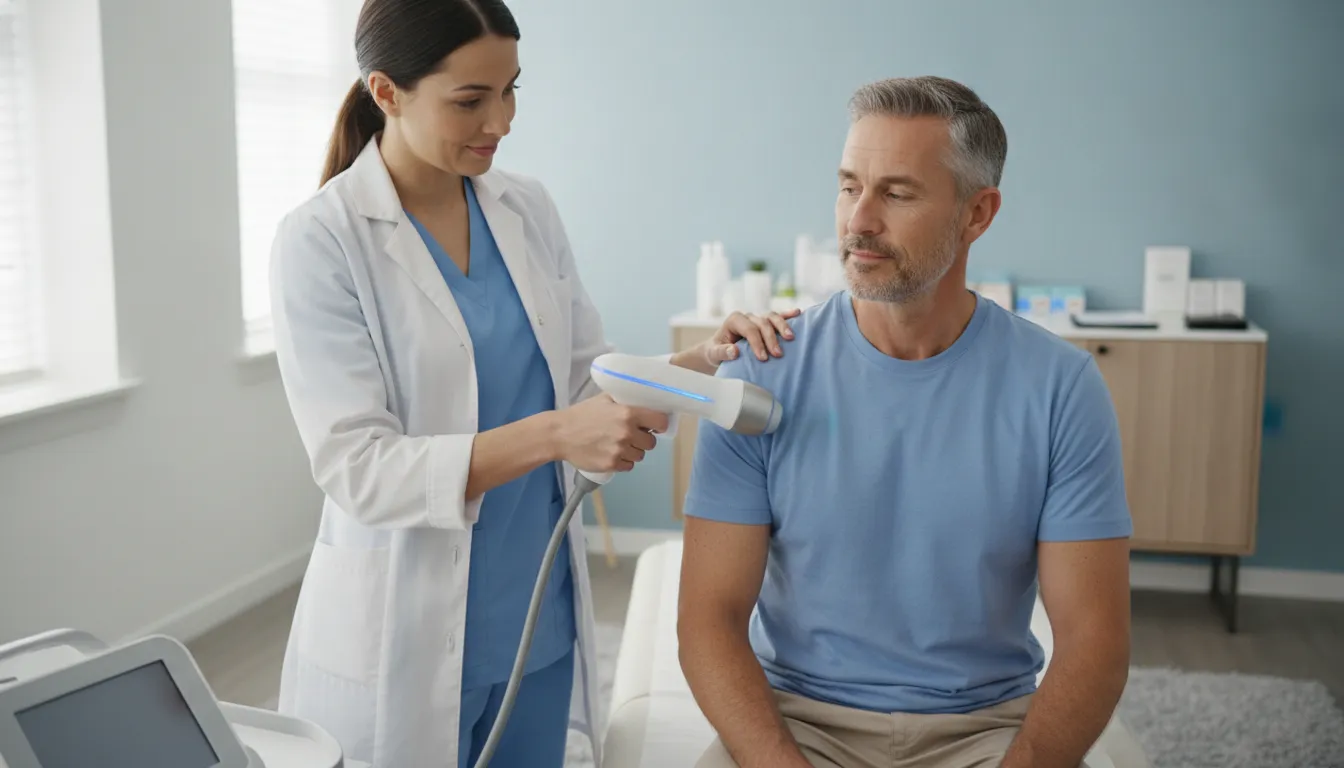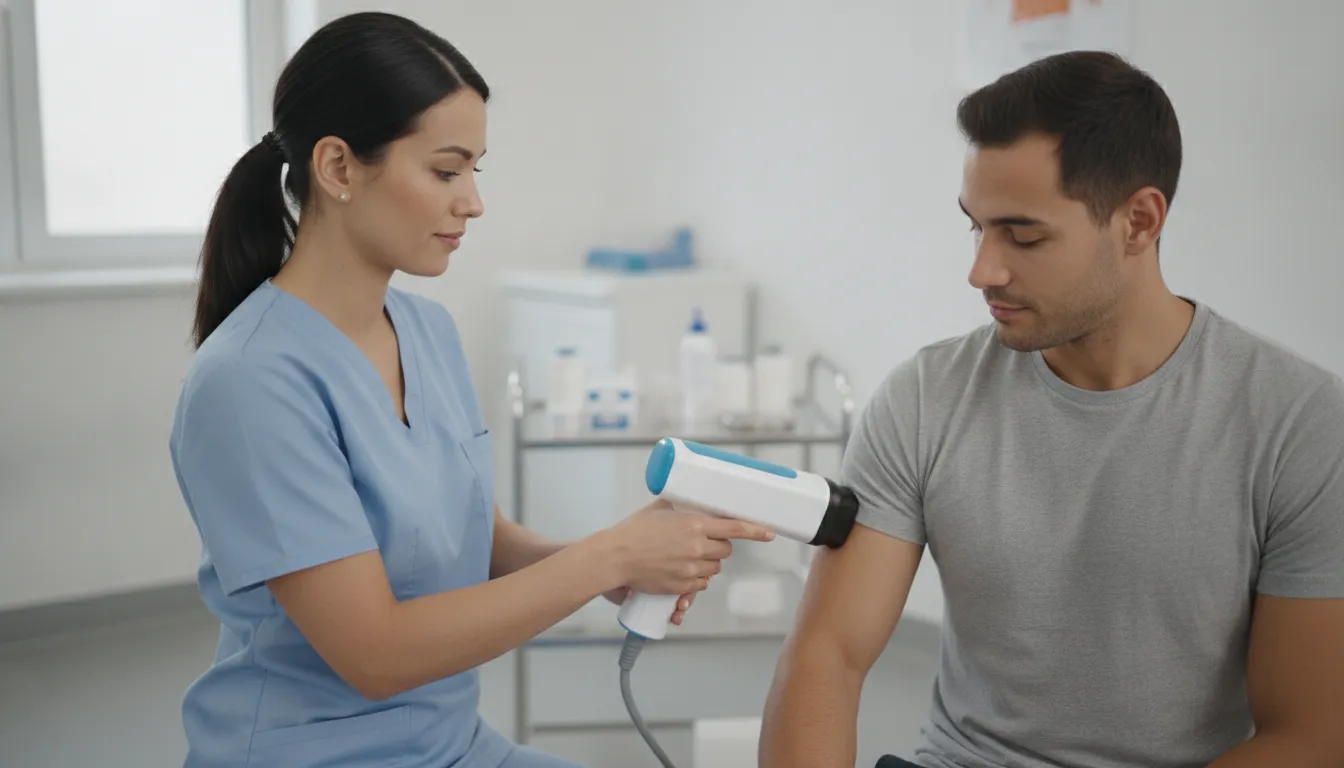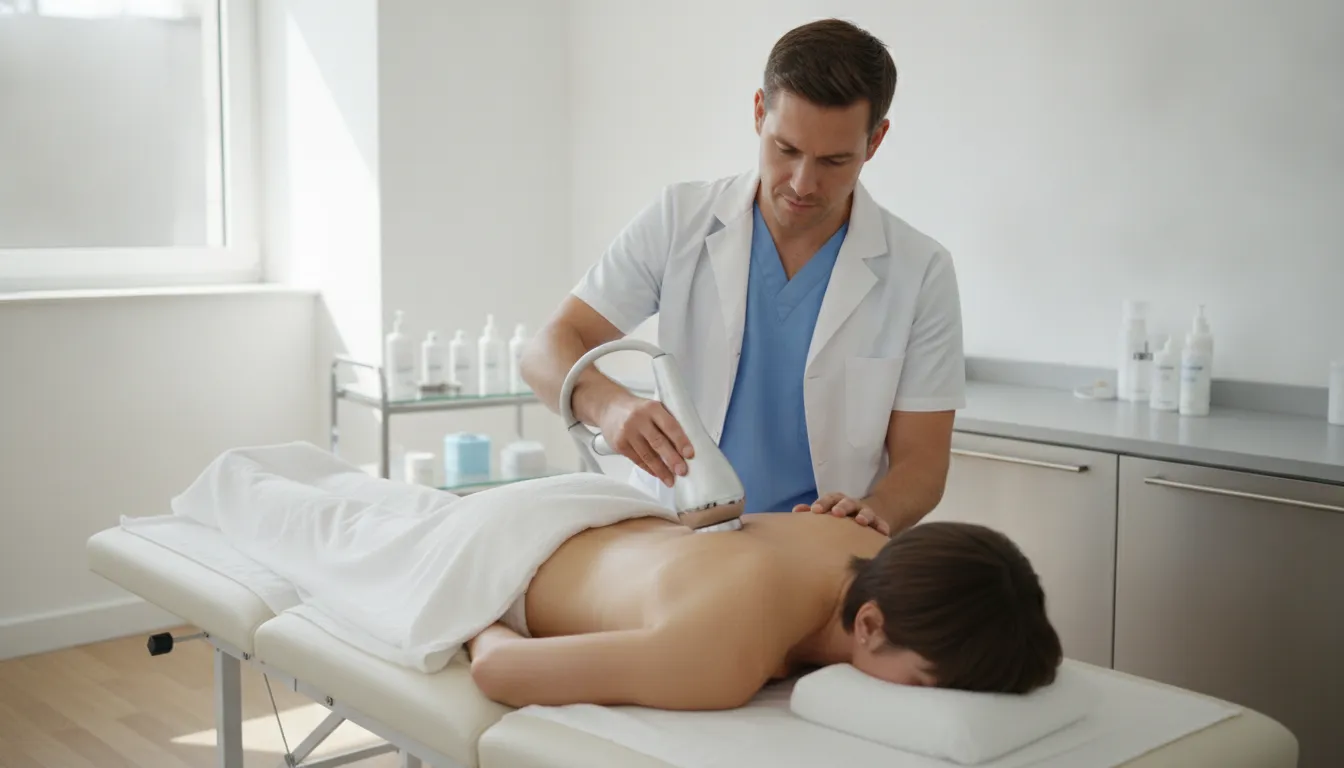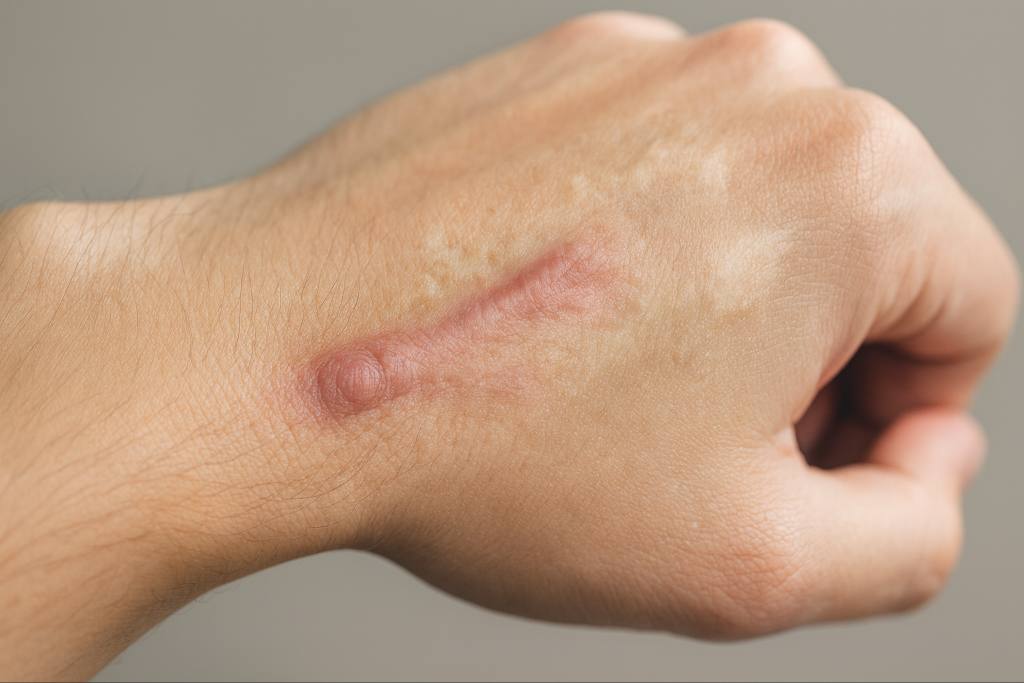
Regenerative skin treatment refers to advanced therapies that stimulate the body’s healing processes for tissue repair. Unlike conventional wound care, these methods promote the regrowth of healthy tissue in complex cases such as severe burns, hypertrophic scars, and chronic non-healing wounds. Extracorporeal shockwave therapy (ESWT) illustrates this approach, using shock waves to repair tissues without invasive procedures. For clinicians, having clarity on how regenerative skin treatment applies to burns, scars, and wounds supports consideration of modalities that restore damaged tissue through active cellular repair.
Why Do Burns, Scars, and Chronic Wounds Require Regenerative Approaches
Severe burns, chronic ulcers, and pathological scars often fail to progress through the normal healing process, leaving patients with long recovery times and compromised function. Conventional measures can stabilize wounds but rarely restore full tissue integrity or prevent fibrosis. Regenerative treatments, like shockwave therapy, aim to address these limitations by stimulating angiogenesis, modulating inflammation, and directing cellular repair. A systematic review supports regenerative interventions, including cellular and growth factor–based therapies, improved wound closure rates compared with standard care alone (Zhang et al., 2017).
For burn and scar management, randomized trials show regenerative strategies can reduce scar thickness, improve pliability, and enhance function. In burn patients, one study demonstrated that regenerative therapies, such as shockwave therapy, decreased hypertrophic scar formation and improved hand mobility during rehabilitation (Joo et al., 2020). Similarly, a meta-analysis reported measurable improvements in scar pain, pruritus, and elasticity, supporting the role of biologically driven interventions alongside conventional care (Yang et al., 2022).
How Does Shockwave Therapy Promote Skin Regeneration for Burns, Scars, and Wounds
Shockwave therapy applies shock waves to tissue, producing mechanical stress that activates biological repair pathways. This process triggers angiogenesis, stem cell recruitment, growth factor release, and inflammation modulation, all of which accelerate skin regeneration. Through these mechanisms, damaged skin can remodel into functional tissue rather than a dense scar. The effects have been studied in various clinical contexts, showing relevance for burns, scars, and chronic wounds.
Burns
In patients with acute burns, regenerative effects of shockwave therapy have been demonstrated in randomized trials. Ottomann et al. (2012) reported that patients receiving shockwaves after burn debridement showed faster re-epithelialization compared to controls, indicating accelerated tissue repair. This supports the use of shockwaves as an adjunct to conventional burn management by promoting quicker skin coverage.
Scars
Pathological scars are characterized by excessive fibroblast activity and disorganized collagen. In a randomized study, the authors found that patients with post-burn hypertrophic scars who underwent shockwave therapy had reduced scar thickness and improved hand mobility compared to standard rehabilitation. These findings suggest that shockwaves can positively influence scar remodeling and functional recovery.
Wounds
Chronic wounds frequently stall due to impaired circulation and persistent inflammation. A meta-analysis by Huang et al. (2020) showed that patients with diabetic foot ulcers treated with adjunctive shockwave therapy were significantly more likely to achieve full wound closure than those receiving standard care alone. This indicates that shockwaves can help restart healing in chronic ulcer environments.
Read: How Shockwave Therapy Breaks Down Scar Tissue
SoftWave Therapy for Burns, Scars, and Wounds
SoftWave Therapy is a patented form of shockwave treatment that delivers broad-focused shock waves across both superficial and deep tissue layers. Its parabolic reflector applicator generates parallel waves that cover an area up to 7 cm wide and 12 cm deep, allowing clinicians to treat extensive burns, ulcers, or scars without the limitations of traditional devices. This wide therapeutic field stimulates angiogenesis, connective tissue activation, and cytokine release without causing microtrauma, making it an efficient non-invasive option for large or complex skin injuries.
Clinically, SoftWave therapy holds FDA clearance for acute second-degree burns, chronic diabetic foot ulcers, and activation of connective tissue, as well as Health Canada licensure for chronic wounds and pathologic scarring. Sessions typically last 10–15 minutes, require no anesthesia, and integrate seamlessly into outpatient care. Providers have observed improved granulation, faster epithelial coverage, and enhanced tissue remodeling in patients treated with this technology. Its combination of safety, ease of use, and regenerative effectiveness positions SoftWave as a leading device for clinicians managing burns, scars, and chronic wounds.
Discover the best shockwave therapy machine and the research supporting its use for burns, scars, and wounds.
How Does SoftWave Therapy Differ from Other Treatment Options
Several regenerative and supportive treatments are used for burns, scars, and chronic wounds. Each works through different biological mechanisms and has specific strengths and limitations. Below is an overview of commonly applied modalities.
Other Shockwave Devices
Focused devices target small, deep points while radial machines (which are not shockwave devices but pressure wave devices as per the ISMST-International Society for Medical Shockwave Treatment) disperse energy superficially. Both stimulate healing but often require multiple passes for larger wounds, resulting in less consistent coverage and greater surface discomfort.
Hyperbaric Oxygen Therapy
This therapy places patients in a pressurized chamber to boost oxygen delivery to ischemic tissues. It may support angiogenesis and infection control, though treatments are lengthy, costly, and limited to specialized facilities.
Platelet-Rich Plasma Injections
Platelet-rich plasma therapy involves drawing blood, concentrating platelets, and injecting them into wounds or scars to deliver growth factors. While it can stimulate repair, it is invasive, results vary across patients, and repeated procedures are often required.
Growth Factor Dressings
Topical growth factor dressings or engineered skin substitutes provide external biological cues to stimulate tissue repair. They may improve granulation and closure rates, but products are expensive, require frequent application, and have variable efficacy depending on wound type.
Surgical Skin Grafting
Skin grafting provides direct coverage for large or non-healing wounds by transplanting skin from another site. While effective in achieving closure, grafts carry surgical risks, donor site morbidity, and often result in scar tissue rather than fully regenerated skin.
SoftWave Therapy stands apart through its capacity to treat extensive areas of damaged skin in a single session while reaching both superficial and deep tissue layers. Instead of relying on external biologic agents or invasive grafting, it works by activating the body’s own repair processes across the wound environment. This approach offers clinicians a streamlined, non-invasive option that supports consistent tissue regeneration in burns, scars, and chronic wounds.
Transform Patient Healing Outcomes through SoftWave Therapy
Burn injuries, chronic wounds, and pathological scars require therapies that actively stimulate repair rather than only manage symptoms. Regenerative skin treatment has been shown to accelerate closure, improve tissue quality, and reduce fibrosis. SoftWave Therapy applies these principles in a non-invasive way, giving clinicians a practical tool for complex wound management.
This technology is already integrated into multiple specialties, including orthopedics, sports medicine, physical therapy, urology, and podiatry. Its use is supported through ongoing clinical research, which continues to document safety and efficacy across a range of conditions. For providers, adopting SoftWave means access to a device that enhances patient care while streamlining clinical workflows.
Become a SoftWave Provider today and schedule a demo to see its impact in your practice.