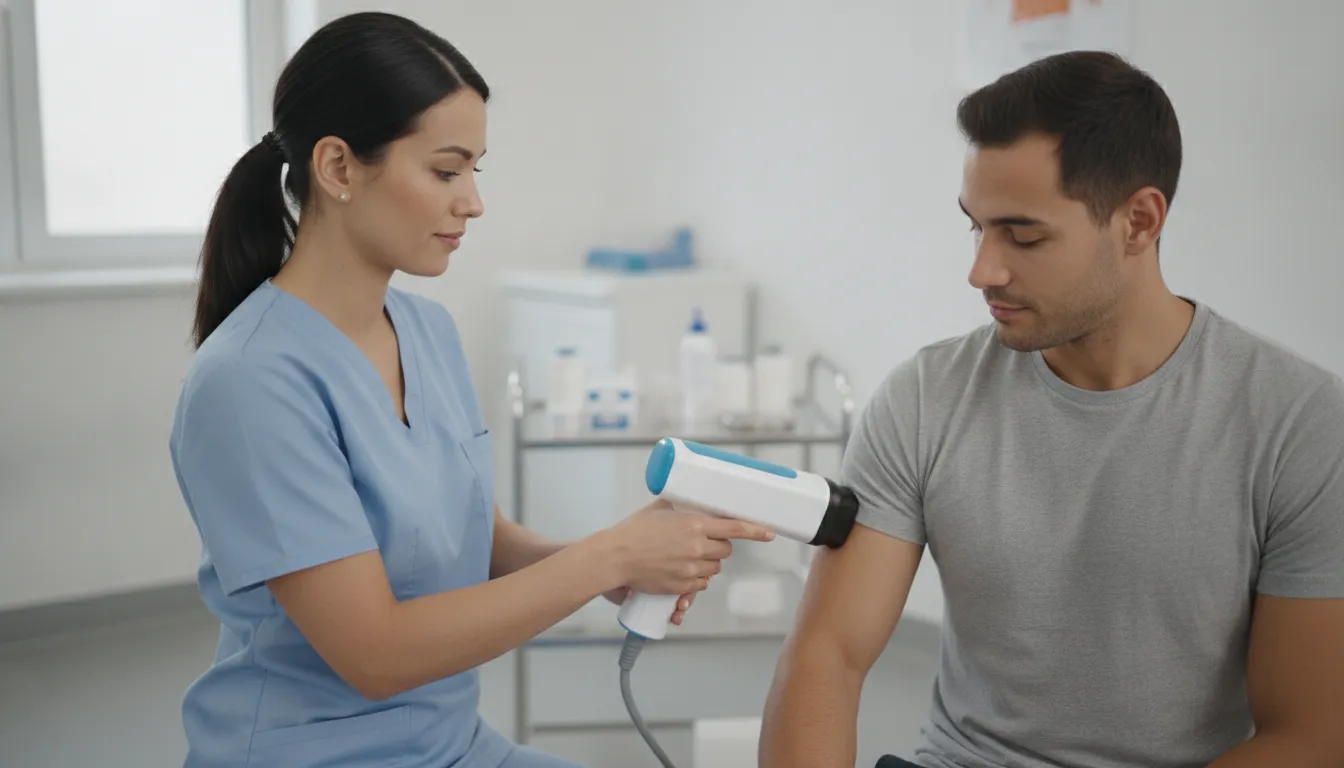
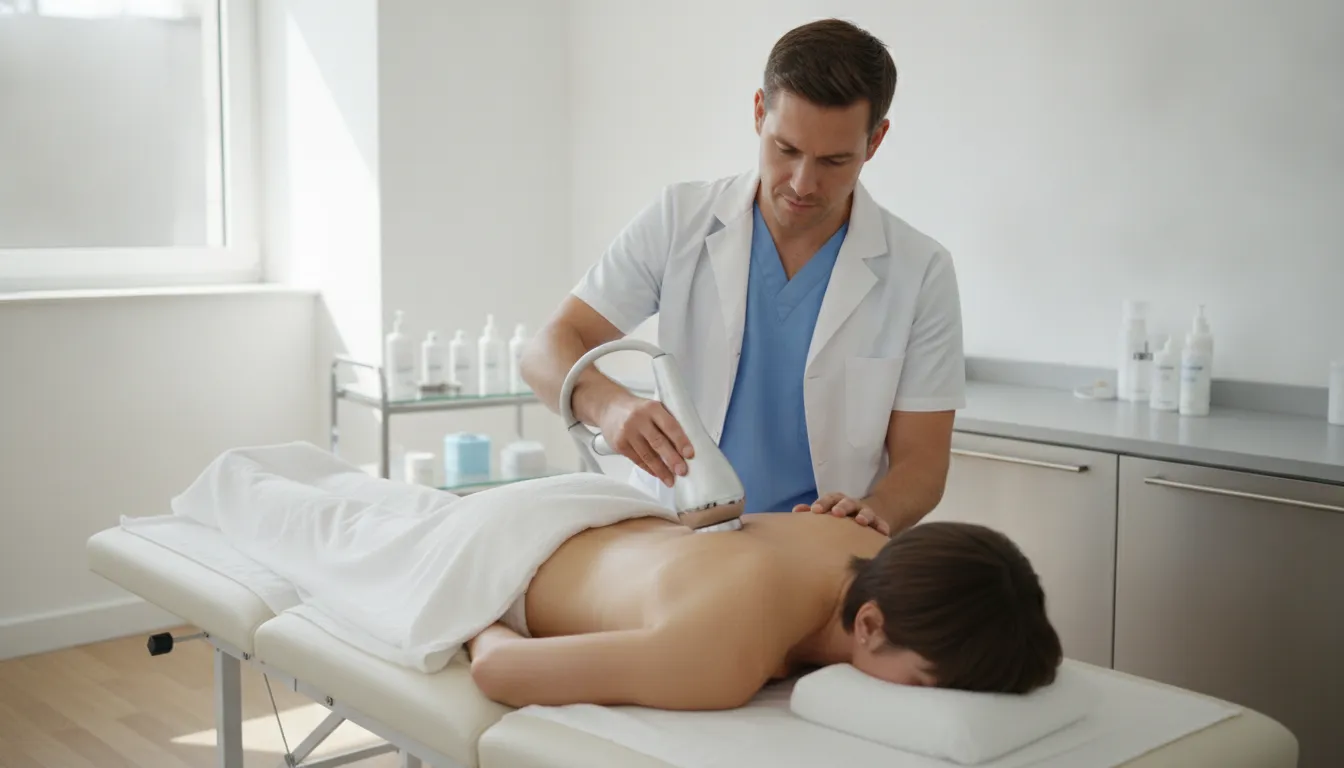
Diabetic foot ulcers (DFUs) are among the most demanding wound care challenges in clinical practice. Current evidence places the lifetime incidence at 19% to 34% among people with diabetes (Armstrong et al., 2017), with recurrence rates of 40% in the first year after healing and up to 65% within three years (Netten et al., 2024). For providers managing these patients, those numbers frame the clinical challenge clearly: successful closure is only part of the problem.
Where standard wound care reaches its limits, regenerative adjuncts have gained increasing traction. Among them, extracorporeal shockwave therapy (ESWT) is one of the most evidence-supported non-invasive options for DFU management. Controlled studies and systematic reviews consistently show improved healing rates and enhanced tissue perfusion compared with conventional wound care alone.
What the literature is less consistent about is which shockwave technology produces those outcomes. Devices differ substantially in wave generation method, penetration depth, treatment coverage, and biologic mechanism. In diabetic wound care specifically, those differences have direct clinical implications for healing progression, workflow, and patient tolerance.
Why DFUs Are Difficult to Heal
The biologic environment of a chronic DFU is hostile to healing at multiple levels simultaneously.
Peripheral neuropathy removes the protective pain response that would normally signal tissue stress, allowing repetitive mechanical loading to continue unchecked over the wound. Peripheral vascular disease reduces local perfusion, limiting oxygen and nutrient delivery to tissue that cannot repair itself without adequate circulation. Elevated glucose disrupts leukocyte function, increases infection susceptibility, and impairs the cellular signaling pathways that regulate normal wound repair. The result is a wound environment where angiogenesis, inflammatory resolution, cellular proliferation, and extracellular matrix remodeling are chronically stalled.
Conventional wound care addresses the wound bed: debridement, offloading, infection control, appropriate dressings. What it does not do is directly restore the biologic deficits preventing closure. Regenerative therapies are designed to fill exactly that gap.
How Shockwave Therapy Works in DFU Tissue
Shockwave therapy operates through mechanotransduction: acoustic mechanical energy is converted into biochemical signaling within tissue, triggering a cascade of biologic responses relevant to wound healing.
The most clinically significant effects in DFU applications are angiogenesis and improved perfusion. ESWT stimulates vascular endothelial growth factor (VEGF) and endothelial nitric oxide synthase (eNOS), both critical for neovascularization in ischemic tissue. In a randomized comparative study, patients treated with ESWT showed significantly higher VEGF and eNOS expression than those treated with hyperbaric oxygen therapy, with corresponding improvements in wound healing and perfusion (Wang et al., 2011).
Alongside angiogenesis, ESWT modulates the inflammatory environment of chronic wounds. DFUs frequently remain locked in a prolonged inflammatory phase that prevents progression into active tissue repair. Shockwave therapy helps regulate the inflammatory signaling pathways that govern this transition, reducing markers of cellular apoptosis while increasing proliferative cellular activity associated with repair. Depending on device architecture, shockwave energy can also activate both superficial and deeper tissue simultaneously, supporting biologic stimulation across the full wound depth rather than only the surface layer.
Read: Extracorporeal Shockwave Treatment for Chronic Diabetic Foot Ulcers
Not All Shockwave Technology Are the Same
The term “shockwave therapy” covers several distinct technologies with different physical properties and clinical implications. Understanding those differences is necessary before evaluating device-specific evidence or making a capital purchase decision.
Electrohydraulic shockwave uses a spark discharge within a water chamber to generate a true acoustic shockwave. Electrohydraulic technology produces broad energy distribution, consistent biologic activation, and is the original and most extensively studied form of shockwave therapy in wound care and regenerative medicine applications.
Electromagnetic and piezoelectric shockwave systems generate focused acoustic energy through coil or crystal mechanisms respectively. Both produce narrower treatment zones and require more precise applicator positioning. They are well-suited to localized pathology at specific depth targets but cover less tissue per application pass.
Radial or ballistic pressure wave devices are mechanically generated pressure pulses rather than true shockwaves. Energy dissipates rapidly within superficial tissue, which limits penetration depth and biologic activation in deeper wound structures. For DFU applications where perfusion, tissue depth, and broad wound coverage matter, radial devices are generally less appropriate than true electrohydraulic shockwave platforms.
The table below compares these technologies across the parameters most relevant to diabetic wound management.
| Feature | Focused ESWT | Radial / Ballistic | Broad-Focused Electrohydraulic (SoftWave TRT) |
|---|---|---|---|
| Wave type | True shockwave, narrow focal point | Pressure wave only | Broad-focused true shockwave |
| Treatment coverage | Small focal zone | Superficial surface area | Wide treatment field (~7 cm) |
| Penetration depth | Deep focal targeting | Limited depth | Up to ~12 cm |
| Tissue activation | Localized | Surface-level | Superficial + deep tissue layers |
| Repositioning required | Often, for multi-layer wounds | Often | Single application pass for broad coverage |
| Anesthesia | Sometimes required | Generally not required | Not required |
| DFU-specific evidence | Device dependent | Limited DFU evidence | Supported by wound-focused studies |
| FDA status for DFUs | Device dependent | Often non-DFU classification | FDA-cleared for chronic diabetic foot ulcers |
What the Evidence Shows for ESWT in Diabetic Foot Ulcers
The strongest evidence for ESWT in DFU care comes from randomized controlled trials and systematic reviews evaluating healing progression, perfusion, and complete epithelialization rates.
The most direct comparative data comes from Wang et al., 2011, a randomized study of 77 patients comparing ESWT and hyperbaric oxygen therapy (HBOT) in chronic DFUs. Complete wound healing was achieved in 57% of the ESWT group compared with 25% in the HBOT group (p = 0.003), with greater improvement also reported in the ESWT group among patients with partial rather than complete healing.
At the systematic review level, a 2024 meta-analysis of randomized controlled trials published in Diabetes Research and Clinical Practice found ESWT superior to standard wound care for complete wound healing (OR 2.66, 95% CI 1.03 to 6.87) and time to healing (64.5 versus 81.2 days) (Fangfang Wu et. al., 2024).
Broader wound care evidence further supports the feasibility of broad-focused electrohydraulic delivery specifically. A prospective study by Schaden et al., 2007 enrolled 208 patients with acute and chronic soft tissue wounds and administered outpatient ESWT using an unfocused electrohydraulic device with a parabolic reflector. Complete epithelialization was achieved in 75% of patients across a mean follow-up of 44 days, with no treatment-related toxicity, infection, or wound deterioration.
One consistent caveat applies across the literature: many ESWT studies do not isolate device-specific outcomes by technology type. Clinicians reviewing the evidence should look for studies that specify wave generation method and energy profile rather than treating all ESWT research as interchangeable. For a broader review of SoftWave’s clinical evidence, see the SoftWave clinical research library.
Where SoftWave’s Broad-Focused Electrohydraulic Technology Fits in DFU Care
DFUs present a specific structural challenge that device architecture must accommodate. Most chronic ulcers are irregular in shape, variable in depth, and involve simultaneous biologic dysfunction across multiple tissue planes. A narrow focal device may require repeated repositioning to cover the full wound field, introducing treatment variability and adding procedural time in a patient population that may have limited tolerance for extended clinical contact.
SoftWave TRT uses broad-focused electrohydraulic shockwave technology with a patented parabolic reflector that distributes acoustic energy across a wider and deeper treatment field in a single applicator position. The treatment zone reaches approximately 7 cm wide and up to 12 cm deep, engaging both superficial wound tissue and deeper vascular structures simultaneously. For providers managing complex or irregularly shaped DFUs, that changes what is achievable per session without requiring multiple passes or precise repositioning.
SoftWave TRT is FDA-cleared specifically for chronic diabetic foot ulcer treatment and supports reimbursement pathways through CPT codes 0512T and 0513T. The device delivers energy consistently in the anabolic range (at or below 0.18 mJ/mm²), the zone that promotes tissue regeneration without the cellular damage associated with catabolic energy delivery. Full FDA clearance documentation is available on the FDA Safety Page.
Integrating SoftWave into DFU Care Protocols
Shockwave therapy is not a replacement for standard diabetic wound management. Appropriate offloading, debridement, infection control, vascular assessment, and glycemic management remain foundational. ESWT functions as a biologically active adjunct that supports what standard care cannot: restoring the angiogenic and cellular signaling environment needed for closure in wounds that have stalled.
SoftWave TRT’s broad-focused platform fits the clinical workflow of wound care and podiatry practices treating DFUs, as well as vascular and regenerative medicine settings managing patients with complex lower-extremity presentations. Treatments are delivered in an outpatient setting without anesthesia and typically completed in under 15 minutes, which keeps integration practical without adding significant operational complexity.
For practices where DFU outcomes matter and standard care alone is not moving the wound forward, the evidence for broad-focused electrohydraulic shockwave is substantial enough to warrant evaluation. SoftWave TRT’s combination of FDA clearance, CPT reimbursement support, and a treatment architecture designed for irregular, multi-layer wounds makes it a clinically grounded option for practices ready to add a regenerative adjunct to their DFU protocols.
Become a SoftWave Provider or schedule a discovery call to review how SoftWave TRT fits your wound care workflow and patient population.