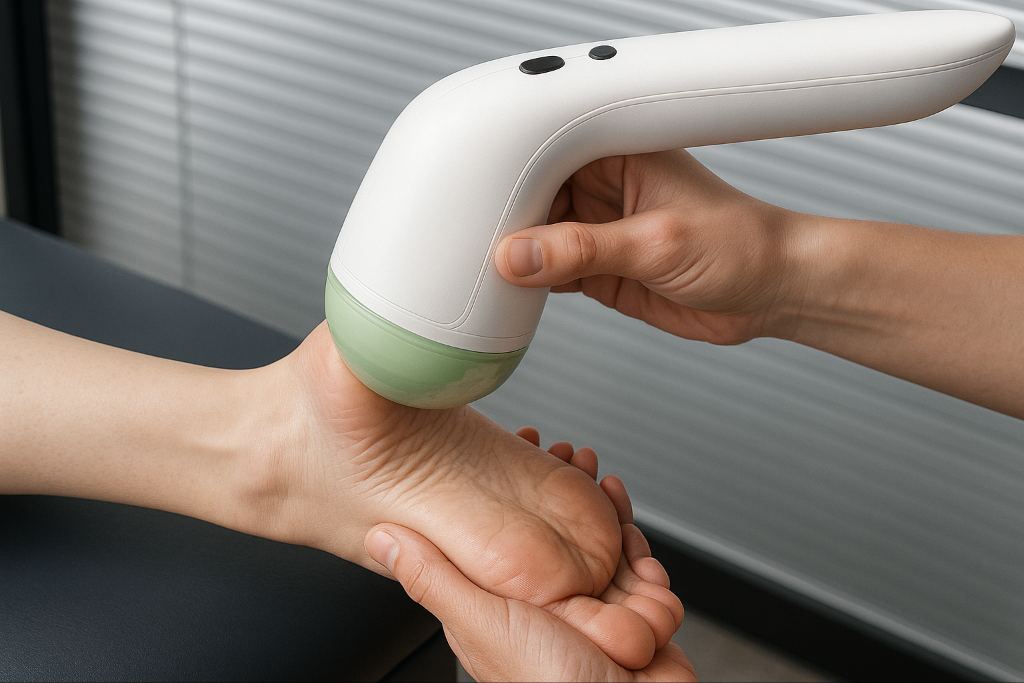
Shockwave therapy is a non-invasive treatment that stimulates biological repair processes through the application of targeted energy. It has become an established modality for addressing musculoskeletal injuries and chronic pain. Devices like EmFocus shockwave therapy represent a newer generation of focused ESWT technology, designed to deliver precise, high-intensity energy to localized tissues. For clinicians aiming to expand their practice, exploring different shockwave modalities, like emfocus shockwave, represents the possibility of improving patient outcomes and gaining deeper knowledge in non-invasive treatment modalities.
What Is EmFocus Shockwave Therapy and How Does It Work
EmFocus is a focused extracorporeal shockwave therapy (ESWT) device that uses electromagnetic technology to generate therapeutic shockwaves. Its energy converges at a defined point, enabling precise targeting of deep tissues such as tendons or bone insertions while minimizing discomfort at the skin surface. This design makes it suitable for localized musculoskeletal and pain-related conditions that require high-intensity therapy.
Among EmFocus features are its electromagnetic generator, which ensures stable output, and a controllable focal depth of up to 65 mm, adjustable through a touchscreen interface. The device delivers energy below the skin, reducing superficial irritation while concentrating its effect in the target zone. At this focal point, EmFocus produces electromagnetic focused shockwaves that stimulate healing, address pain and support tissue recovery.
Clinical Indications for EmFocus Shockwave Therapy
EmFocus is positioned for orthopedic and sports medicine conditions such as plantar fasciitis, Achilles tendonitis, and calcific shoulder tendonitis, as well as pain syndromes including fibromyalgia, myofascial trigger points, and osteoarthritis. It is also applied in urology for vascular erectile dysfunction, chronic pelvic pain, and Peyronie’s disease, with claims that the therapy promotes bone healing, tissue regeneration, pain relief, and immune regulation.
Focused shockwave therapy has been evidenced in the literature across many of these same areas. In musculoskeletal care, a multicenter randomized controlled trial reported significant pain reduction and functional improvement in patients with chronic plantar fasciitis (Gollwitzer et al., 2015). Other studies have demonstrated benefits in Achilles, patellar, and lateral epicondylitis, underscoring its relevance in treating chronic tendon injuries.
Research has also explored its effects on bone healing. A randomized trial found that focused shockwave therapy was comparable to surgery in promoting union of long-bone nonunions, while also improving pain outcomes (Cacchio et al., 2009). In chronic pain management, controlled trials have shown reductions in pain intensity and disability for patients with low back pain, and evidence supports its role in alleviating pain from myofascial trigger points (Rajfur et al., 2022).
In sports-related and overuse injuries, focused shockwave therapy has been shown to improve pain and function in patients with lateral epicondylitis compared with therapeutic ultrasound (Król et al., 2024).
Benefits of EmFocus Shockwave Therapy
EmFocus provides several clinical advantages rooted in the principles of focused ESWT.
Deep Targeting Capability
The device directs energy into deeper tissues, reaching areas such as tendon-bone junctions or thick muscle groups. This makes it applicable for conditions like hamstring or hip tendinopathies that require penetration beyond surface layers.
Precision Energy Delivery
EmFocus concentrates energy into a defined focal point, allowing providers to localize treatment for pathologies such as calcific tendonitis while minimizing impact on surrounding healthy tissue.
Therapeutic Impact
At the focal zone, the therapy initiates biological responses including angiogenesis, improved circulation, and stimulation of growth factors. These effects have been linked to outcomes in delayed healing cases such as nonunion fractures.
Patient Tolerance
Because peak energy is delivered below the skin, surface discomfort is reduced. Patients typically describe the sensation as a tapping or dull ache, which supports tolerability without sedation or significant downtime.
Versatility in Use
Adjustable depth settings and preset protocols streamline clinical workflow. A single applicator design allows providers to address a range of indications without multiple device attachments.
Limitations of EmFocus Shockwave Therapy
While EmFocus provides targeted treatment, there are limitations that providers should consider when determining its role in practice.
Limited Coverage
Because the device focuses energy in a small zone, only a narrow area can be treated at a time. Multifocal or diffuse conditions may require multiple applications and longer sessions.
Targeting Demands
Effectiveness depends on precise localization of pathology. This often requires detailed anatomical knowledge or imaging guidance to ensure accuracy.
Patient Discomfort
Some patients may report temporary soreness, swelling, or bruising, particularly with higher energy settings. These effects are typically short-lived but should be communicated in advance.
Cost Considerations
The device represents a significant investment, and ongoing maintenance plus extended treatment times can add to operational costs for clinics.
Evidence and Regulatory Scope
Device-specific studies are limited, and regulatory approvals vary by region. Providers should confirm local clearances and rely on broader ESWT evidence when shaping protocols.
After considering these limitations, it’s worth noting that other shockwave technologies take a different approach to overcome some of these challenges. SoftWave Therapy uses a patented broad-focused shockwave design that treats both superficial and deep tissues across a larger area. This technology has been shown to modulate inflammation, improve blood flow, and support tissue regeneration while maintaining patient comfort and without causing microtrauma. It offers providers an alternative when wider coverage is needed without sacrificing depth.
Learn more about the Best Shockwave Therapy Machine for Providers.
Take Your Practice Further with SoftWave Therapy
When considering technologies like EmFocus, providers should weigh precision, therapeutic strength, and practical limitations. Focused ESWT offers value in targeted cases, but its narrow treatment field and operator demands mean it may not suit every scenario. A balanced approach ensures the right tool is chosen for each patient, aligning therapy with evidence and clinical goals.
SoftWave Therapy provides a broader treatment option, delivering parallel shockwaves across both superficial and deep tissues. It has demonstrated benefits in orthopedics, sports medicine, physical therapy, urology, and podiatry, with outcomes supported by clinical research. Integrating SoftWave allows clinics to expand treatment capabilities, deliver shorter and more comfortable sessions for patients, and use a versatile, evidence-backed device.
Become a SoftWave Provider today and improve your patient outcomes.