 Summarize with ChatGPT
Shockwave therapy is widely used in musculoskeletal medicine for non-invasive treatment of chronic soft tissue conditions. Devices like OmniWave aim to deliver focused shockwaves to promote tissue healing and reduce pain. While such technologies are common in clinical practice, understanding the scope of OmniWave’s indications, cost structure, and therapeutic impact is important for physicians evaluating which shockwave modality best supports patient outcomes. This article examines OmniWave’s core features and compares them to broader alternatives used in regenerative medicine.
What Is OmniWave Shockwave Therapy and How Does It Work?
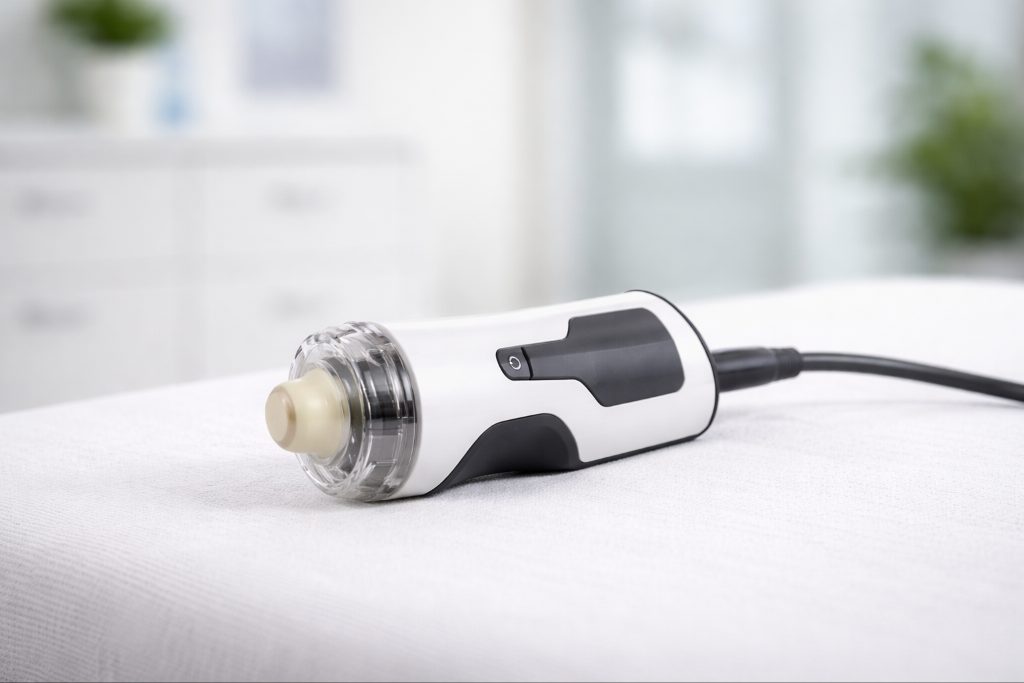
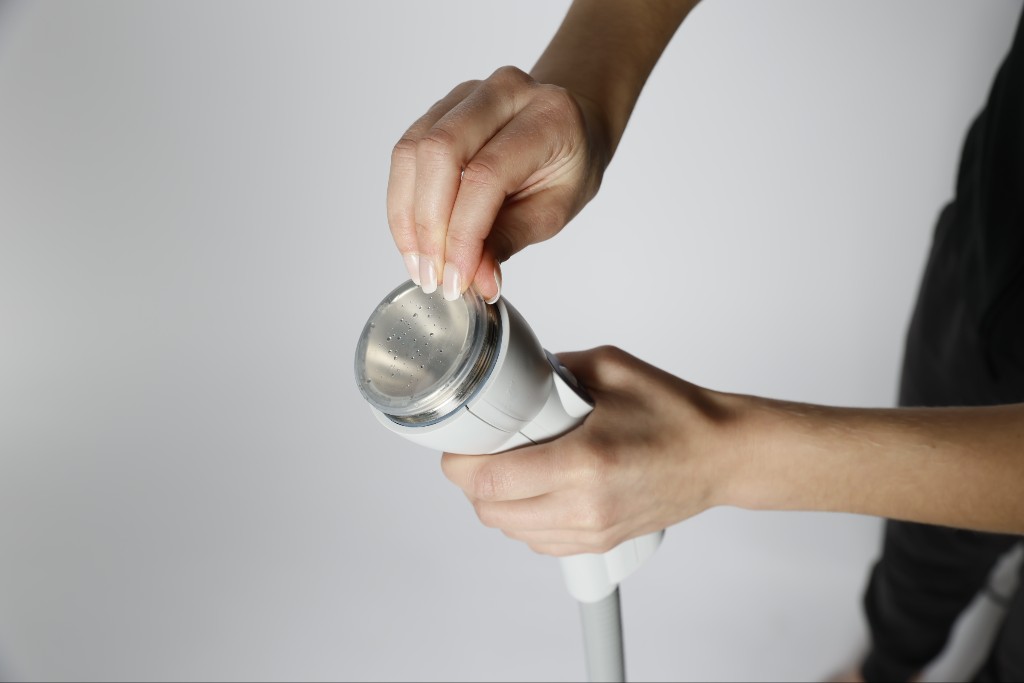
OmniWave therapy uses electrohydraulic shockwave technology to deliver focused high-energy shockwaves into targeted tissues. Each pulse is generated by a spark gap in a fluid-filled applicator, producing controlled pressure that penetrates deep into muscles, tendons, or ligaments. This energy induces cellular-level microtrauma to trigger pain relief and tissue regeneration. Adjustable depth and energy settings allow clinicians to tailor treatments across various musculoskeletal conditions. The therapy promotes local blood flow, angiogenesis, and the release of growth factors. Its non-invasive approach offers an alternative to surgery or injections while supporting natural healing.
Clinical Uses of Omniwave Shockwave Therapy
OmniWave is used in clinical settings to address a range of musculoskeletal conditions. Its focused energy is directed at targeted tissues to support recovery in chronic injuries. The most common indications where OmniWave is applied include:
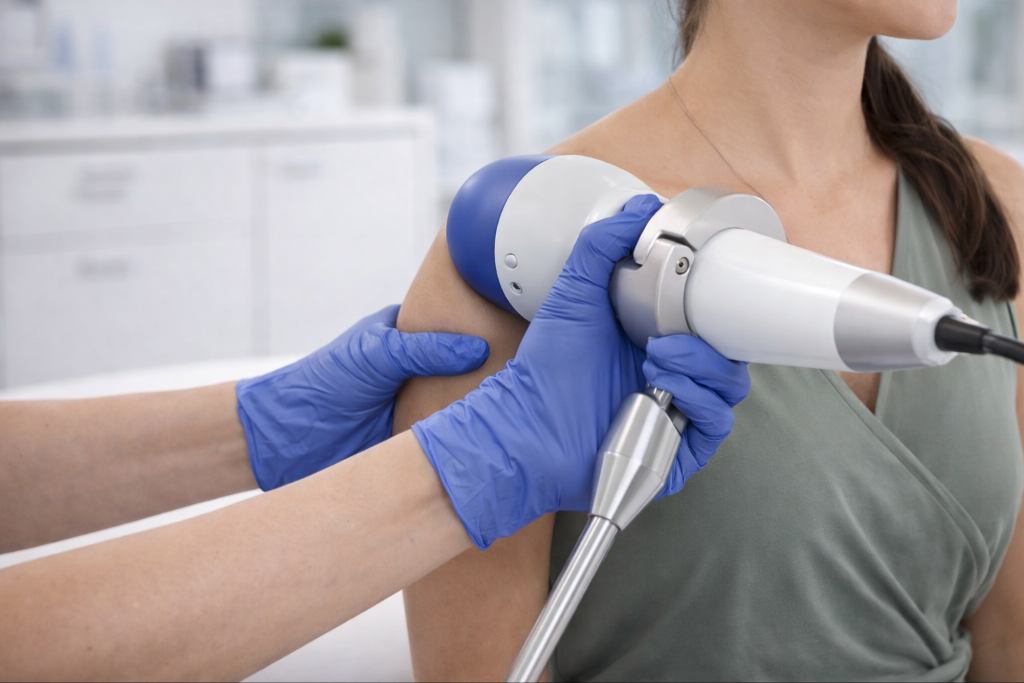
- Tendinopathies (e.g., Achilles, Rotator Cuff): Omniwave’s focused shockwaves are applied to the affected tendon area to stimulate tissue remodeling and address long-standing tendon pain.
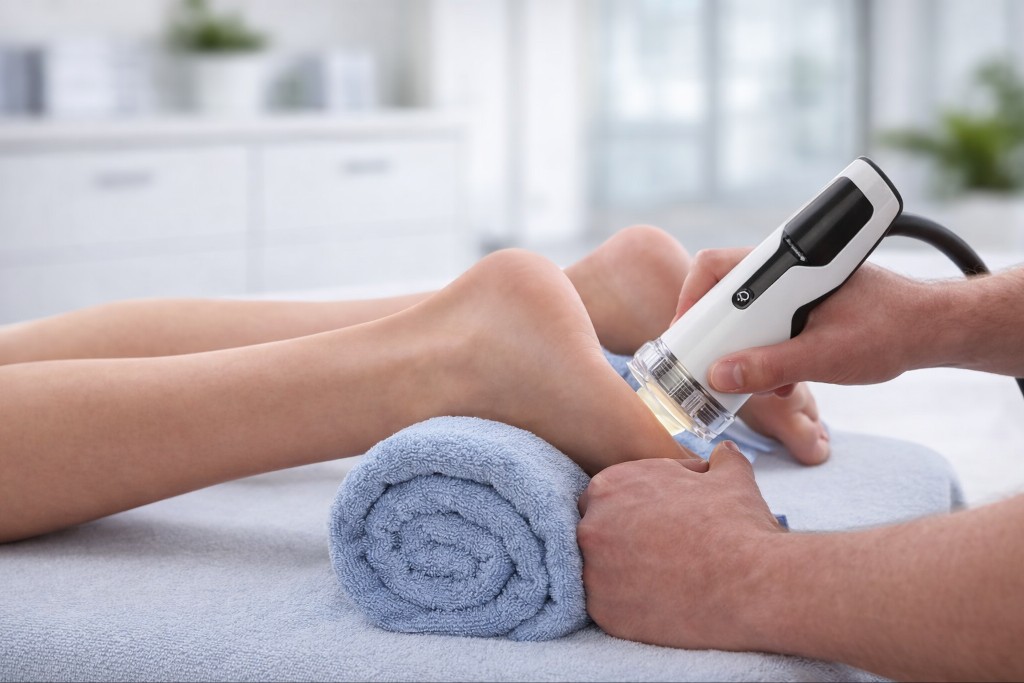
- Plantar Fasciitis: Focused energy is directed at the plantar fascia to address tissue stiffness and heel pain. Sessions are often spaced over several weeks as part of a conservative care plan.
- Lateral Epicondylitis: Energy is directed to the lateral elbow to address soft tissue changes associated with tendon overload, helping improve local circulation and relieve discomfort.
- Calcific Shoulder Tendinitis: OmniWave is used over the rotator cuff to address calcium deposits that limit motion and cause pain. Treatment may help soften or fragment calcific material.
- Patellar Tendinopathy (Jumper’s Knee): Shockwaves are delivered to the patellar tendon insertion to stimulate localized repair, support tendon integrity, and functional movement.
- Medial Epicondylitis (Golfer’s Elbow): Focused pulses are used along the medial elbow region to address repetitive strain and tendon irritation, supporting healing in cases of chronic strain.
Clinical Research on Focused Shockwave Therapy
Medical research supports the clinical application of focused shockwave therapy for treating chronic musculoskeletal conditions. OmniWave, which delivers focused acoustic waves, aligns with protocols used in studies that have demonstrated improvements in pain reduction and functional outcomes. Clinical trials have shown positive effects in cases of calcific shoulder tendinitis, with over 70% of patients experiencing improved shoulder function (Gerdesmeyer et al., 2003), and in plantar fasciitis, where significant reductions in pain scores were reported within 12 weeks (Sun et al., 2017).
Systematic reviews continue to affirm the efficacy of shockwave therapy in tendinopathies. A meta-analysis reported significant functional gains and pain relief in upper limb conditions, including rotator cuff tendinitis (Xiong et al., 2024). Lower-limb applications are equally supported, with improvements in pain and return to activity noted in Achilles and patellar tendinopathies (Mani-Babu et al., 2015). Focused shockwaves have also shown promise in tissue regeneration, with diabetic foot ulcer healing rates significantly improved compared to standard care alone (Snyder et al., 2018), highlighting the broad clinical utility of technologies like OmniWave.
What Does OmniWave Shockwave Therapy Cost?
The OmniWave cost can range from approximately $500 to $35,000, depending on the device model, energy capabilities, and included accessories. Entry-level units are lower cost, while advanced systems with higher energy output and multiple applicators fall at the upper end. Clinics should also plan for ongoing expenses such as maintenance, consumables, and staff training. These factors contribute to the total cost of ownership when integrating a shockwave system. For many practices, the investment is evaluated based on clinical utility and long-term revenue potential.
Alternatives to OmniWave Shockwave Therapy Devices
Clinicians considering shockwave therapy often evaluate multiple technologies before choosing a system. Each device varies in energy delivery, treatment depth, and clinical scope. Below are four commonly used alternatives to OmniWave in medical settings.
SoftWave Therapy
SoftWave Therapy utilizes a patented parabolic reflector to generate broad-focused shockwaves that induce angiogenesis, modulate inflammation, and improve blood supply in injured tissues, thereby accelerating recovery and regeneration. Unlike point-focused systems, it covers a large 7 cm x 12 cm area, reaching both superficial and deep tissues without causing concentrated microtrauma.
Clinically, SoftWave Therapy is indicated for conditions such as musculoskeletal injuries (joint pain, tendon and ligament injuries, chronic tendinopathies, and arthritis), difficult-to-heal wounds (like diabetic foot ulcers), and even urologic applications like erectile dysfunction and chronic pelvic pain syndrome in men. SoftWave offers a research-backed and FDA-cleared solution that can expand treatment options without significantly increasing complexity. With pricing typically ranging from $19,000 to $39,100 for SoftWave devices like the SoftWave Gold Li Series, SoftWave offers support and training programs to help integrate it seamlessly into practice.
Learn more about the Best Shockwave Therapy Machine for Providers.
Storz Medical Masterpuls® Ultra+
The Storz Masterpuls Ultra+ utilizes radial shockwave technology. Radial shockwaves, in contrast to focused waves, disperse outward from the applicator head, covering a broader area at a more superficial depth. The Masterpuls Ultra+ has an ergonomic, user-friendly design and offers various transmitter heads to tailor the pressure wave for different tissues. Storz’s radial pulses are used for treating conditions near the surface of the body, such as chronic plantar fasciitis, Achilles tendinopathy, myofascial pain syndrome, and other soft-tissue injuries that benefit from improved circulation and pain modulation.
Radial energy is ideal for surface-level therapy, resulting in minimal discomfort. The system is priced between approximately $15,000 and $25,000, depending on features and accessories.
Read more: Storz Duolith Machines: Cost, Efficacy, & Alternatives
BTL Focused Shockwave
The BTL Focused Shockwave device is an example of an electrohydraulic shockwave system. BTL’s system is engineered to allow fine control over the energy flux density and focal zone, enabling high-energy delivery exactly where it’s needed while minimizing exposure to surrounding tissues.
Clinically, the BTL Focused Shockwave is used to address deep-seated conditions. Examples include bone non-unions (delayed fracture healing), deep tendinopathies (such as chronic hamstring or gluteal tendon injuries), calcific deposits in tendons (like calcific shoulder tendinitis), and deeply located trigger points or muscle knots. With penetration depths that can reach 50–60 mm, this device ensures therapeutic energy at the site of pathology. Typical BTL system ranges from $20,000 to $40,000, depending on the model and package.
PiezoWave2T
The PiezoWave2T system represents the piezoelectric approach to shockwave generation. Using an array of piezoelectric crystals, this device produces focused acoustic waves with a stable energy output. The PiezoWave2T can be configured to deliver different wave propagation patterns, allowing the therapist to treat either a very specific, small target, such as a single trigger point or calcification, or a larger linear area, such as along a muscle or tendon, by switching the transducer type.
In terms of clinical applications, the PiezoWave2T is indicated for many of the same musculoskeletal conditions as other shockwave devices, including chronic myofascial pain, tendinopathies (such as lateral epicondylitis or plantar fasciitis), enthesopathies, and spinal facet joint pain in certain protocols. PiezoWave pricing typically ranges from $25,000 to $45,000, depending on configurations and applicator types.
Read more: Piezowave Therapy Efficacy & Alternatives Explained
Expand Your Treatment Capabilities With Broad-Focused SoftWave Therapy
As clinicians evaluate options like OmniWave and similar devices, it’s clear that not all shockwave technologies function the same. For practices seeking broader coverage, greater depth of penetration, and support across multiple indications, SoftWave Therapy offers a distinctive clinical approach.
Its patented broad-focused shockwaves deliver low-intensity energy over a wide treatment zone, initiating biologic responses without causing microtrauma. With FDA clearances for musculoskeletal conditions, burns, ulcers, and connective tissue activation, SoftWave is well-suited for orthopedics, sports medicine, physical therapy, urology, and podiatry.
Expand your capabilities with a proven, non-invasive modality. Become a SoftWave Provider today.