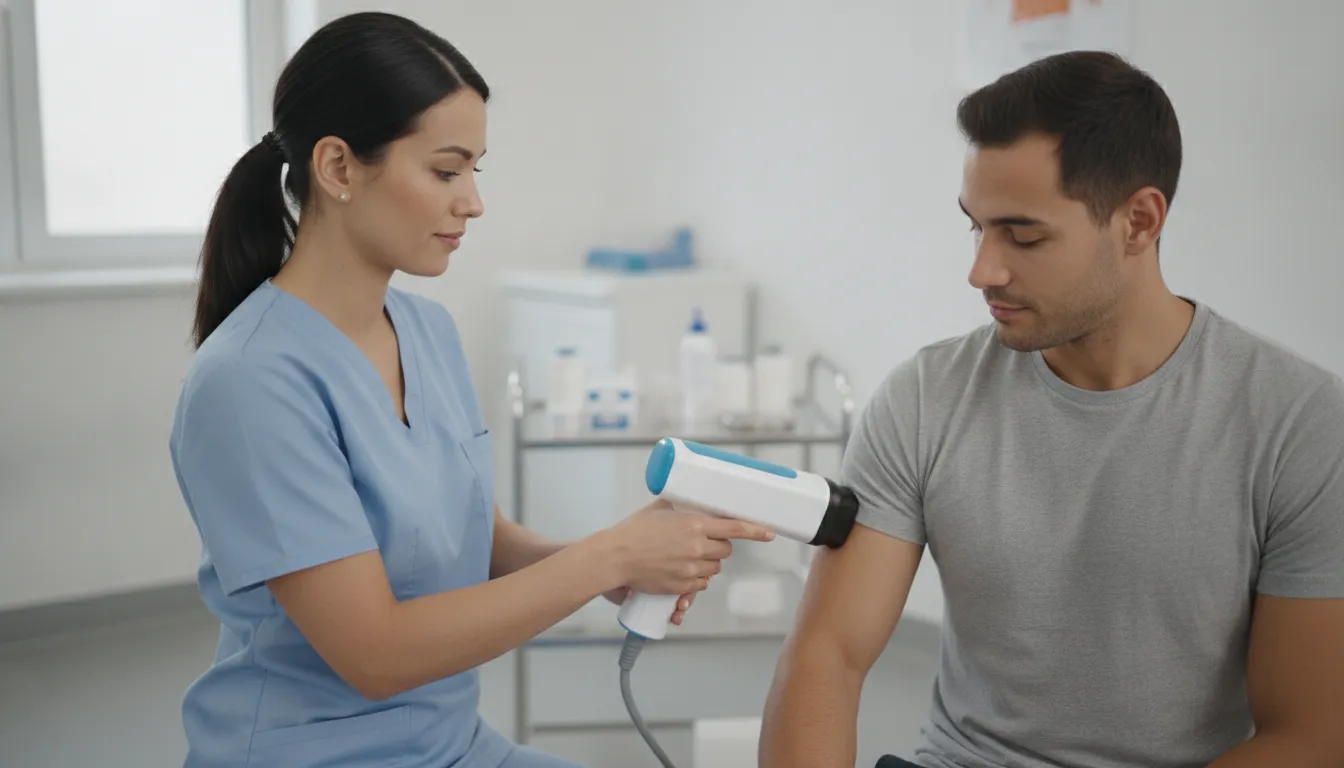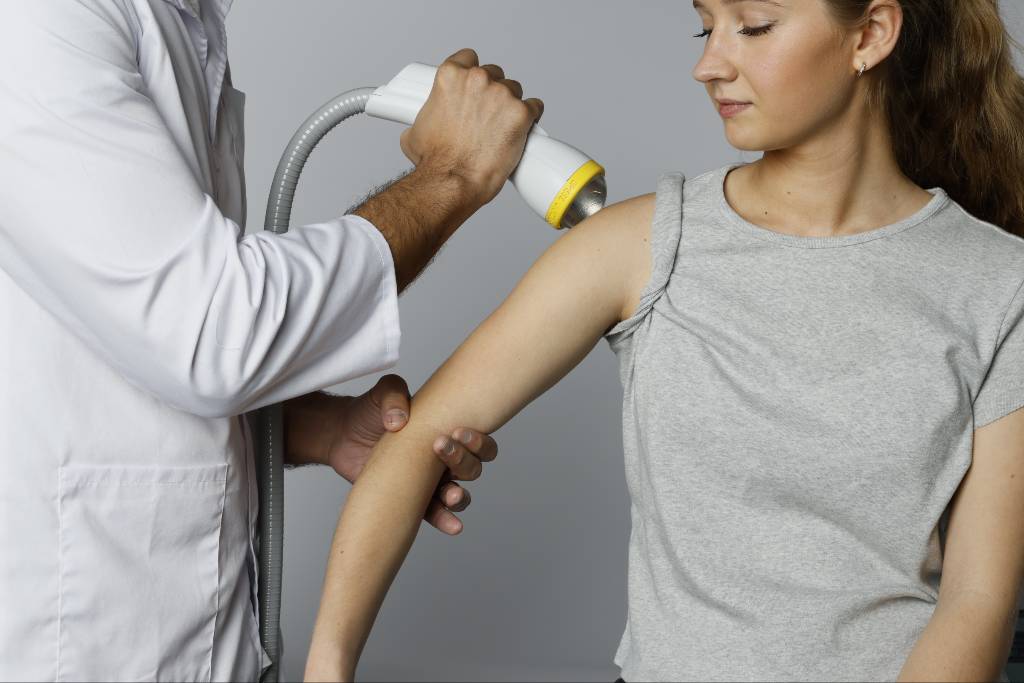
Shockwave therapy is widely used across musculoskeletal and soft tissue medicine to stimulate repair and support functional recovery, but questions sometimes arise about its safety in clinical use.
Evaluating whether shockwave therapy can cause damage starts with understanding that the therapy itself is not harmful when administered through a regulated, low-intensity medically engineered device. Problems occur when systems lack consistent energy control, scientific validation, or proper FDA clearance.
For clinicians, the ability to distinguish between risky devices and verified shockwave systems is central to patient safety, consistent outcomes, and the credibility of regenerative care.
Understanding the Real Risks of Shockwave Therapy
When administered through a medically validated and properly regulated device, shockwave therapy is a safe and effective treatment used across orthopedic, podiatric, and rehabilitative settings. In direct answer to the question can shockwave therapy cause damage: not when energy levels remain within the therapeutic range, where treatment supports cellular repair rather than tissue injury and adverse reactions are uncommon and usually mild, such as brief redness or localized soreness that resolves quickly.
Consistent Energy Output & Waveform Control
Concerns arise only when devices fail to maintain consistent energy output or waveform control. Electrohydraulic systems that deliver energy above approximately 0.22 mJ/mm² reach a catabolic range that stresses cells and causes irritation, while those calibrated at or below 0.18 mJ/mm² remain within the regenerative zone that supports angiogenesis and connective tissue activation.
That distinction matters for clinicians and healthcare providers. Patient safety, treatment efficacy, patient trust, and practice liability all depend on selecting shockwave systems that deliver stable, validated energy instead of unstable or excessive output.
For clinicians, maintaining patient safety depends on using technology with verified regulatory 510(k) clearance, consistent energy calibration, and a design that has been validated through long-term clinical use.
The 7 Red Flags That Signal a Risky Shockwave Device
Clinicians face a growing challenge as the market becomes saturated with devices marketed as shockwave systems that often lack medical validation. Many of these products rely on misleading terminology, weak engineering, or incomplete regulatory status. Can shockwave therapy cause damage to patients? Identifying the following red flags helps ensure that patients receive true shockwave therapy delivered within safe and effective parameters. The reputation of your practice may depend on it.
1. Only “FDA Registered” Instead of Class II Cleared
Devices listed only as “FDA registered” fall under Class I, which includes basic therapeutic massagers. These devices, like Stemwave, have not been evaluated for medical effectiveness or safety in tissue repair.
True shockwave systems require Class II 510(k) clearance, confirming review for safety and performance. Any system without this clearance is not authorized for medical indications such as connective tissue activation or circulation improvement.
2. Marketed as “Acoustic” or “Pressure” Wave
Products described as “acoustic” or “pressure” or “pneumatic” waves do not generate true shockwaves. They produce slower, lower-energy pulses that lack the sharp pressure rise and depth penetration required for biologic stimulation and depth of penetration. These systems may irritate superficial tissue but fail to reach the cellular level where regeneration occurs. When clinicians question if shockwave therapy can cause damage, the issue often lies in these devices, not in properly engineered shockwave technology.
3. No Published Research or Clinical Registry Data with the Device
Manufacturers that cannot provide data or published studies linked directly to their device have not demonstrated safety or efficacy. True medical-grade systems maintain clinical documentation and registry outcomes that validate performance. Without this transparency, patient outcomes remain uncertain, and reproducibility cannot be guaranteed.
4. Small Focal Zone or High Shock Count per Session
Devices designed with very narrow focal zones require extreme precision and high pulse counts to treat a standard area. This increases treatment time, patient discomfort, and risk of localized irritation. When energy delivery is concentrated into a small point only, tissues can experience microtrauma rather than controlled regeneration. Systems with broad treatment zones reduce these risks and provide more uniform results.
5. High Maintenance or Overseas Servicing
Complex daily maintenance requirements or overseas servicing are indicators of poor design. Systems with an open system, requiring manual degassing, frequent water changes, or wrench-based part replacements are more prone to errors and downtime. Devices lacking local service infrastructure can delay patient care and introduce unnecessary operational risk.
6. Unproven or Newly Formed Company
Manufacturers without a verified track record or established clinical presence pose a long-term risk. A lack of patents, research partnerships, or reliable service infrastructure can leave practices without ongoing support. Companies with a proven track record of longevity and regulatory compliance are more likely to maintain product safety, adhere to regulations, and drive continued innovation.
7. “Too Good to Be True” Pricing
Low-cost imports often eliminate key safety features and quality testing to reduce production expenses. These devices may appear cost-effective at purchase but carry hidden risks through frequent repairs, inconsistent output, or unsatisfied patients. For clinical practice, quality assurance and safety validation are stronger indicators of value than price.
For additional context on evaluating system design, safety verification, and evidence-based performance, review The Clinician’s Guide to Shockwave Therapy: Evidence, Safety, and Technology.
Choosing a Safe and Evidence-Based Shockwave Device
After identifying the risks associated with unverified systems, the next step is selecting a shockwave device that meets medical, regulatory, and clinical standards. SoftWave Therapy meets these standards through patented engineering, clinical validation, and a design proven to deliver regenerative results without compromising patient comfort.
Proven Engineering and Mechanism of Action
SoftWave represents the advancement of electrohydraulic shockwave technology through its patented broad-focused design. The SoftWave device distributes low-intensity energy evenly through deep and superficial tissue. Each pulse is generated through a controlled plasma discharge in water and shaped by a parabolic reflector to ensure precise, consistent energy without microtrauma. This mechanism activates angiogenesis, modulates inflammation, and supports natural tissue repair.
FDA Clearance and Clinical Validation
SoftWave is FDA 510(k) cleared for several medical indications, including activation of connective tissue, treatment of diabetic foot ulcers, second-degree burns, improved local circulation, and relief of minor muscle aches and pains. These clearances verify the system’s safety and consistent therapeutic performance across indications studied in peer-reviewed research and multicenter clinical trials. Ongoing studies continue to support its role as a scientifically validated and evidence-based shockwave technology.
Built-In Safety and Reliability
Safety and consistency are maintained through features such as a closed water system, which removes contamination and electrical risks, auto-degas technology for reliable wave formation, and SmartTrode® electrodes that automatically regulate output. The 7 cm by 12 cm broad-focused treatment zone activates more tissue per session, reducing treatment time and improving patient comfort.
Most patients are typically administered 3 to 6 shockwave therapy sessions. The plan is adjusted to the patient’s condition and often combined with physical therapy for various musculoskeletal conditions and other certain medical conditions. It should be avoided over lung tissue, may not be suitable over malignant tumors or some medical conditions, and is not suitable for areas with vascular insufficiency.
Clinical Recognition and Adoption
Trusted by leading institutions including Mayo Clinic, UCLA, Baylor, and Cleveland Clinic. SoftWave has demonstrated satisfactory results in orthopedics, sports medicine, physical therapy, urology, and podiatry applications. Its broad-focused, low-intensity design provides reproducible outcomes, aligning with the highest standards of patient safety and clinical efficacy.
Learn more about the Best Shockwave Therapy Machine for Providers. Learn how clinical engineering and verified safety standards make the most trusted evidence-based devices.
Why Safe Shockwave Therapy Matters for Your Practice
Medical device safety extends beyond preventing adverse reactions. It directly affects patient trust, treatment efficiency, and the reputation of the clinician providing care. What happens when a device lacks engineering consistency or fails to deliver controlled energy? The risk shifts from technical failure to patient dissatisfaction and clinical liability. A single negative experience can diminish confidence in both the treatment and the provider offering it.
Look for FDA-Cleared Shockwave Devices
Safe, FDA-cleared shockwave systems provide the foundation for reproducible outcomes and long-term clinical success. Reliable devices operate within validated parameters that preserve tissue integrity while activating biologic repair. They also streamline workflow, minimize downtime, and maintain compliance with regulatory standards. For any practice committed to regenerative care, investing in a proven and verified device. This protects both patient well-being and professional credibility.
Strengthen Patient Trust and Outcomes with SoftWave Therapy
Shockwave therapy is safe and regenerative when performed with a clinically verified, FDA-cleared system. Can shockwave therapy cause damage? The main risk comes from imitation devices that lack proper engineering and regulatory review. Choosing a proven system backed by scientific validation is the only way to ensure that regenerative treatment remains both safe and effective.
Why Choose a SoftWave Shockwave Therapy Device?
SoftWave Therapy fulfills that standard through its broad-focused electrohydraulic design. The SoftWave device delivers uniform energy to both deep and superficial tissue without discomfort or microtrauma. Its verified FDA clearances reflect rigorous safety evaluation and clinical reliability. Supported by ongoing research and consistent use in medical settings, SoftWave offers a technology foundation that promotes true tissue regeneration while protecting patient outcomes.
Experience the assurance of evidence-based technology in your practice. Become a SoftWave Provider today or schedule a demo to transform your approach to regenerative medicine.