Chronic tendonitis, or tendinopathy, is a degenerative condition marked by ongoing pain and reduced function. Repeated strain and incomplete healing often disrupt tendon structure, leaving patients with persistent inflammation and limited mobility. While injections are frequently used as a chronic tendonitis treatment, their impact is usually short-lived. This gap in lasting care highlights the need for approaches that actively support tendon repair rather than providing temporary relief.
Why Injections for Chronic Tendonitis Often Fail
Among the injection-based options used for chronic tendonitis treatment, two of the most recognized approaches are corticosteroid injections and platelet-rich plasma (PRP) injections. While both are widely applied, evidence shows their effectiveness is often limited in chronic cases.
Corticosteroid Injections
Corticosteroid injections are valued for their rapid anti-inflammatory and analgesic effects, but the benefits are usually short-lived. Research shows steroids may reduce pain in the first few weeks but fail to improve tendon healing long term. A review found no meaningful advantage over placebo by the 6-month mark. Steroids blunt inflammation while inhibiting collagen synthesis, and repeated use may weaken tendon tissue, leaving the degenerative process unchanged (Irby et al., 2020).
PRP Injections
PRP injections aim to deliver growth factors for repair, yet results are inconsistent. Studies report that chronic tendon injuries often show little improvement, likely due to tissue degeneration or variability in preparation. In a meta-analysis on chronic Achilles tendinopathy, PRP showed no significant improvement over placebo at one year (Zhang et al., 2018). Reviews likewise describe PRP outcomes as inconclusive, with no consistent evidence that it improves pain or function.
After injections and conservative care are exhausted, physicians often turn to non-invasive modalities. Shockwave therapy has gained traction as it directly targets the biology of tendon healing rather than suppressing symptoms.
A Non-Invasive Approach to Chronic Tendonitis with Shockwave Therapy
Extracorporeal shockwave therapy (ESWT) is a non-invasive treatment that uses shock waves to stimulate tendon repair. These waves generate micro-mechanical stresses that trigger biological responses such as growth factor release and cytokine activity. Low-energy shockwaves have been shown to promote neovascularization and collagen synthesis, while also helping to interrupt chronic inflammatory processes (Chen et al., 2022). This activity supports the healing of degenerative tendon tissue rather than providing only symptomatic relief.
Clinically, shockwave therapy offers meaningful benefits for patients with chronic tendonitis, especially when other treatments have failed. Multiple randomized controlled trials and meta-analyses have demonstrated that ESWT:
- Reduces pain and improves function in chronic tendinopathies with durable results.
- Provides greater pain relief than placebo at 3- and 6-month follow-ups in conditions such as rotator cuff tendinitis and tennis elbow.
- Improves strength and range of motion while avoiding systemic side effects linked to medications or the risks of surgery (Xiong et al., 2024).
Together, this evidence positions shockwave therapy as an effective, non-invasive option for chronic tendonitis, one that directly activates tendon healing when injections fall short.
Read: Shockwave Therapy for Calcific Tendonitis
SoftWave Therapy for Chronic Tendonitis Treatment
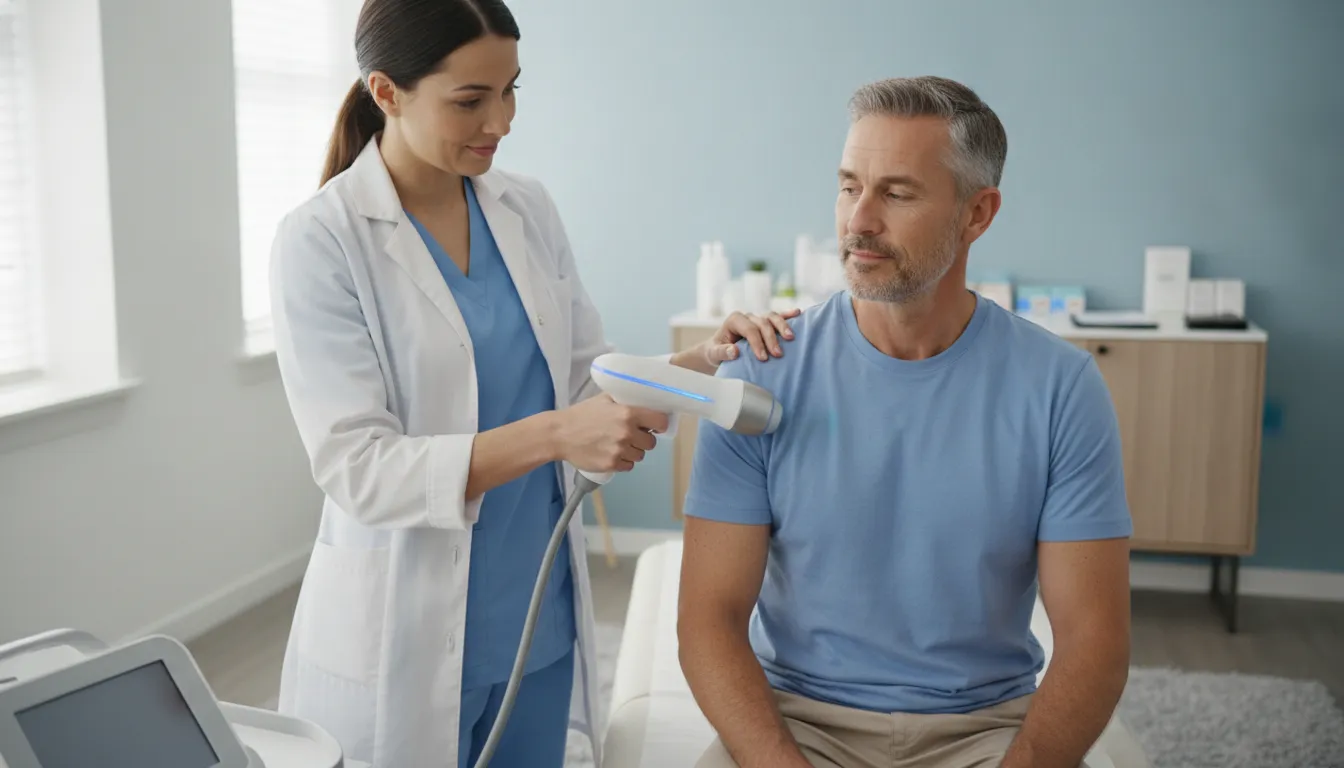
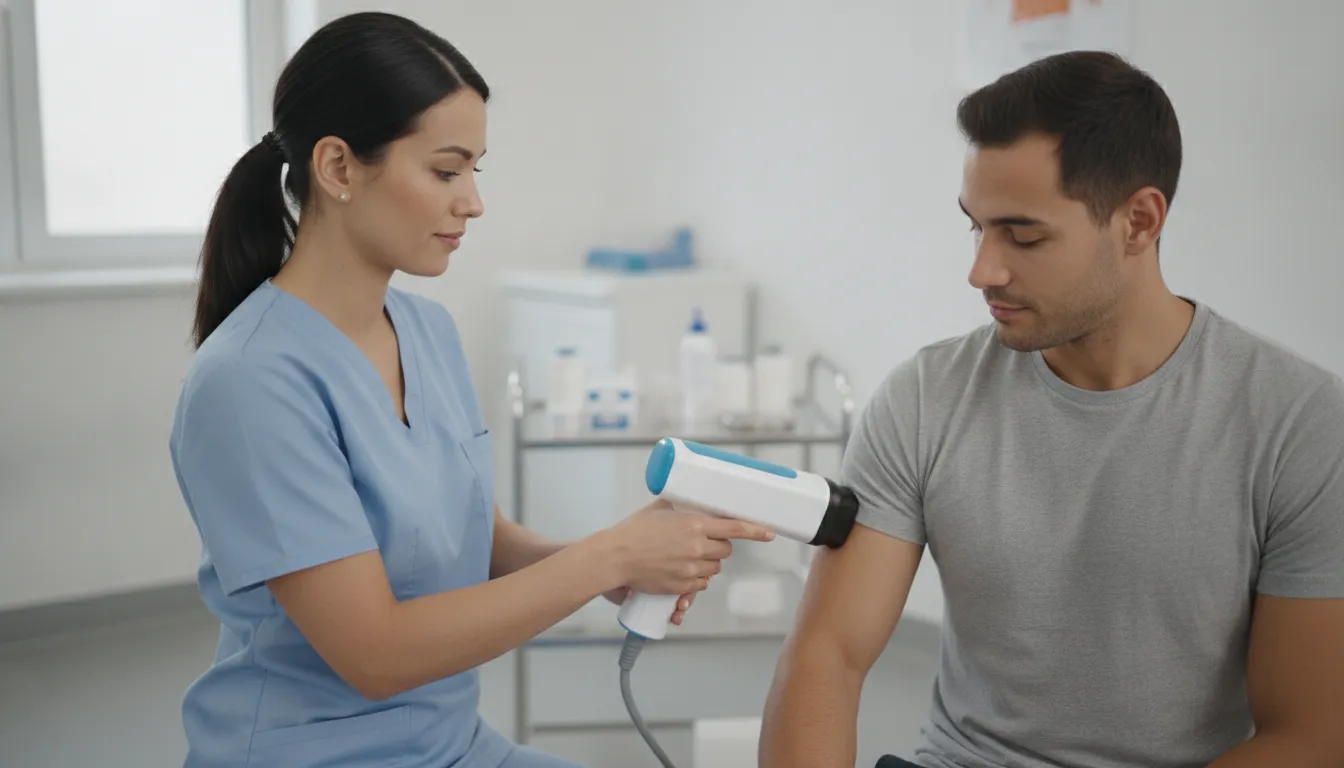
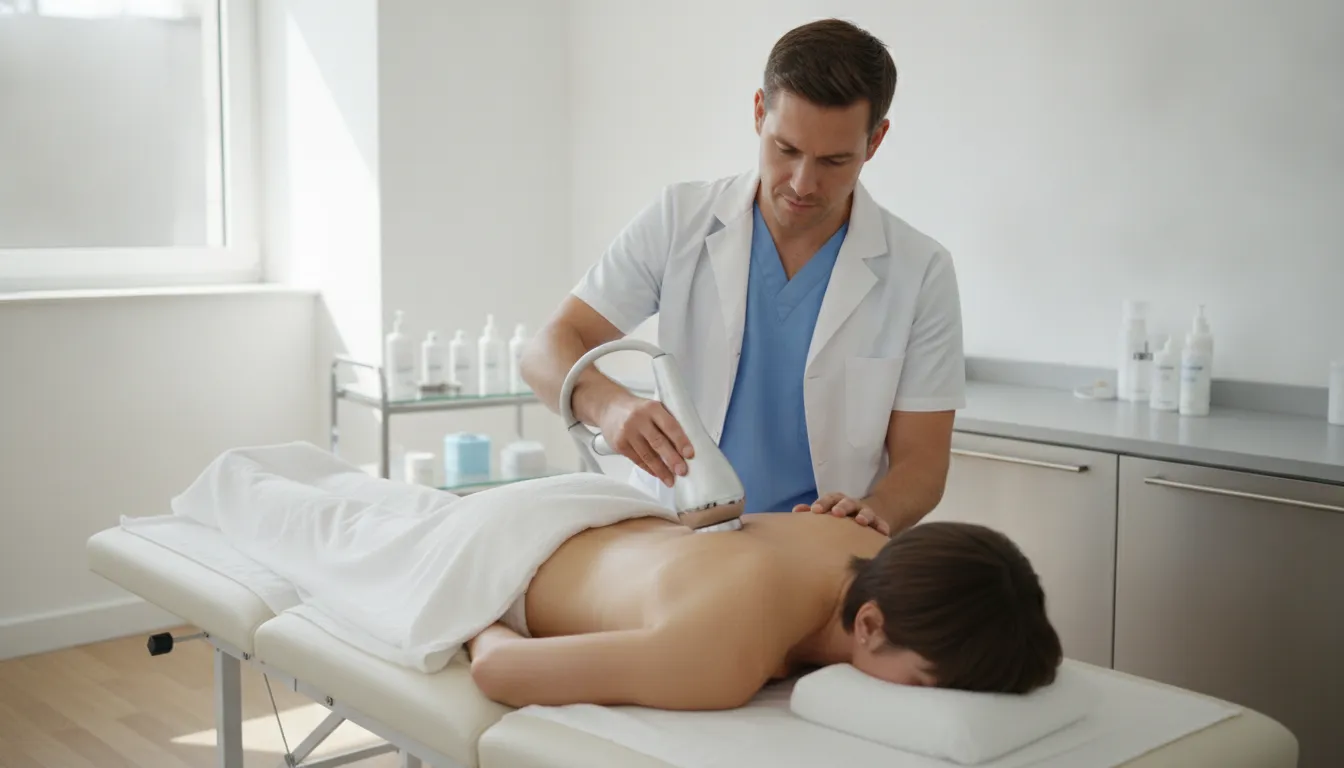
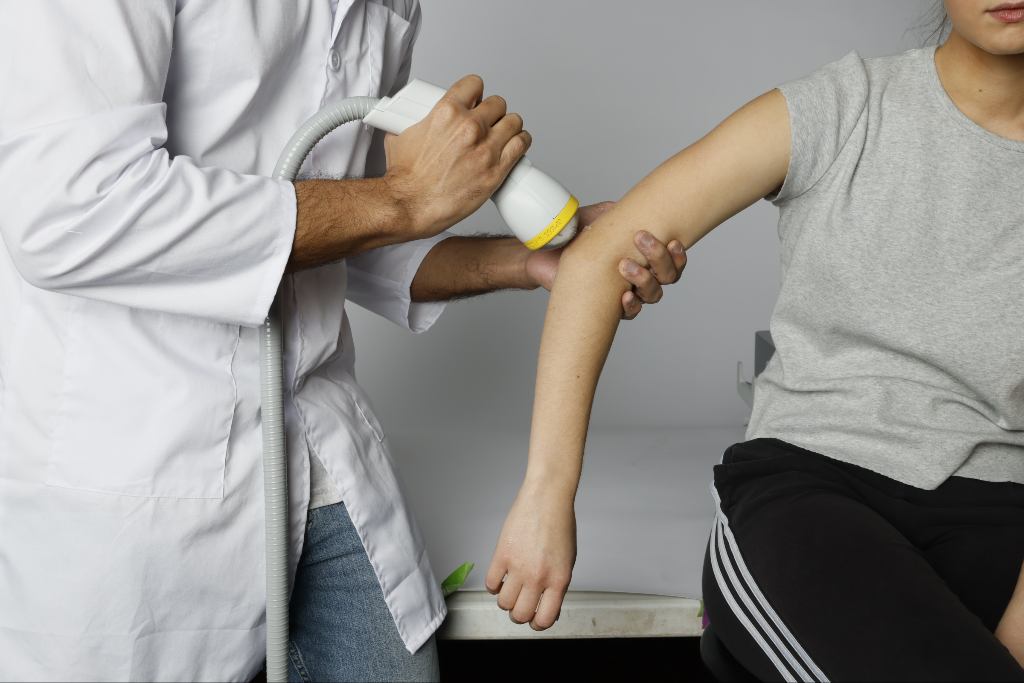
SoftWave Therapy is an advanced form of shockwave technology designed for musculoskeletal care. It uses a patented broad-focused applicator with a parabolic reflector that generates parallel shockwaves. Each treatment influences an area up to 7 cm wide and penetrates as deep as 12 cm, reaching both superficial and deep tendon tissue. Its broad coverage distributes energy without causing microtrauma, offering a comfortable and effective option for chronic tendonitis. SoftWave Therapy devices support chronic tendonitis treatment through several key biological and clinical effects:
Modulates Chronic Inflammation
SoftWave helps reset the inflammatory cycle that perpetuates tendon pain. Reducing excessive inflammation while supporting healing responses creates a healthier environment for tissue recovery.
Stimulates Angiogenesis
The therapy promotes the formation of new blood vessels, improving circulation and nutrient delivery to damaged tendon tissue. This is critical for areas with poor baseline vascularity, such as the Achilles or patellar tendons.
Activates Connective Tissue and Cellular Repair
SoftWave initiates the release of growth factors and cytokines that awaken dormant tendon cells and attract progenitor cells, supporting new collagen formation and structural tendon regeneration.
Provides Pain Relief and Functional Improvement
Through a combination of cellular activation and neural desensitization, patients often report reduced pain and improved mobility within a treatment series. These outcomes occur without anesthesia or downtime, improving compliance and comfort.
SoftWave is FDA 510(k) cleared for indications including activation of connective tissue, improved circulation, and temporary pain relief, and it is supported by ongoing clinical research.
Learn more about the Best Shockwave Therapy Machine for Providers.
Take the Next Step in Patient Care with SoftWave Therapy
Chronic tendonitis is difficult to resolve since rest, medications, and injections often bring only temporary relief without repairing degenerative tissue. SoftWave Therapy offers a non-invasive alternative that targets broad and deep tissue zones, providing a more comprehensive approach to treating tendon degeneration.
For physicians, SoftWave offers a clinically validated, non-invasive option supported by FDA clearance. It is already used across orthopedics, sports medicine, physical therapy, urology, and podiatry to manage different conditions. Incorporating SoftWave helps providers address cases that resist standard care while positioning their practice at the forefront of innovation and evidence-based treatment.
Become a SoftWave Provider today and schedule a demo to experience this technology firsthand.