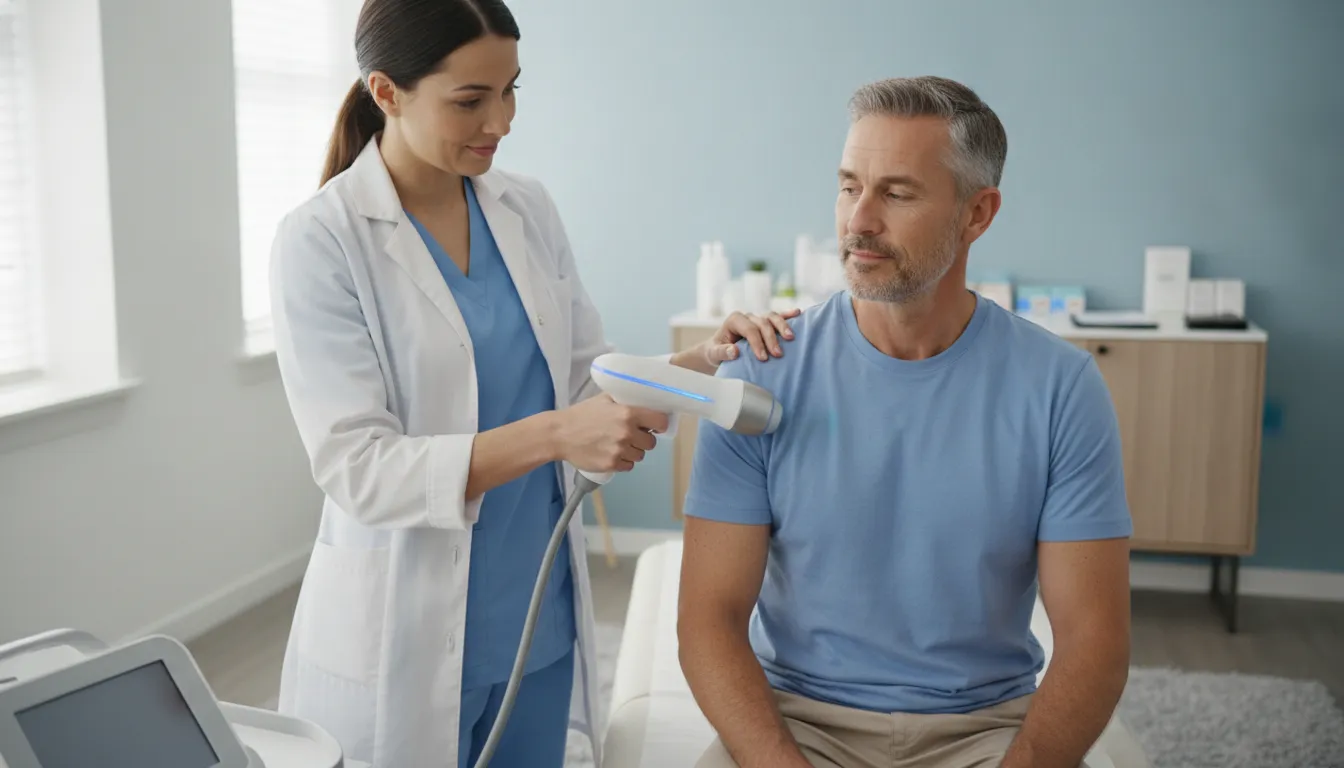
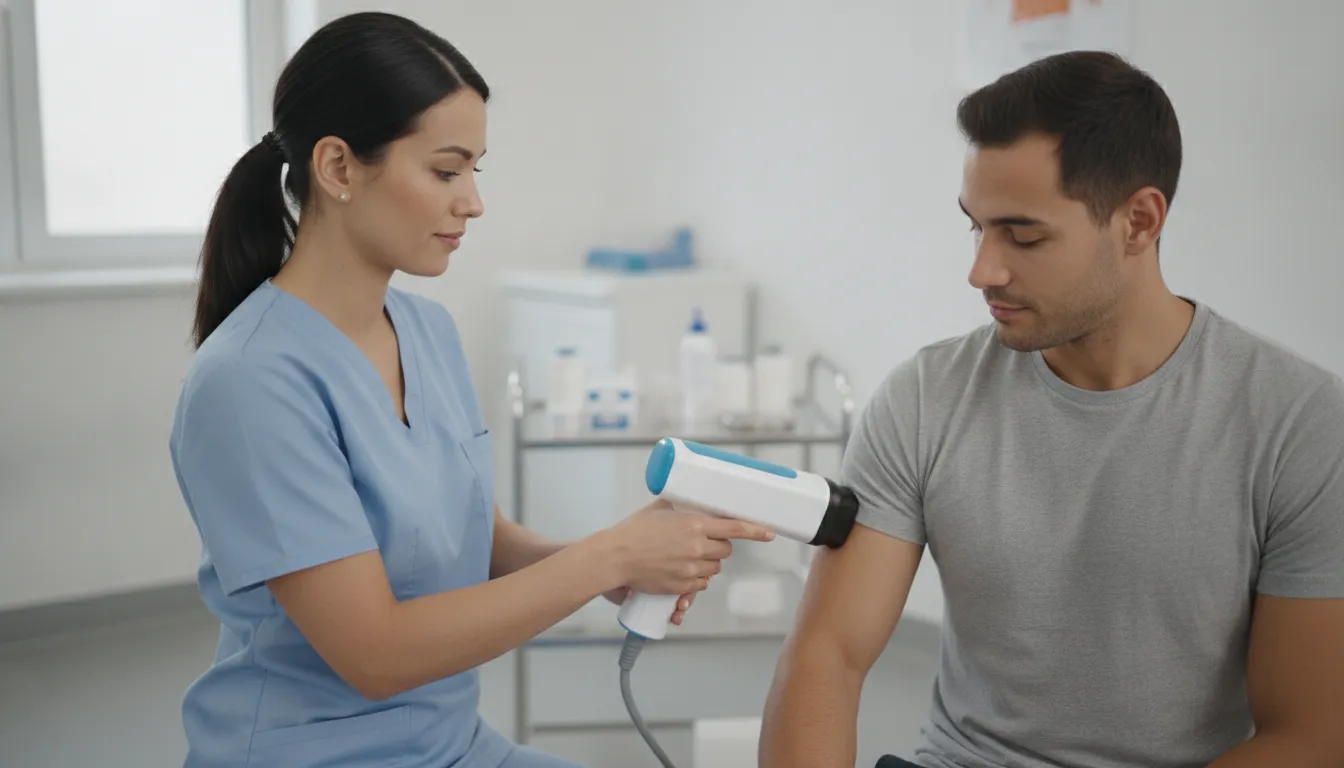
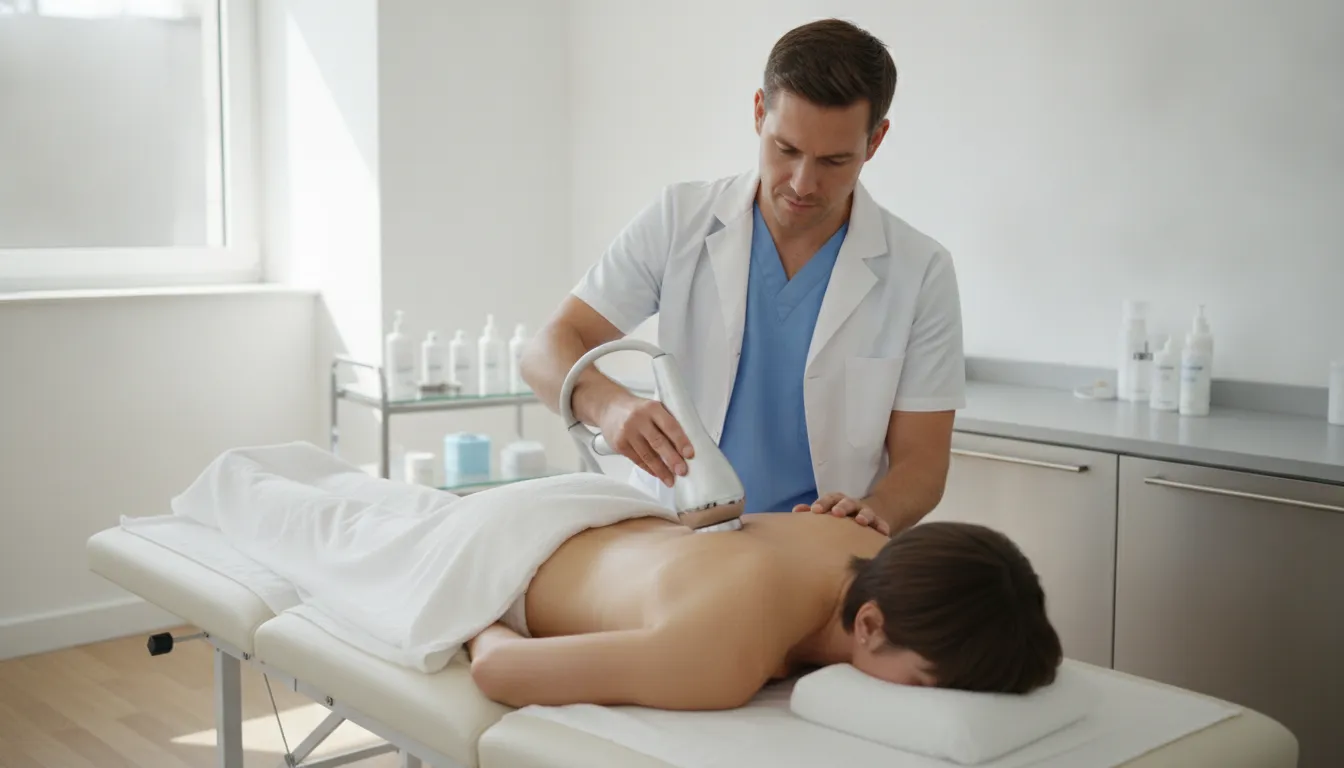
People see ads for shockwave devices claiming big results, so it’s natural to wonder: can I just buy a SoftWave machine and use it myself at home? Plainly put, no. Clinical-grade shockwave systems like SoftWave are designed exclusively for healthcare professionals, because using the device effectively requires precise protocols and diagnostic expertise.
SoftWave Therapy devices are not designed for home use. They are designated for use by healthcare professionals in clinical settings due to the complexity and precision required in administering the therapy.
For practice owners, this isn’t just about staying compliant; it’s also about how the treatment actually works on the body. Without proper application, the treatment is simply not as effective. Effective shockwave therapy relies on professional oversight, precise parameter selection, and deliberate clinical intent.
Is SoftWave Therapy for Home Use? The Direct Answer
Why Patients Raise the Question
Patients ask this a lot because consumer wellness brands borrow clinical language without actually proving they deliver clinical results. Most at-home devices are basic therapeutic massagers or ballistic radial pressure-wave units. Radial pressure waves are not shock waves — they lack the near-instantaneous rise time and peak pressures that define a true shock wave, deliver their maximum energy at the skin surface, and cannot be focused — a distinction the International Society for Medical Shockwave Treatment has formally clarified. When patients see familiar terminology online, they naturally assume the underlying technology is equivalent. Educating them on this distinction reinforces the clinical value of clinician-administered shockwave therapy.
What to Tell a Patient Who Asks
Tell the patient that broad-focused shockwave therapy is a clinician-administered treatment, not a wellness product. A consumer unit offers a single intensity dial, no control over penetration depth, and no diagnosis behind either selection. The clinical version begins with an examination and an identified anatomical target. A short, accurate answer serves the practice better than a defensive one.
How Shockwave Therapy Acts on Tissue
Acoustic Pressure Waves and Mechanotransduction
Shockwave therapy directs acoustic pressure waves into tissue. There, mechanical energy converts into a biological signal, a process researchers call mechanotransduction. The wave carries no pharmaceutical payload. Its therapeutic effect depends on where it lands, how much energy it delivers, and how deep it penetrates. A clinician determines all three. A consumer device generally cannot.
Mechanotransduction is a localized, dose-dependent response rather than a systemic one. The wave must reach the injured tissue specifically, not merely pass nearby. Accurate aim and appropriate energy selection determine whether the treatment succeeds.
The Mechanism in SoftWave’s Own Terms
SoftWave describes its own mechanism by what the wave can possibly accomplish once it reaches tissue: it modulates inflammation, repairs, remodels and regenerates tissue, and accelerates wound healing. Each of those effects depends on the wave reaching the intended tissue at the intended energy level.
Clinical-Grade Systems Versus Consumer Home-Use Devices
Adjustable Energy Flux Density and Penetration Depth
Clinical-grade devices are engineered to deliver precise energy levels necessary for treating a wide range of musculoskeletal conditions. These machines offer adjustable energy flux densities and penetration depths, allowing for targeted therapy of both superficial and deep tissues. They are equipped with specialized applicators designed for specific anatomical regions, ensuring accurate energy delivery. The operation of these devices requires professional training to administer treatments safely and effectively. Moreover, clinical-grade machines undergo rigorous regulatory assessments, including controlled clinical trials and quality control processes, to ensure consistent output parameters and therapeutic efficacy for medical use.
Consumer units typically provide a simpler intensity dial instead. Most offer no penetration-depth control whatsoever. A dial cannot be matched to a specific diagnosis the way a defined energy setting can. That limitation removes precisely the adjustability required to treat musculoskeletal conditions accurately.
Anatomical Applicators and Accurate Energy Delivery
The device extends the same logic into hardware. Clinical systems ship with applicators contoured for specific anatomical regions so that energy arrives where the diagnosis indicates. A single general-purpose consumer wand cannot replicate that specificity.
Medical Device or General Wellness Product
Clinical shockwave systems are evaluated by the FDA as medical devices, under the 510(k) premarket notification pathway. Through that pathway, a manufacturer demonstrates that a device is substantially equivalent to one already legally marketed. FDA clearances establish documented regulatory status for specific uses supported by formal submission and review, not generalized claims.
That difference is not a technicality. It determines what a manufacturer may legally claim, and what evidence had to exist before the product reached the market. Many consumer units never go through that review at all. The FDA maintains a compliance policy for low-risk products that promote a healthy lifestyle. That category covers low-risk products whose intended uses are unrelated to diagnosing, curing, mitigating, preventing, or treating a disease.
A device cleared as a medical device has demonstrated equivalence to a predicate device with a defined intended use. A device sold under the general wellness policy has demonstrated nothing comparable, and is not marketed as a treatment for any condition. SoftWave’s own FDA clearances span both categories: musculoskeletal indications such as activation of connective tissue and relief of minor muscle aches and pains, and wound care, including treatment of chronic diabetic foot ulcers. The same diagnostic and parameter-selection requirements apply to every one of them.
Why Professional Oversight Is the Deciding Factor
Diagnosis Precedes Treatment
Treatment requires precise targeting of pathological tissue, and precise targeting requires a diagnosis first. A medical professional examines the patient, identifies the structure involved (plantar fascia, rotator cuff, an area of chronic scar tissue), and only then determines where the wave should be directed. That examination may include a history, a physical assessment, and diagnostic imaging where indicated, ruling structures in or out before the device is activated.
Two patients reporting identical heel pain may have plantar fasciitis, a calcaneal stress reaction, or nerve entrapment. Each diagnosis changes where the wave is directed and how much energy it carries. Differential diagnosis weighs mechanism of injury, palpation findings, range-of-motion testing, and, where indicated, diagnostic imaging. Each finding narrows the anatomical target and indicates the energy level appropriate for that tissue.
A patient working alone has no equivalent step. A patient can locate pain. A patient cannot identify the tissue generating it, which means a consumer device is aimed at a guess rather than a finding.
Parameters Are Selected, Not Preset
Schroeder et al. (2021) describe ESWT protocols as adjustable in the clinical setting. The adjustable variables include energy flux density, number of impulses, focused or radial shockwave type, session number, frequency and duration, and area of application. Protocols vary across studies, and optimal protocols for most indications remain undetermined. That is professional judgment applied case by case, not a fixed configuration a device can ship with.
Training is what makes that judgment possible. It is part of what converts the technology into a treatment. A consumer device engineered to operate without training necessarily eliminates that step.
What This Means for a Musculoskeletal Practice
A clinical-grade shockwave device delivers a treatment, and a treatment requires three components: a diagnosis, an instrument the clinician can adjust, and a trained professional connecting the two. At home shockwave devices are marketed as general wellness products, engineered for a different purpose and evaluated against a lower standard. That is no criticism of the wellness product. It is simply not what the patient is asking about.
A patient who gets minimal results from an at-home therapeutic massager will not have the same experience with clinical shockwave therapy. They have demonstrated that a wellness product and a clinical treatment were never engineered to accomplish the same objective.
For a practice already treating patients with SoftWave, the same reasoning shapes how the treatment is delivered day to day. The device, the applicators, and the FDA clearances behind them exist because the therapy is customized to the patient, region-specific, and clinician-directed. Those are the same reasons it cannot be packaged as a consumer unit. To see how those parameters and the supporting clinical research fit your own caseload, schedule a call.
To explore in-person options, use the SoftWave provider locator. Providers can also review SoftWave Technology when evaluating treatment approaches.